MANTRA OF THE DAY
The Four Agreements
Four agreements for greater personal freedom.
Features section
Lorem ipsum dolor sit amet, consectetur adipiscing elit. Suspendisse tincidunt sagittis eros. Quisque quis euismod lorem. Etiam sodales ac felis id interdum.
Features section
Lorem ipsum dolor sit amet, consectetur adipiscing elit. Suspendisse tincidunt sagittis eros. Quisque quis euismod lorem. Etiam sodales ac felis id interdum.
- Where am I currently using my words against myself or someone else?
- What am I taking personally or assuming without actually knowing?
- What would doing my best look like today, without demanding perfection?
Don Miguel Ruiz. The Four Agreements.
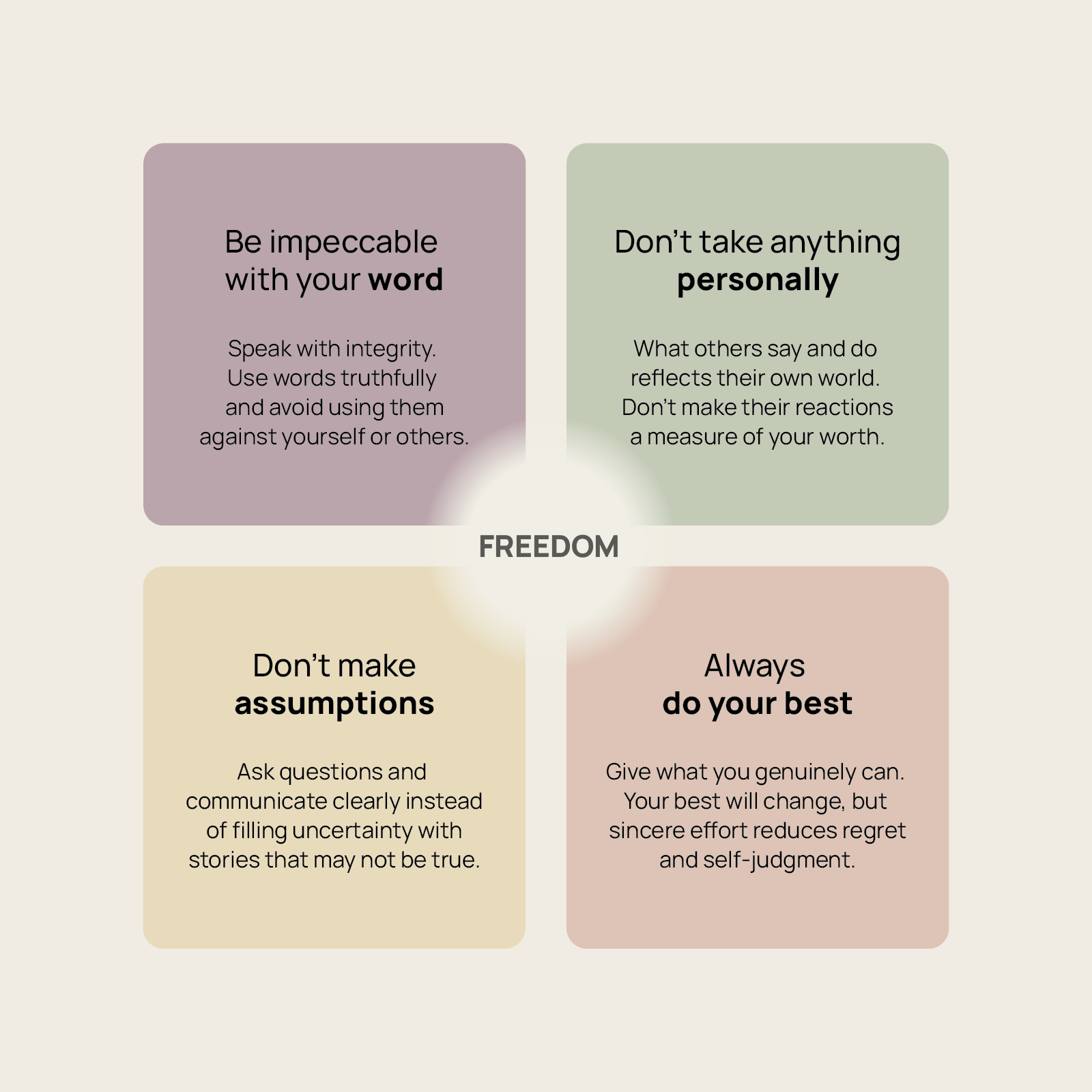
→ Introduces the four agreements as a practical framework for challenging self-limiting beliefs and cultivating personal freedom.
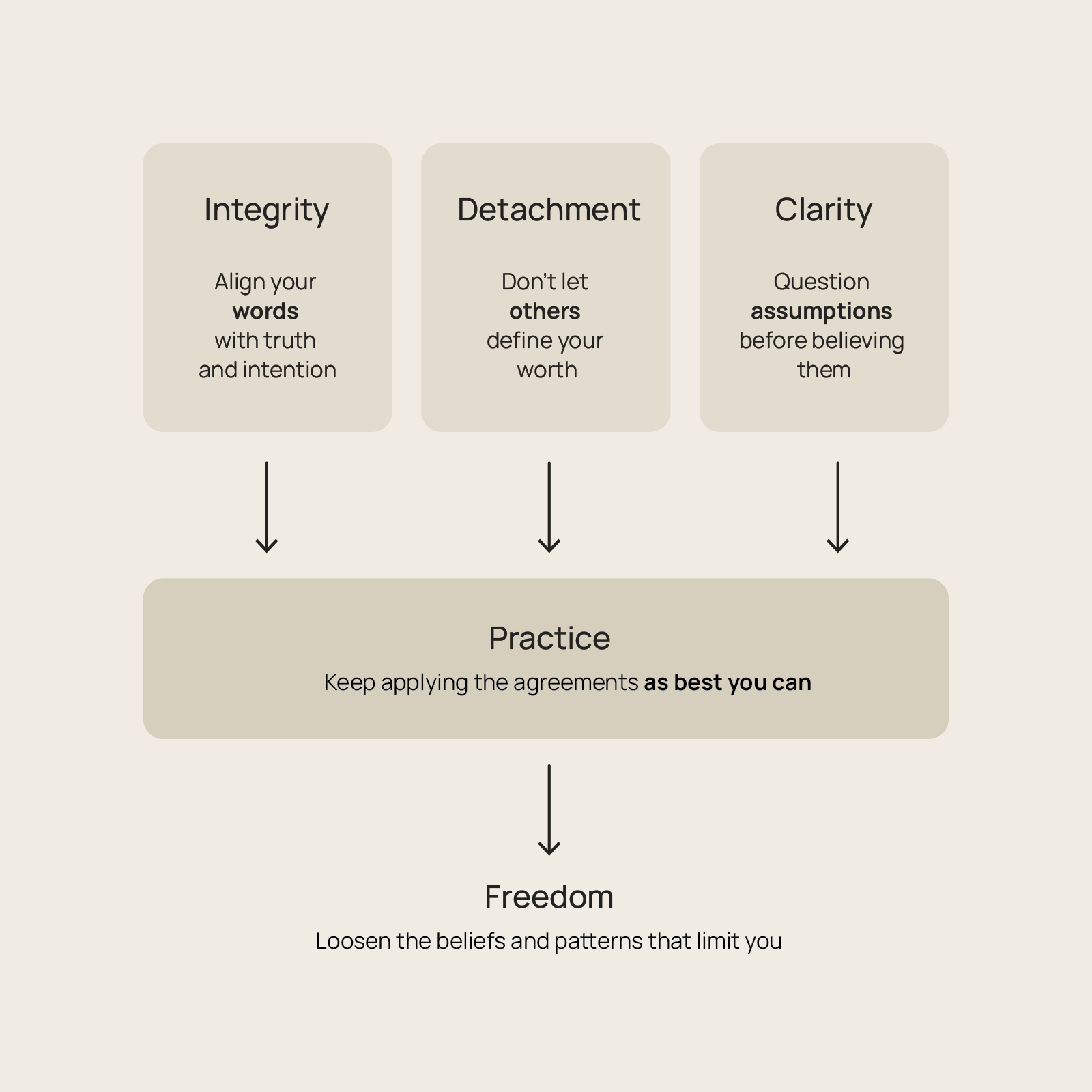
Don Miguel Ruiz's Four Agreements offer a practical code for loosening beliefs and habits that create unnecessary suffering. Speak with integrity. Don't make other people's behavior a measure of your worth. Question the assumptions your mind creates. And practice these principles as well as you genuinely can. Simple as they sound, the agreements demand continual attention. Together they shift our focus away from judgment, projection, and self-limitation toward greater clarity, responsibility, and personal freedom.
MANTRA OF THE DAY
Four Noble Truths
Understand suffering, its cause, and the path beyond it.
Features section
Lorem ipsum dolor sit amet, consectetur adipiscing elit. Suspendisse tincidunt sagittis eros. Quisque quis euismod lorem. Etiam sodales ac felis id interdum.
Features section
Lorem ipsum dolor sit amet, consectetur adipiscing elit. Suspendisse tincidunt sagittis eros. Quisque quis euismod lorem. Etiam sodales ac felis id interdum.
- What suffering or dissatisfaction am I resisting rather than seeing clearly?
- What craving, attachment, or aversion might be sustaining it?
- What practice could help me loosen my relationship to its cause?
Dhammacakkappavattana Sutta (Setting the Dhamma Wheel in Motion).
→ The early Buddhist discourse traditionally associated with the Buddha's first exposition of the Four Noble Truths.
Walpola Rahula. What the Buddha Taught.
→ A widely respected modern introduction to the Four Noble Truths and their place within Buddhist thought.
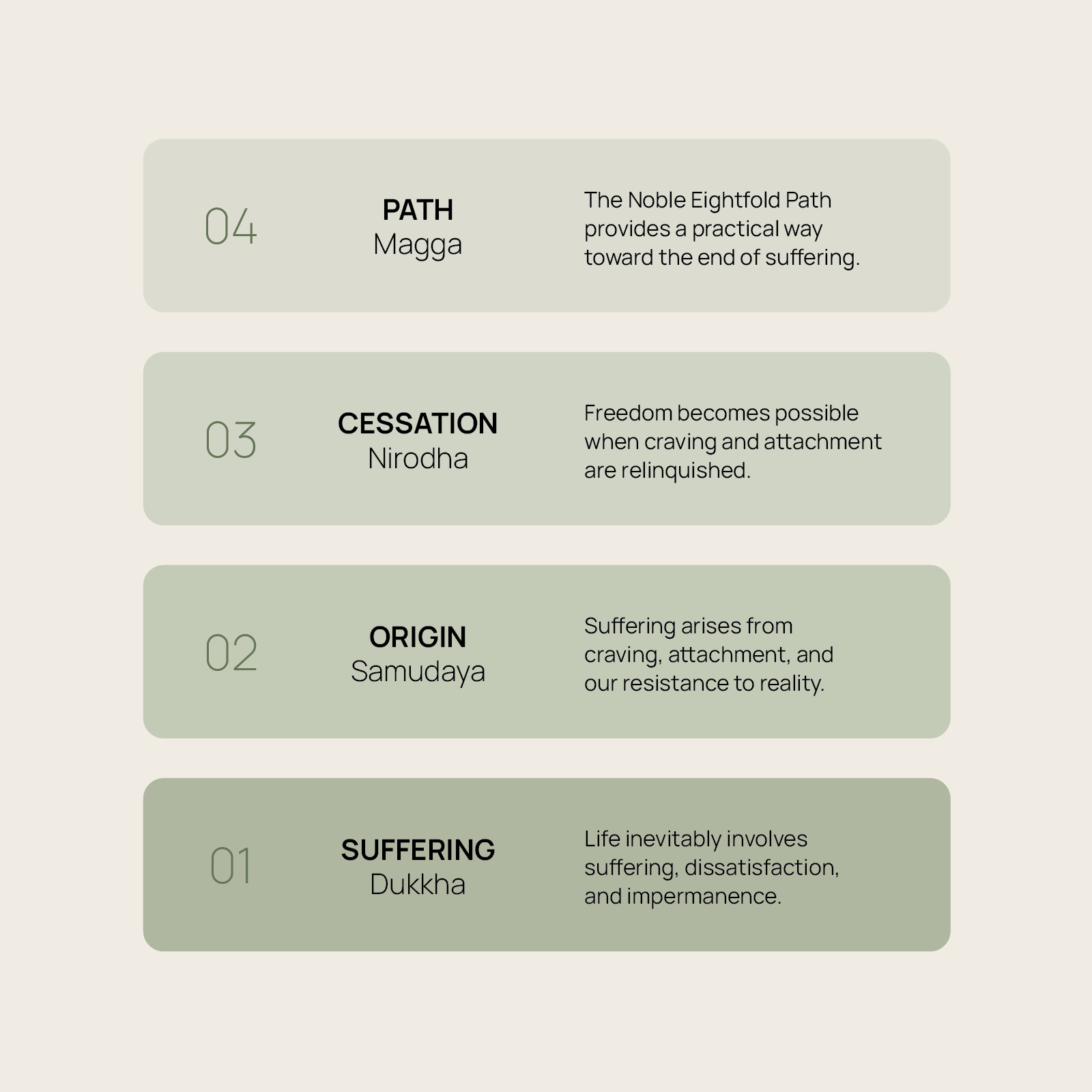
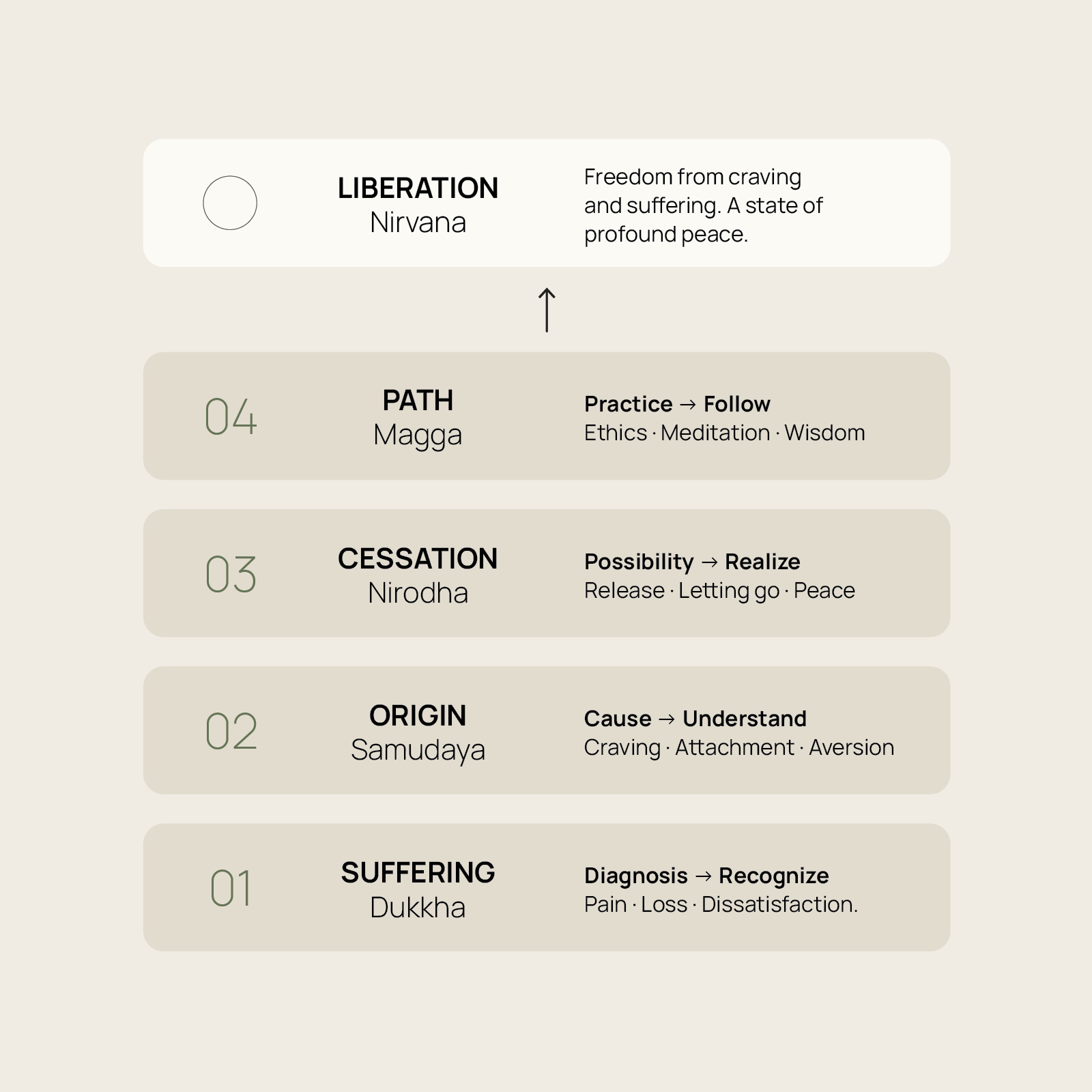
The Four Noble Truths form the foundation of Buddhist teaching on suffering and liberation. First, recognize dukkha: the suffering and dissatisfaction woven into conditioned existence. Second, understand its origin in craving. Third, realize that suffering can cease when its causes are relinquished. Fourth, follow the path of practice leading toward that cessation. Rather than simply declaring that life is suffering, the framework offers a practical progression: recognize the problem, understand its cause, realize that freedom is possible, and follow a path toward it.
MANTRA OF THE DAY
Aristotle’s Golden Mean
Virtue lies in finding the right measure.
Features section
Lorem ipsum dolor sit amet, consectetur adipiscing elit. Suspendisse tincidunt sagittis eros. Quisque quis euismod lorem. Etiam sodales ac felis id interdum.
Features section
Lorem ipsum dolor sit amet, consectetur adipiscing elit. Suspendisse tincidunt sagittis eros. Quisque quis euismod lorem. Etiam sodales ac felis id interdum.
- Where in my life am I currently being pulled toward an extreme?
- What would the right measure look like in this particular situation?
- Where might I be confusing balance with simply choosing the midpoint?
Aristotle. Nicomachean Ethics.
→ Aristotle's foundational account of moral virtue as a mean between excess and deficiency.
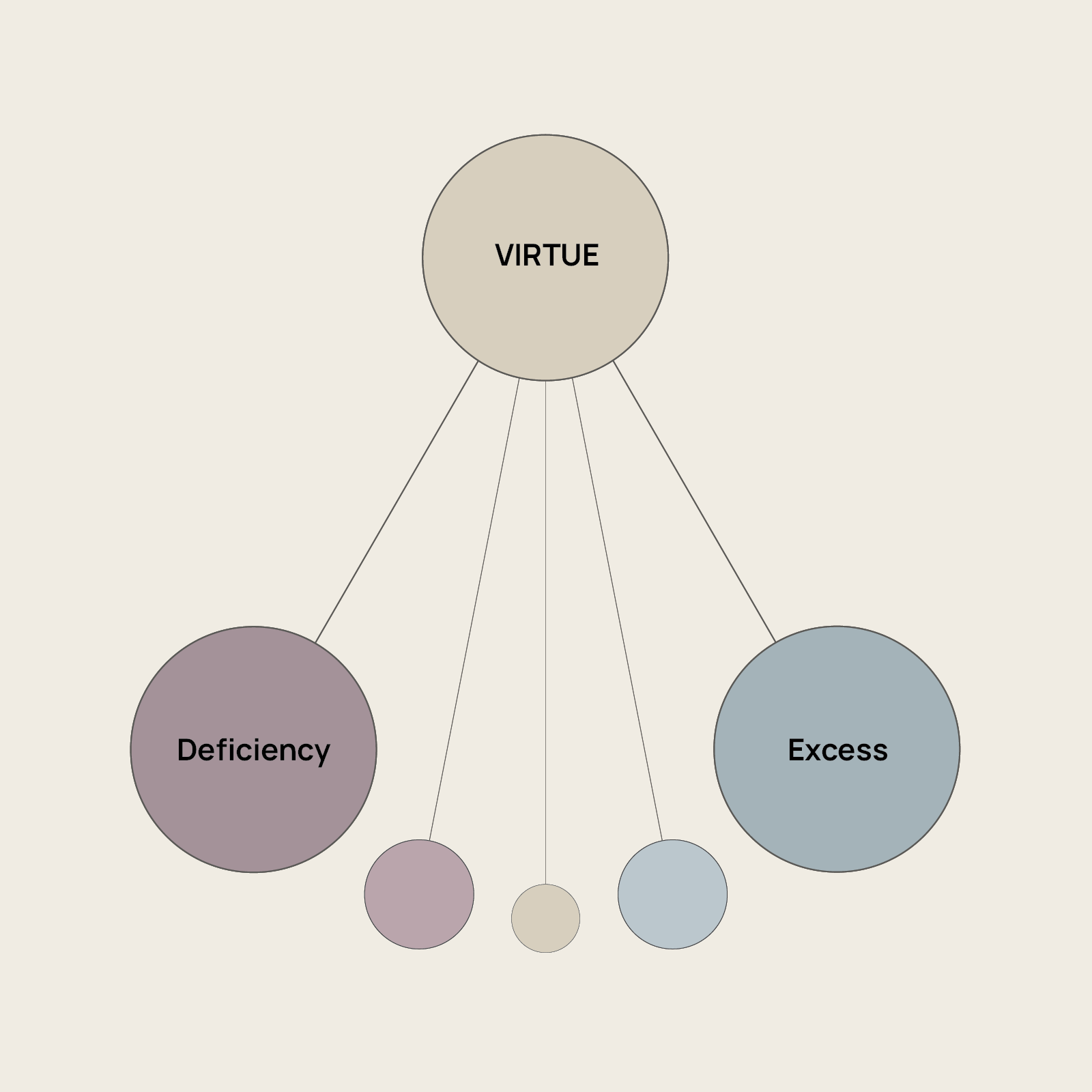
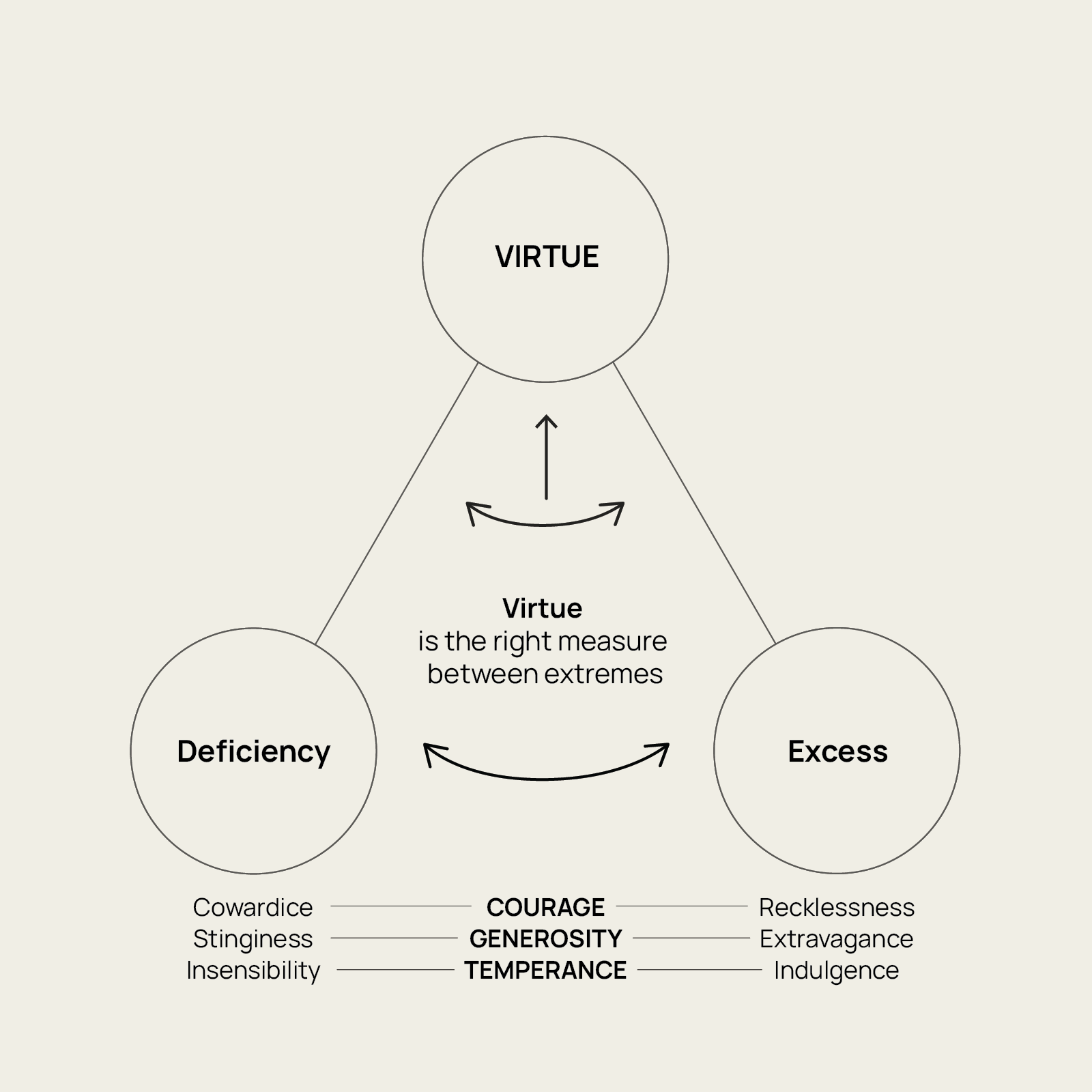
Aristotle argued that virtue often lies between two opposing errors: too little and too much. Courage, for example, stands between cowardice and recklessness; generosity between stinginess and extravagance. But the Golden Mean is not a mathematical midpoint or a call for moderation in everything. The appropriate response depends on the person, situation, timing, and purpose. Wisdom lies in learning to recognize the right measure for the circumstances rather than being pulled toward either extreme.
MANTRA OF THE DAY
The Path of Cultivation
Change the world by beginning with yourself.
Features section
Lorem ipsum dolor sit amet, consectetur adipiscing elit. Suspendisse tincidunt sagittis eros. Quisque quis euismod lorem. Etiam sodales ac felis id interdum.
Features section
Lorem ipsum dolor sit amet, consectetur adipiscing elit. Suspendisse tincidunt sagittis eros. Quisque quis euismod lorem. Etiam sodales ac felis id interdum.
- What qualities in myself have the greatest influence on the people around me?
- Where could changing my own behavior improve one of my closest relationships?
- What change do I hope to see in the wider world that I could begin practicing myself?
The Great Learning (Daxue).
→ The foundational Confucian text connecting self-cultivation with harmony in family, society, and the wider world.
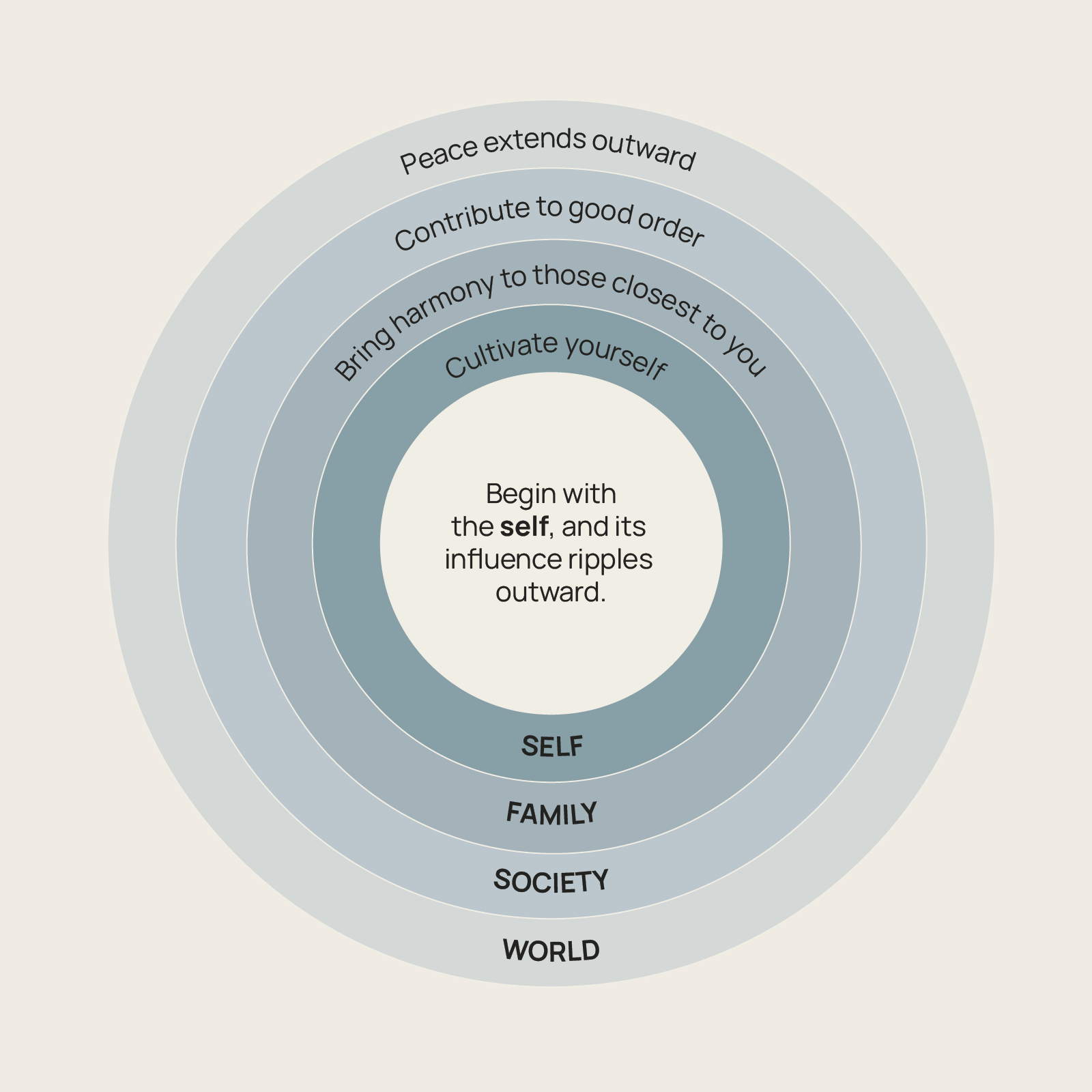
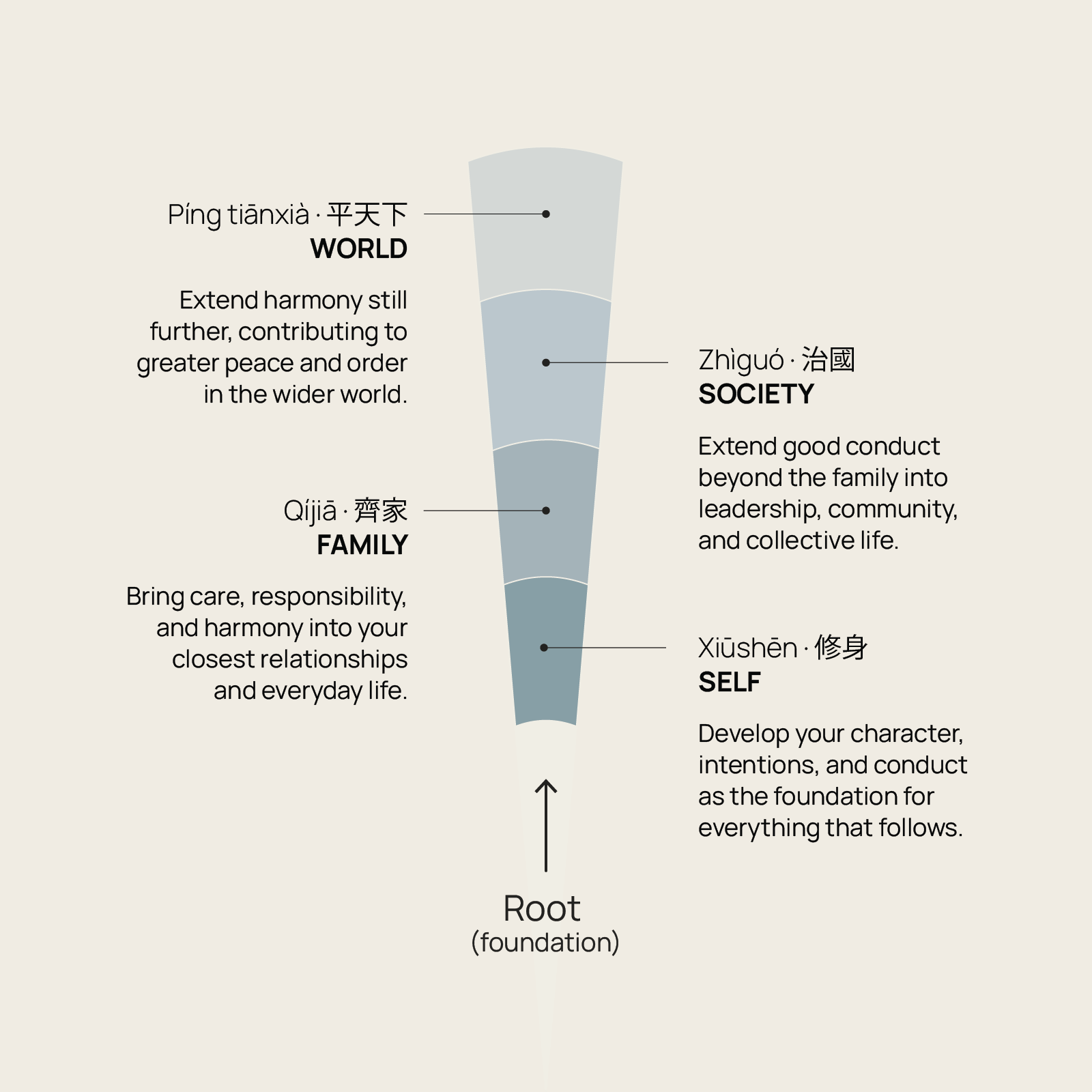
The Confucian path of cultivation begins with the self and extends outward. By developing our character, intentions, and conduct, we influence the quality of our closest relationships, which in turn shapes society and the wider world. Personal and collective wellbeing are therefore inseparable. The model reminds us that meaningful change does not begin with controlling others or reforming distant systems, but with cultivating the qualities we hope to see reflected around us.
MANTRA OF THE DAY
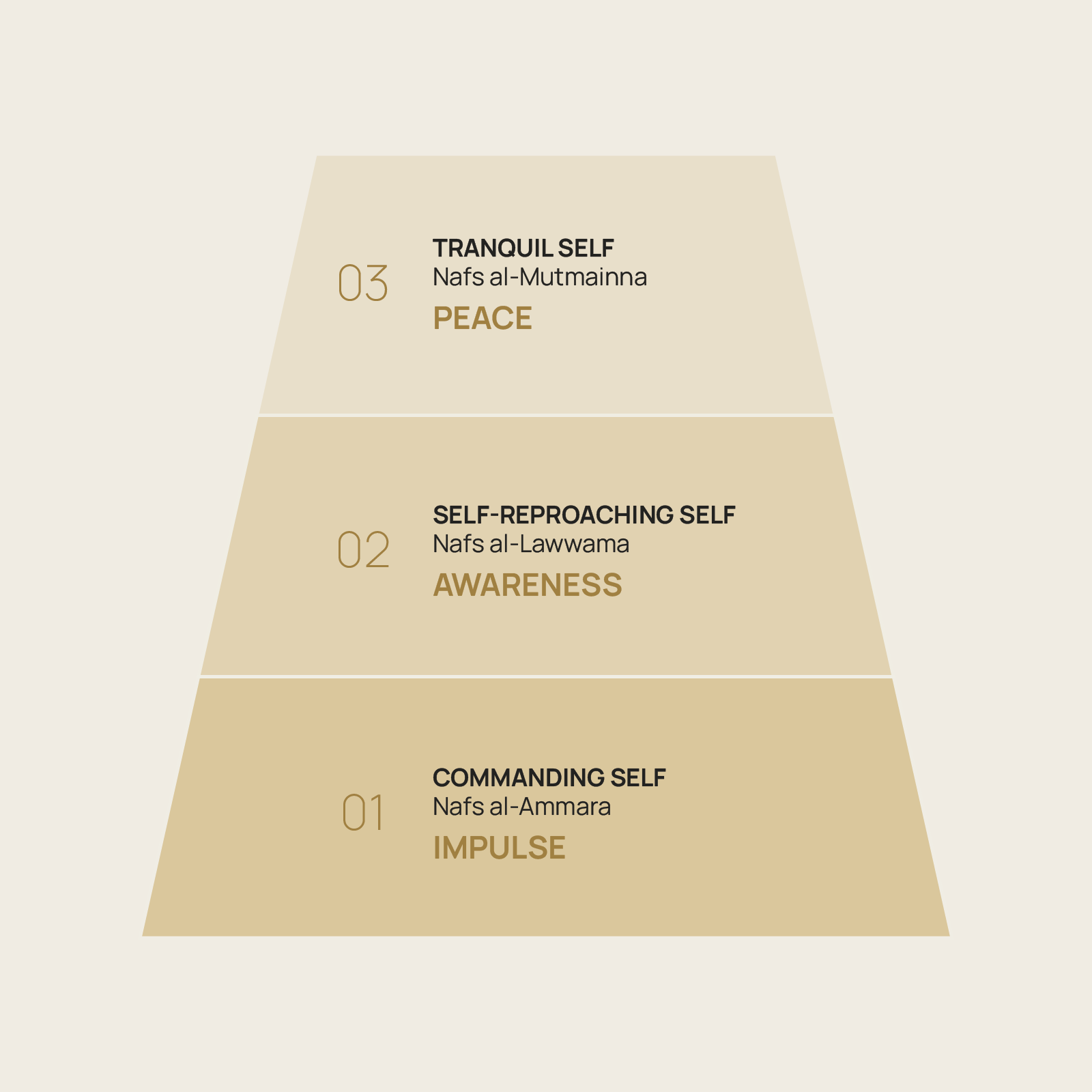
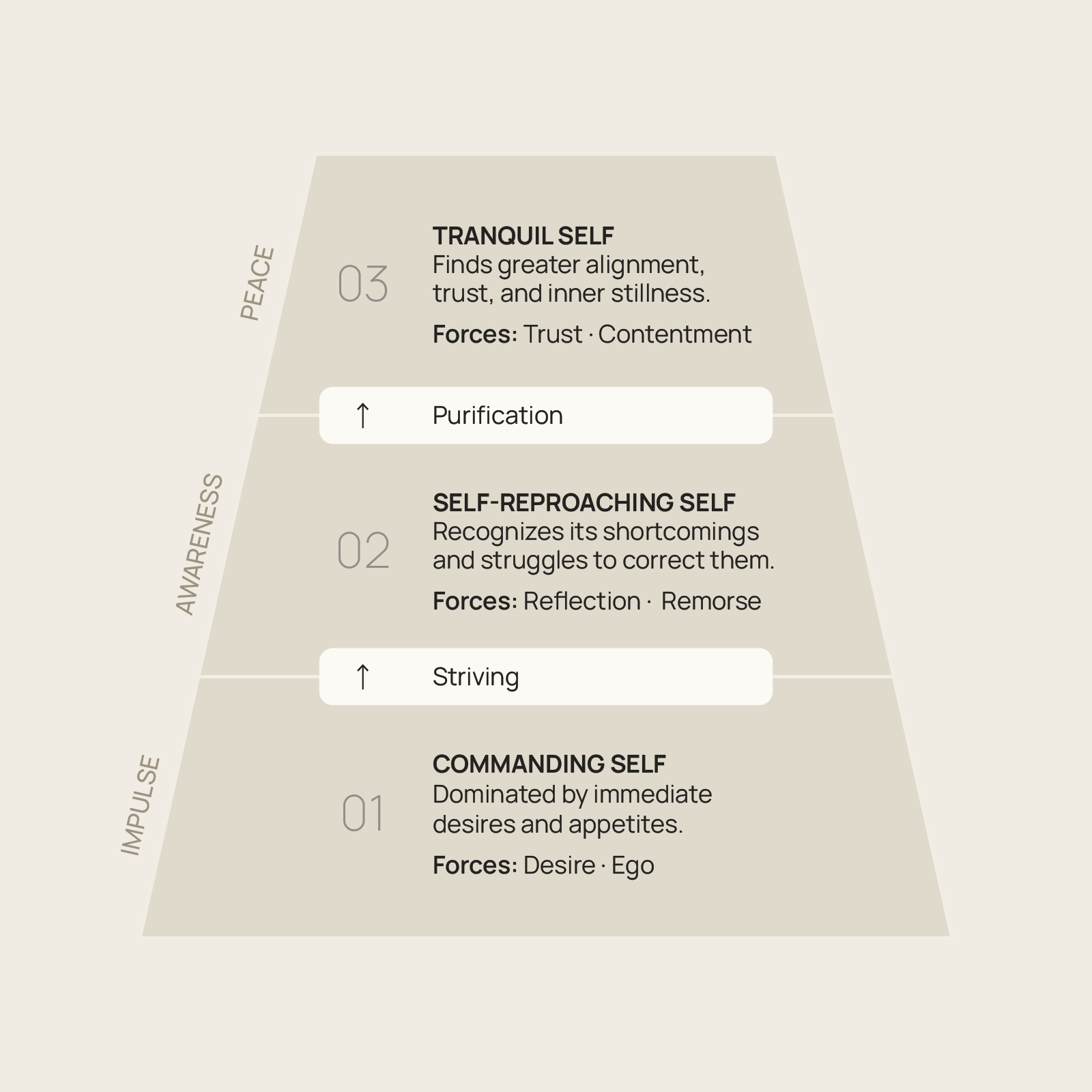
The Three States of the Self
From impulse to awareness, from awareness to peace.
Features section
Lorem ipsum dolor sit amet, consectetur adipiscing elit. Suspendisse tincidunt sagittis eros. Quisque quis euismod lorem. Etiam sodales ac felis id interdum.
Features section
Lorem ipsum dolor sit amet, consectetur adipiscing elit. Suspendisse tincidunt sagittis eros. Quisque quis euismod lorem. Etiam sodales ac felis id interdum.
- Which impulses most often act before I have time to examine them?
- What is my conscience currently asking me to acknowledge or change?
- What practices help move me from inner conflict toward greater peace?
The Qur'an, 12:53; 75:2; 89:27–30.
→ The passages describing the commanding, self-reproaching, and tranquil states of the nafs that underpin later developmental interpretations.
Seyyed Hossein Nasr. “Self-Awareness and Ultimate Selfhood.”
→ Discusses the transformation of the nafs through these states within the Sufi tradition and notes further stages recognized by some Sufis.
Islamic and Sufi traditions describe the self, or nafs, as capable of profound inner transformation. Three prominent states trace a movement from the commanding self, driven by impulse and desire, through the self-reproaching self, awakened to conscience and reflection, toward the tranquil self, characterized by contentment and inner peace. The journey is not simply about suppressing desire, but gradually refining the self through awareness, spiritual striving, and purification.
MANTRA OF THE DAY
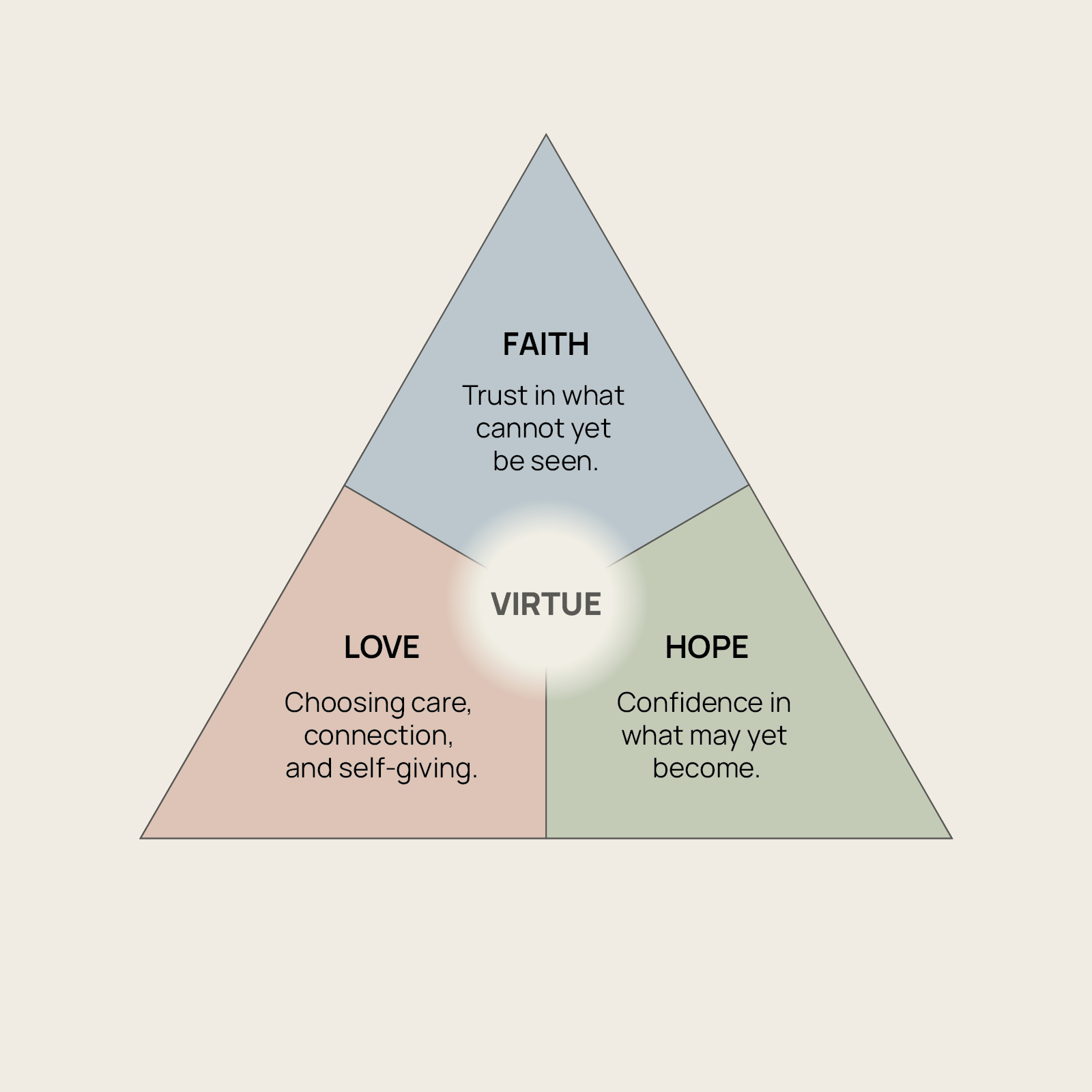
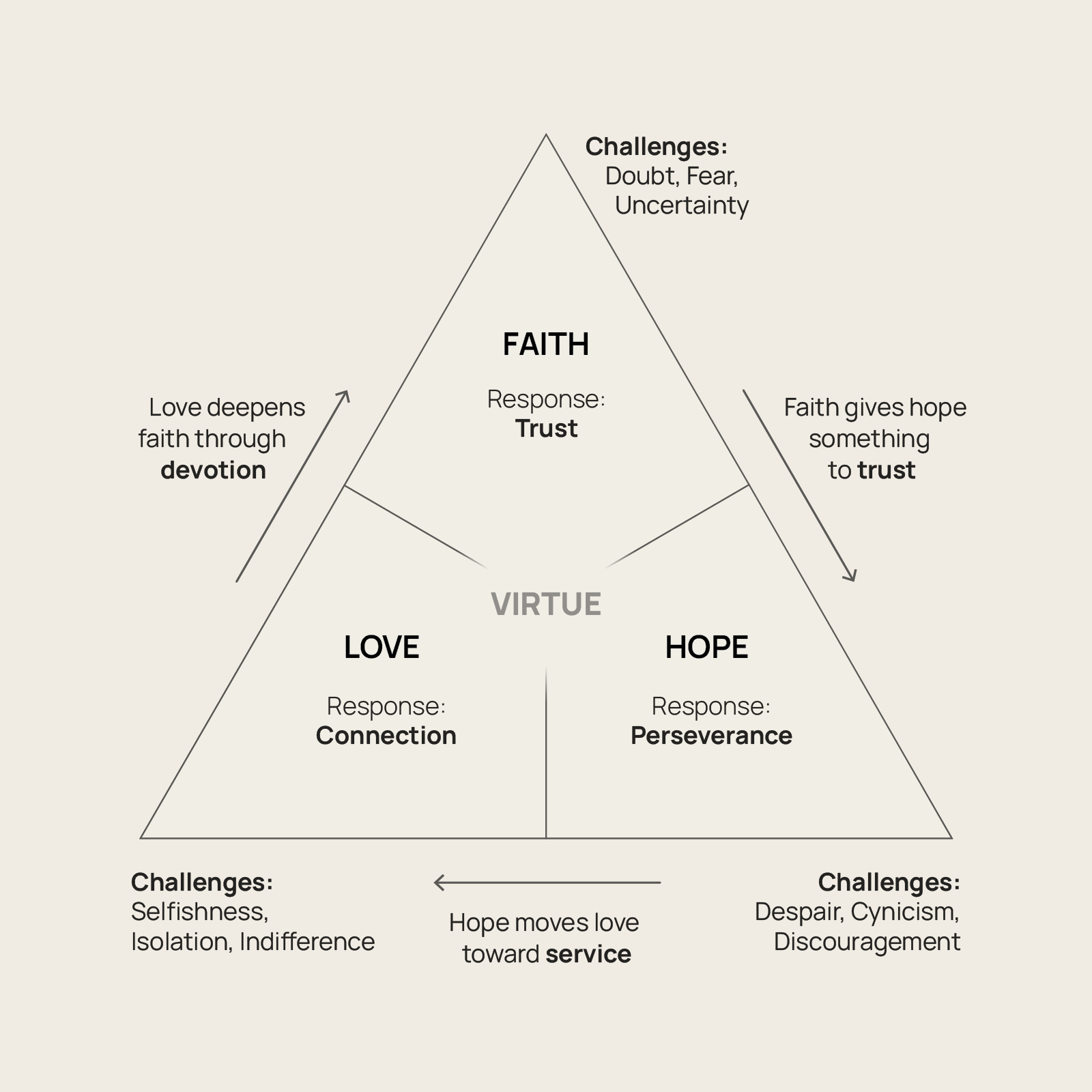
Faith, Hope & Love
Three virtues for living through uncertainty.
Features section
Lorem ipsum dolor sit amet, consectetur adipiscing elit. Suspendisse tincidunt sagittis eros. Quisque quis euismod lorem. Etiam sodales ac felis id interdum.
Features section
Lorem ipsum dolor sit amet, consectetur adipiscing elit. Suspendisse tincidunt sagittis eros. Quisque quis euismod lorem. Etiam sodales ac felis id interdum.
- What do I choose to trust when certainty is impossible?
- Where in my life do I most need hope rather than prediction?
- How could love become an action rather than simply a feeling?
Paul the Apostle. First Letter to the Corinthians, Chapter 13.
→ Brings faith, hope, and love together and gives love a distinctive place as the greatest of the three.
Christian tradition brings together three theological virtues: faith, hope, and love. Faith places trust in God and what cannot yet be fully seen. Hope looks beyond present difficulty toward what may still become possible. Love turns outward through care, generosity, and self-giving. Together they offer a way of living through uncertainty without surrendering to fear, despair, or isolation. Paul binds the three together while giving love a special place: of faith, hope, and love, love is the greatest.
MANTRA OF THE DAY
Stages of Change
Change is a process, not a single decision.
Features section
Lorem ipsum dolor sit amet, consectetur adipiscing elit. Suspendisse tincidunt sagittis eros. Quisque quis euismod lorem. Etiam sodales ac felis id interdum.
Features section
Lorem ipsum dolor sit amet, consectetur adipiscing elit. Suspendisse tincidunt sagittis eros. Quisque quis euismod lorem. Etiam sodales ac felis id interdum.
- What change are you currently contemplating but have not yet acted upon?
- Which stage best describes where you are today?
- What would help you move one stage forward?
James O. Prochaska & Carlo C. DiClemente. “Stages and Processes of Self-Change of Smoking” (1983).
→ The foundational study outlining the stages through which people move when intentionally changing behavior.
James O. Prochaska, Carlo C. DiClemente & John C. Norcross. “In Search of How People Change” (1992).
→ A broader and highly influential account of the Transtheoretical Model and its application across different forms of behavioral change.
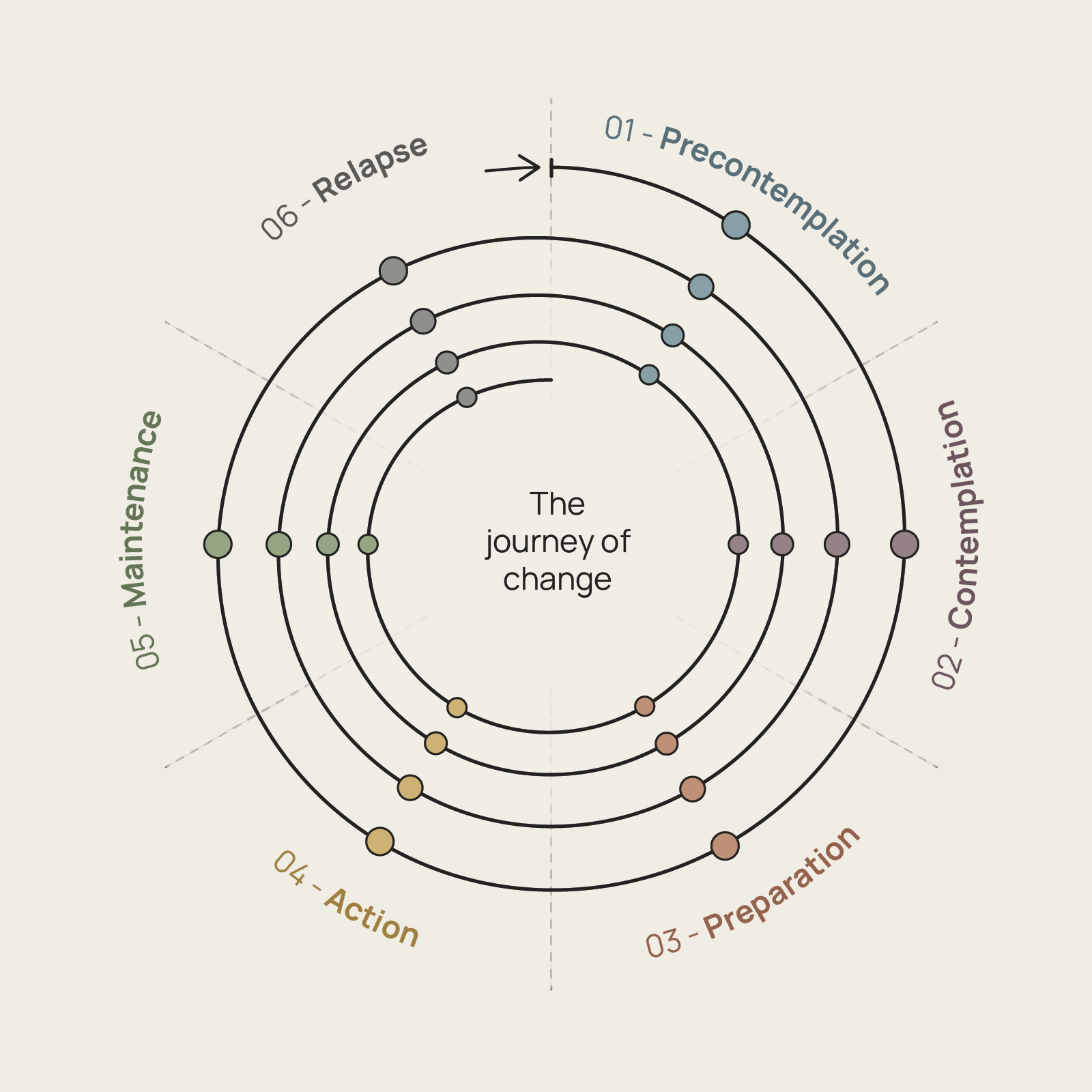
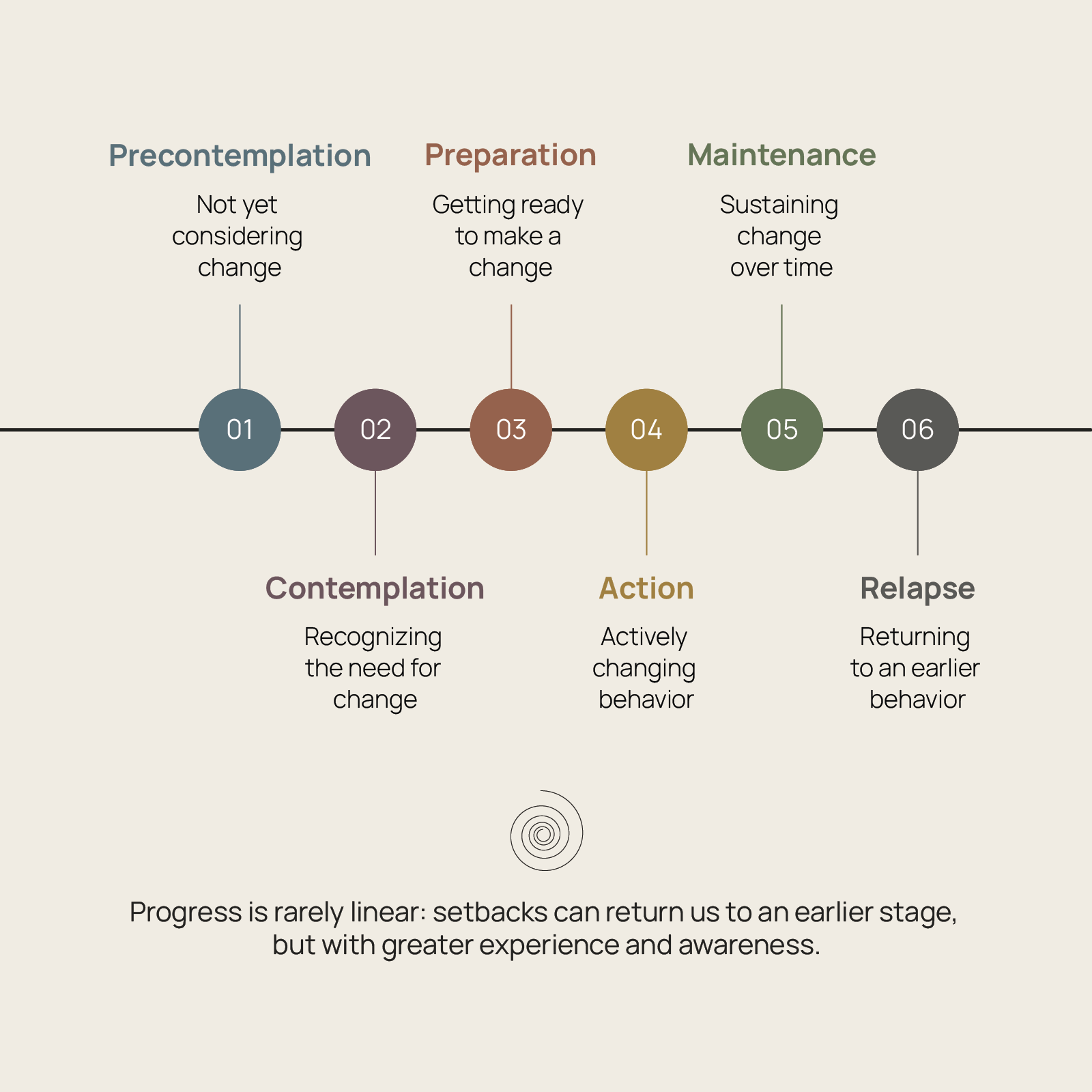
The Stages of Change describe transformation as a gradual and often nonlinear process. We move from not considering change to contemplating it, preparing for it, taking action, and working to sustain new behavior. Setbacks can return us to earlier stages without erasing what has already been learned. Understanding where we are in the cycle helps replace self-judgment with strategies, expectations, and support appropriate to the particular stage of change we are navigating.
MANTRA OF THE DAY
The Learning Matrix
Growth happens where safety meets accountability.
Features section
Lorem ipsum dolor sit amet, consectetur adipiscing elit. Suspendisse tincidunt sagittis eros. Quisque quis euismod lorem. Etiam sodales ac felis id interdum.
Features section
Lorem ipsum dolor sit amet, consectetur adipiscing elit. Suspendisse tincidunt sagittis eros. Quisque quis euismod lorem. Etiam sodales ac felis id interdum.
- Where in your life do you feel safe but insufficiently challenged?
- Where are expectations high but psychological safety low?
- What could you change to create both greater safety and greater accountability?
Amy C. Edmondson. “Psychological Safety and Learning Behavior in Work Teams” (1999).
→ The landmark study establishing psychological safety as a critical condition for learning, experimentation, and speaking up.
Amy C. Edmondson. The Fearless Organization (2018).
→ Extends psychological safety into a practical framework for creating environments where people can learn, challenge assumptions, and take interpersonal risks.
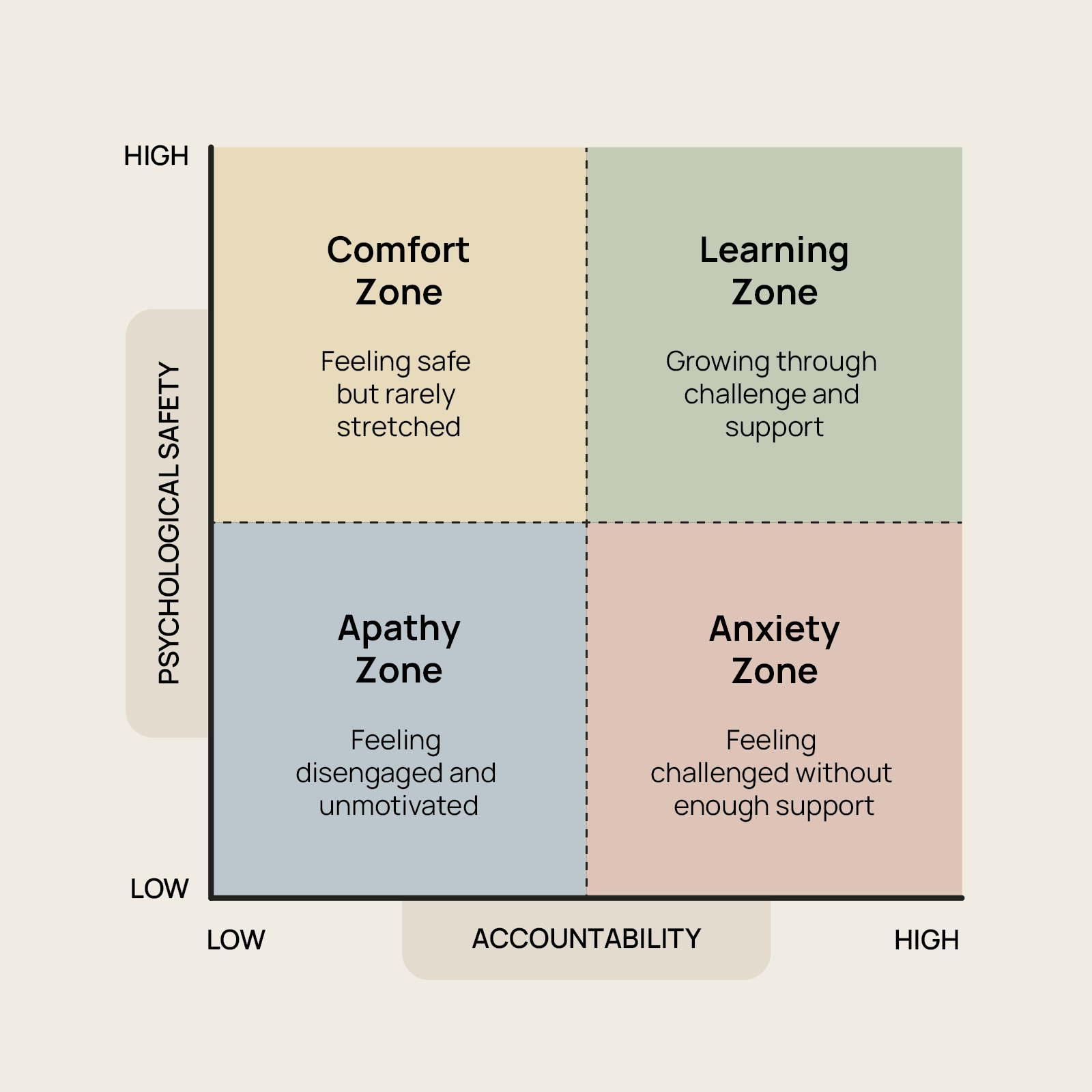
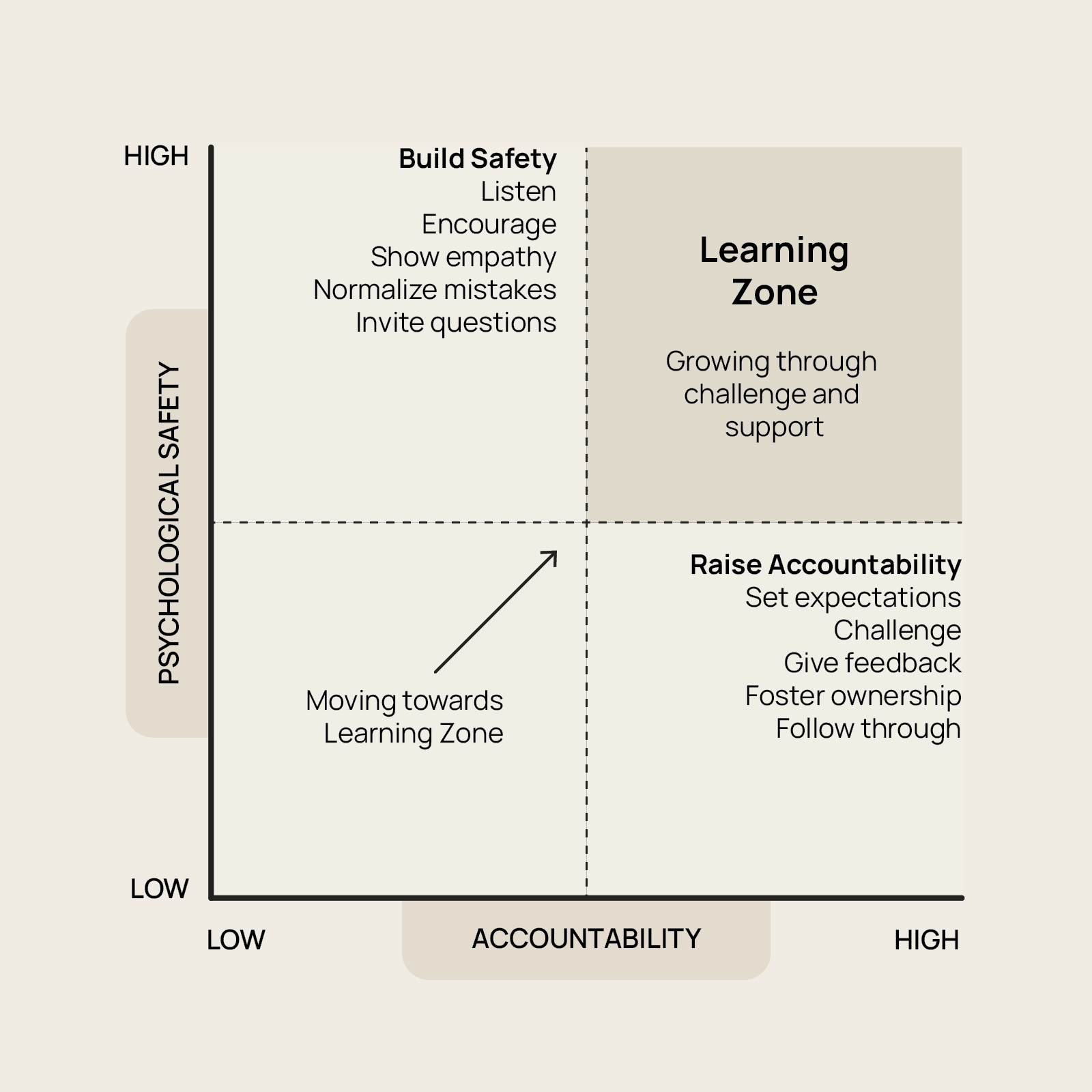
Learning thrives when two conditions coexist: enough psychological safety to question, experiment, disagree, and admit mistakes, and enough accountability to demand effort, responsibility, and improvement. High safety without accountability can create comfort; accountability without safety can create anxiety; lacking both can produce apathy. When both are strong, challenge becomes productive rather than threatening, creating an environment where people can take risks, receive honest feedback, learn from failure, and genuinely grow.
MANTRA OF THE DAY
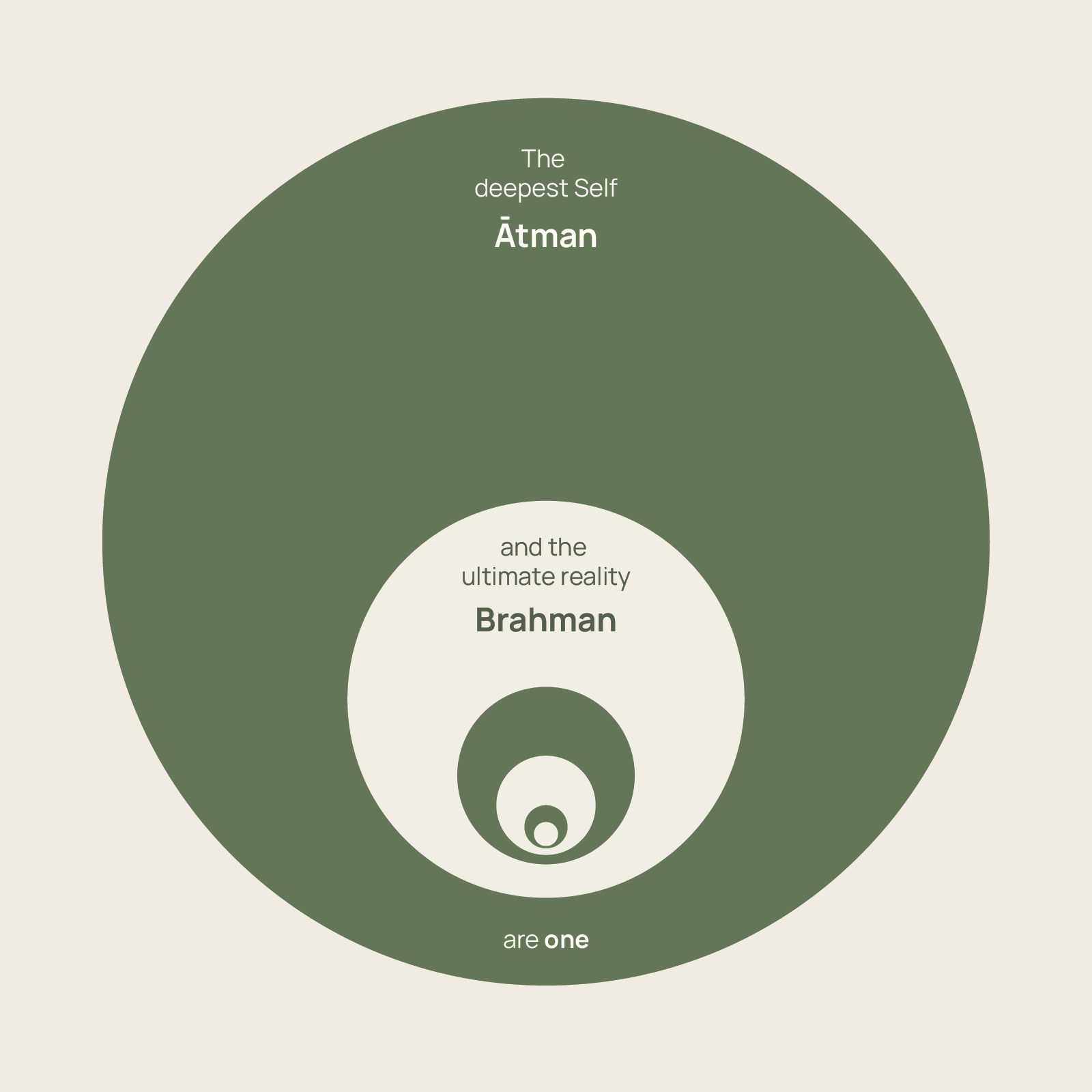
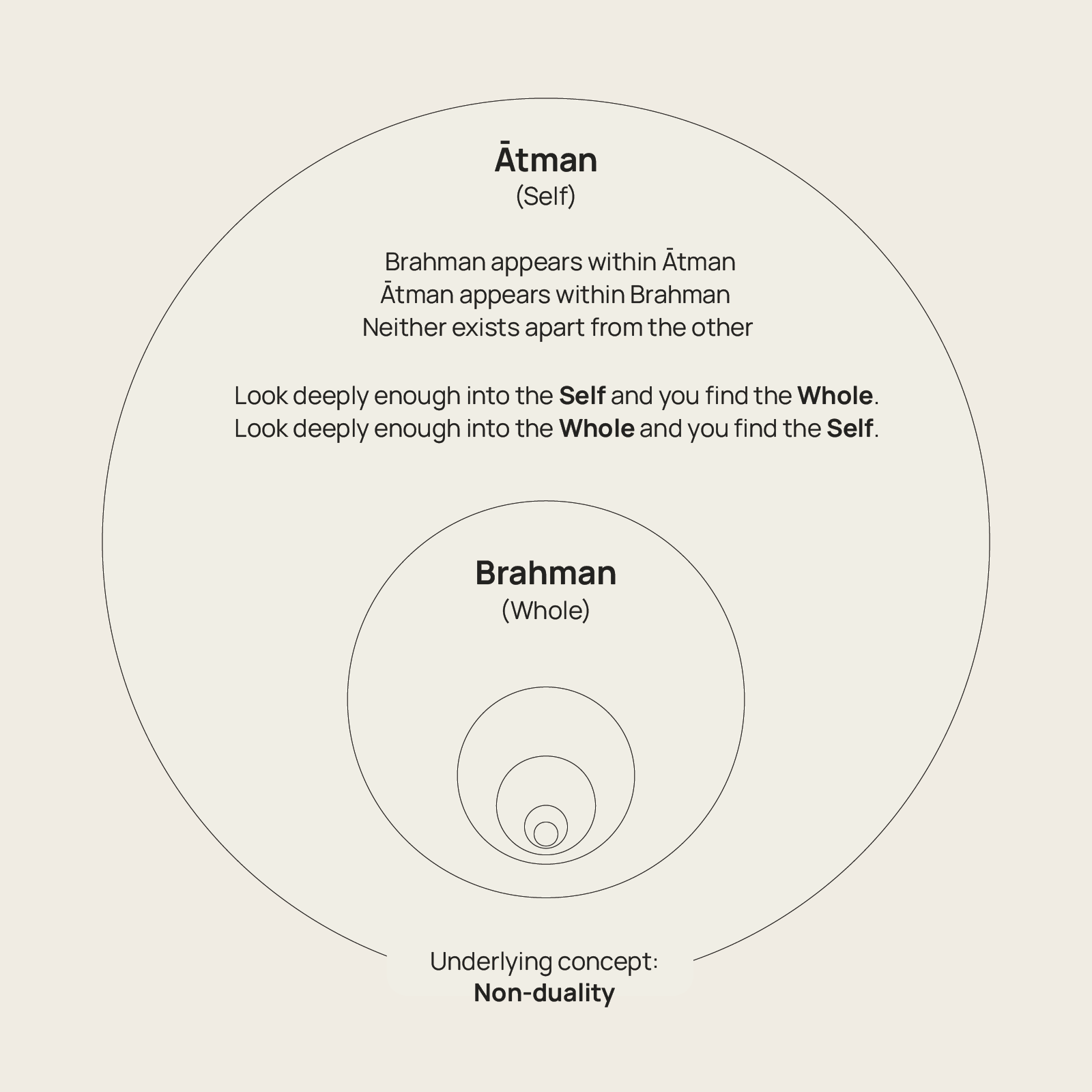
Atman & Brahman Are One
The self within and the reality beyond are ultimately one.
Features section
Lorem ipsum dolor sit amet, consectetur adipiscing elit. Suspendisse tincidunt sagittis eros. Quisque quis euismod lorem. Etiam sodales ac felis id interdum.
Features section
Lorem ipsum dolor sit amet, consectetur adipiscing elit. Suspendisse tincidunt sagittis eros. Quisque quis euismod lorem. Etiam sodales ac felis id interdum.
- What remains when you remove the roles and identities through which you normally define yourself?
- Where do you experience the boundary between yourself and the world most strongly?
- How might your actions change if you experienced yourself as part of a larger whole?
Chāndogya Upaniṣad, 6.8–16.
→ Contains the celebrated teaching Tat Tvam Asi (“That Thou Art”), expressing the fundamental identity of Atman and Brahman.
Bṛhadāraṇyaka Upaniṣad.
→ One of the earliest and most important explorations of Atman, Brahman, and the nature of ultimate reality.
S. Radhakrishnan. The Principal Upanishads.
→ A major modern translation and philosophical commentary on the Upanishadic teachings of self and ultimate reality.
The Upanishadic tradition explores a radical insight at the heart of Advaita Vedanta: Atman, the deepest Self, and Brahman, ultimate reality, are not ultimately separate. Ordinary experience divides existence into self and world, inner and outer, individual and universal. Non-duality invites us to look beneath these apparent boundaries toward a deeper unity, where the distinction between the individual self and the fundamental ground of existence ultimately dissolves.
MANTRA OF THE DAY
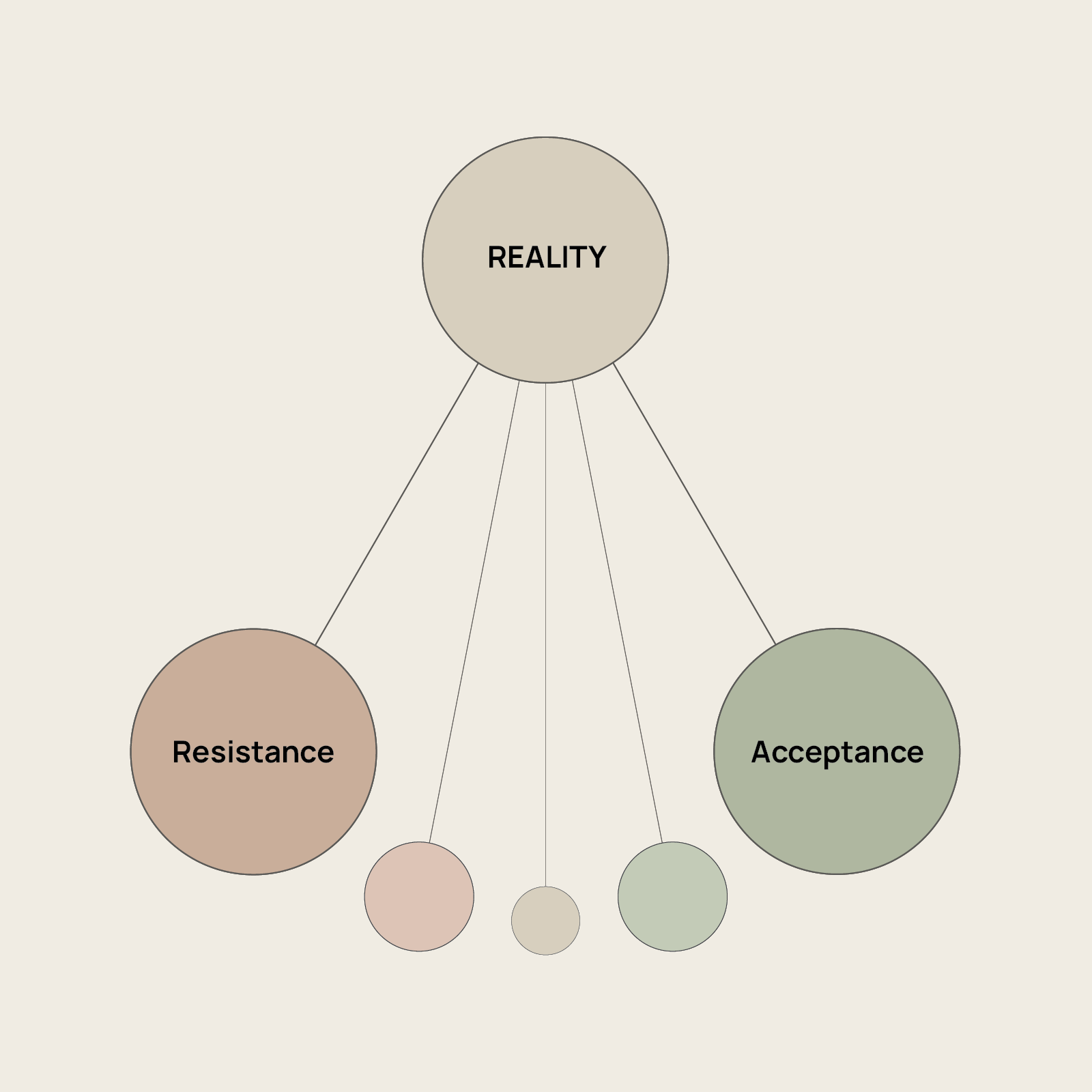
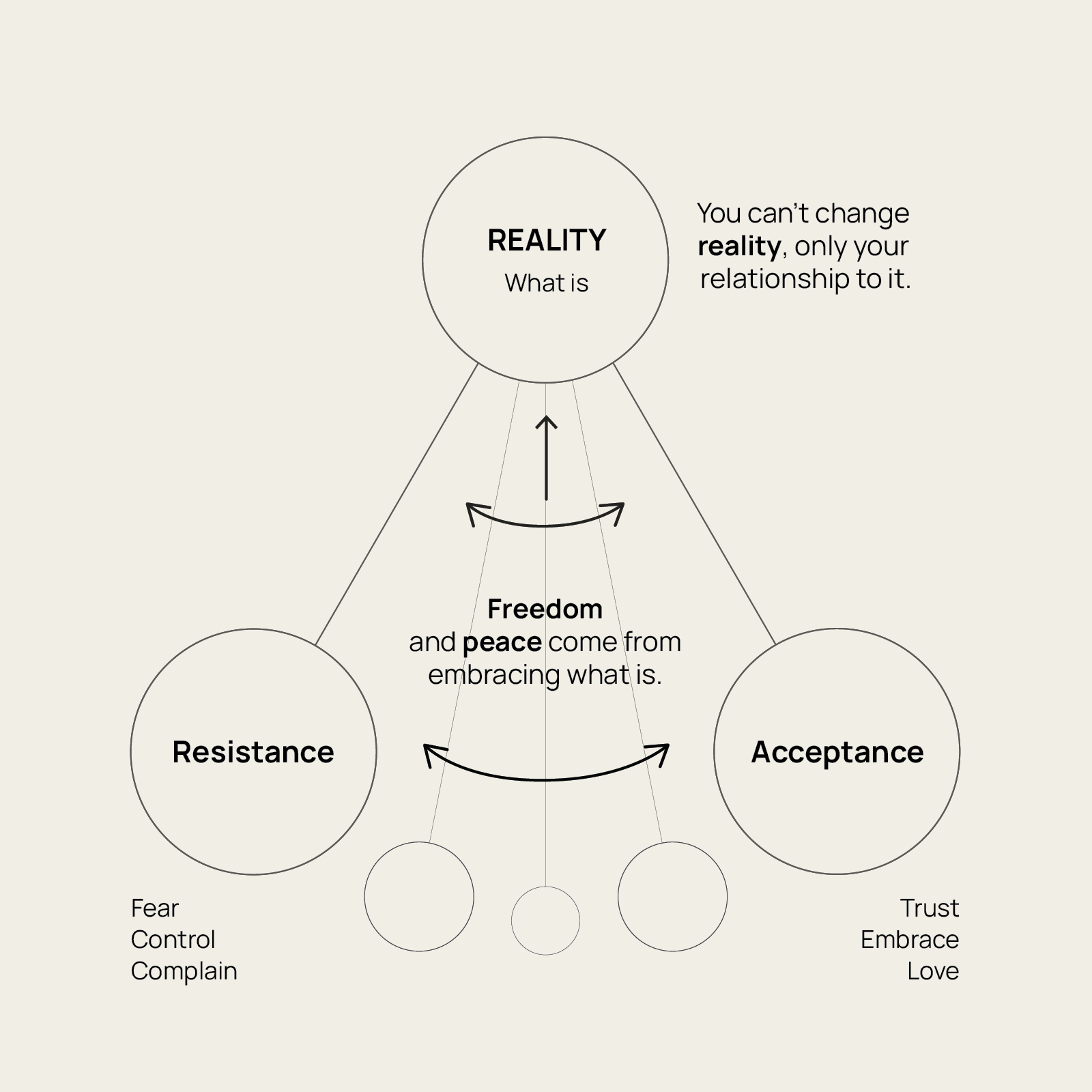
Amor Fati
Do not merely accept your life. Learn to love it.
Features section
Lorem ipsum dolor sit amet, consectetur adipiscing elit. Suspendisse tincidunt sagittis eros. Quisque quis euismod lorem. Etiam sodales ac felis id interdum.
Features section
Lorem ipsum dolor sit amet, consectetur adipiscing elit. Suspendisse tincidunt sagittis eros. Quisque quis euismod lorem. Etiam sodales ac felis id interdum.
- What part of your life do you still wish had happened differently?
- What changes when you stop arguing with what cannot be undone?
- Could you see even your difficulties as belonging to the story of who you have become?
Friedrich Nietzsche. The Gay Science, §276 (1882).
→ Contains Nietzsche’s clearest early formulation of amor fati: learning not merely to accept necessity, but to see it as beautiful.
Pierre Hadot. The Inner Citadel: The Meditations of Marcus Aurelius.
→ Explores the Stoic practice of consenting to what happens, an important philosophical precursor to Nietzsche’s more radical affirmation of fate.
Amor fati, meaning "love of fate," asks for something more radical than simply tolerating what happens. Associated especially with Nietzsche and resonant with Stoic attitudes toward what lies beyond our control, it invites us to stop wishing reality had unfolded differently and affirm life in its entirety. Acceptance ends the struggle against what already is; amor fati goes further, asking whether we can embrace even difficulty as part of the life that is ours.
MANTRA OF THE DAY
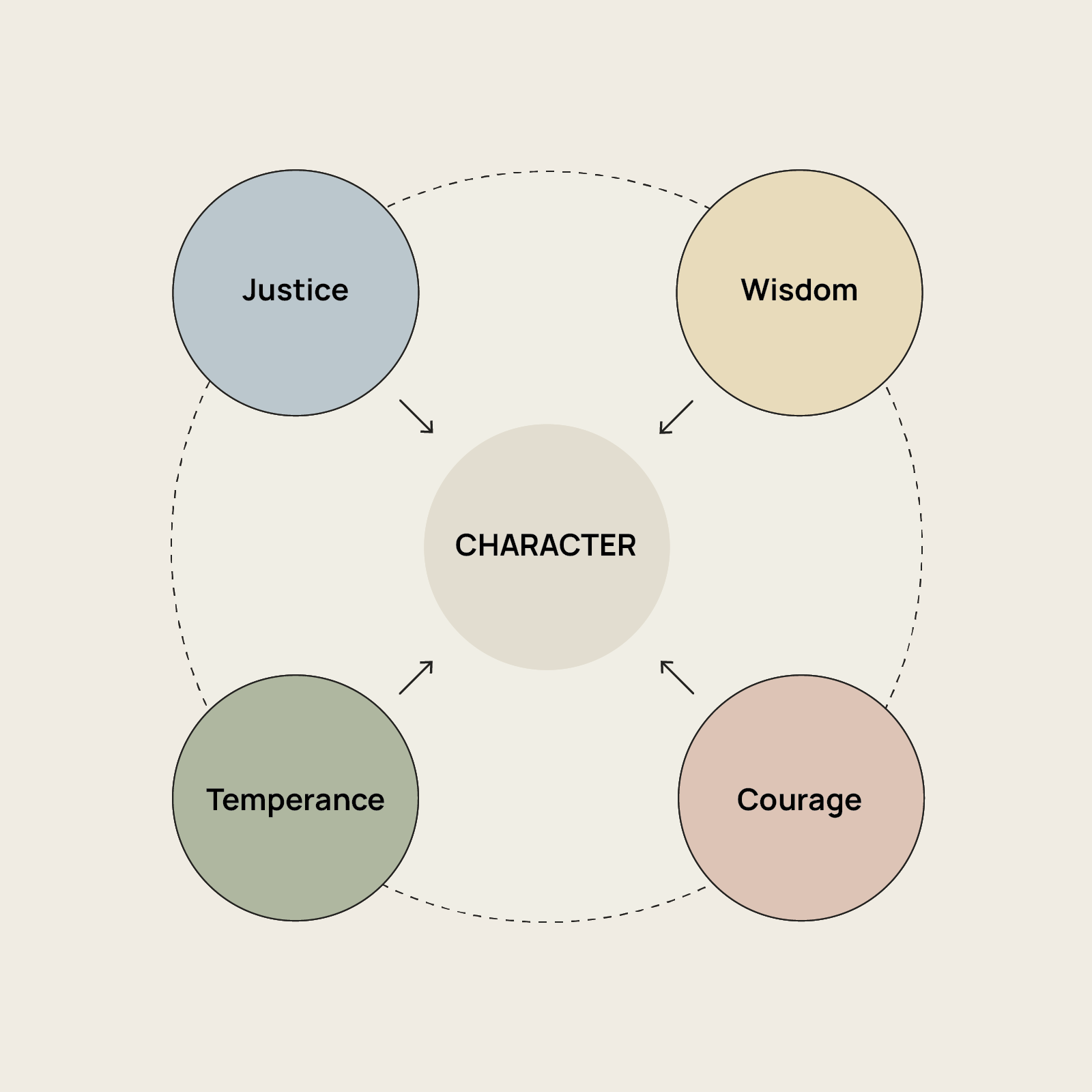
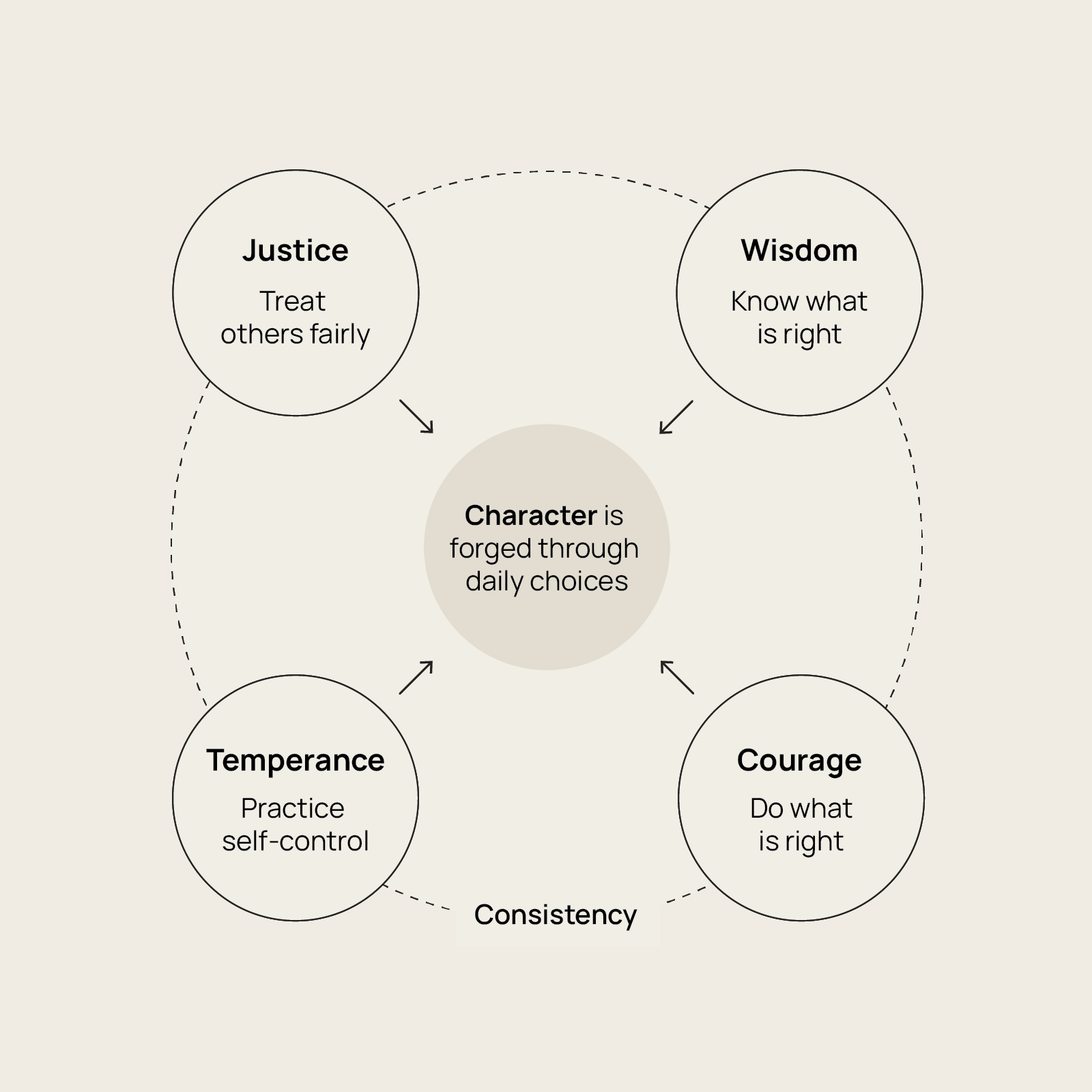
The Four Stoic Virtues
Four virtues to guide a life of character.
Features section
Lorem ipsum dolor sit amet, consectetur adipiscing elit. Suspendisse tincidunt sagittis eros. Quisque quis euismod lorem. Etiam sodales ac felis id interdum.
Features section
Lorem ipsum dolor sit amet, consectetur adipiscing elit. Suspendisse tincidunt sagittis eros. Quisque quis euismod lorem. Etiam sodales ac felis id interdum.
- Which of the four virtues comes most naturally to you?
- Which virtue does your current situation require most?
- Where might one virtue need to be balanced by another?
Marcus Aurelius. Meditations.
→ A practical demonstration of wisdom, courage, justice, and temperance applied to everyday life and leadership.
Epictetus. Discourses and Enchiridion.
→ Explains how virtue, rather than external circumstances, forms the foundation of a flourishing life.
Donald Robertson. How to Think Like a Roman Emperor.
→ A modern interpretation of Stoic philosophy that clearly connects the four virtues to contemporary psychology and daily practice.
For the Stoics, a good life depends less on wealth, status, pleasure, or circumstance than on the quality of our character. They organized virtue around four cardinal qualities: Wisdom, Courage, Justice, and Temperance. Wisdom helps us judge well, courage enables us to act despite fear, justice guides how we treat others, and temperance brings self-command. Practiced consistently, these four virtues provide a compass for making choices and cultivating character throughout everyday life.
MANTRA OF THE DAY
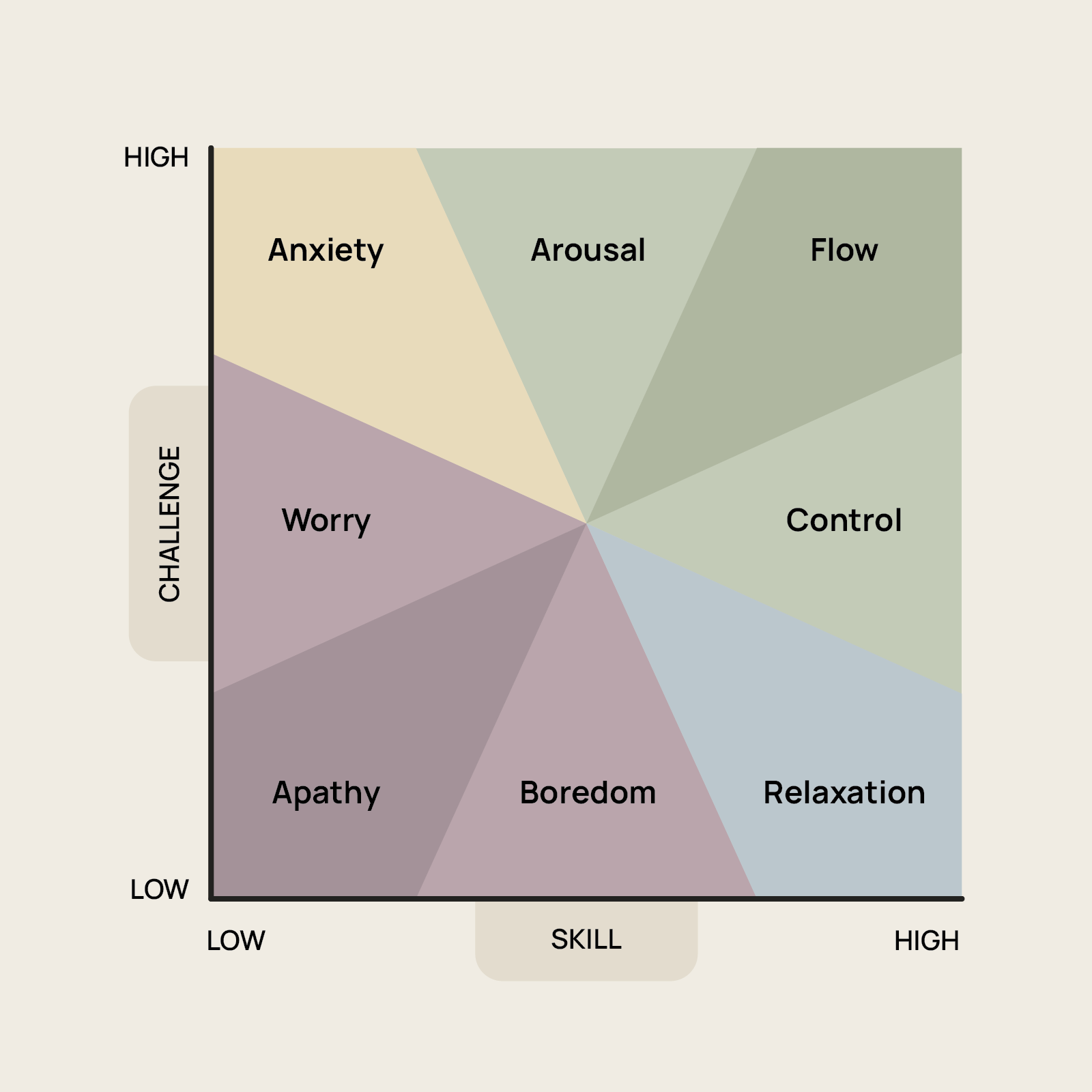
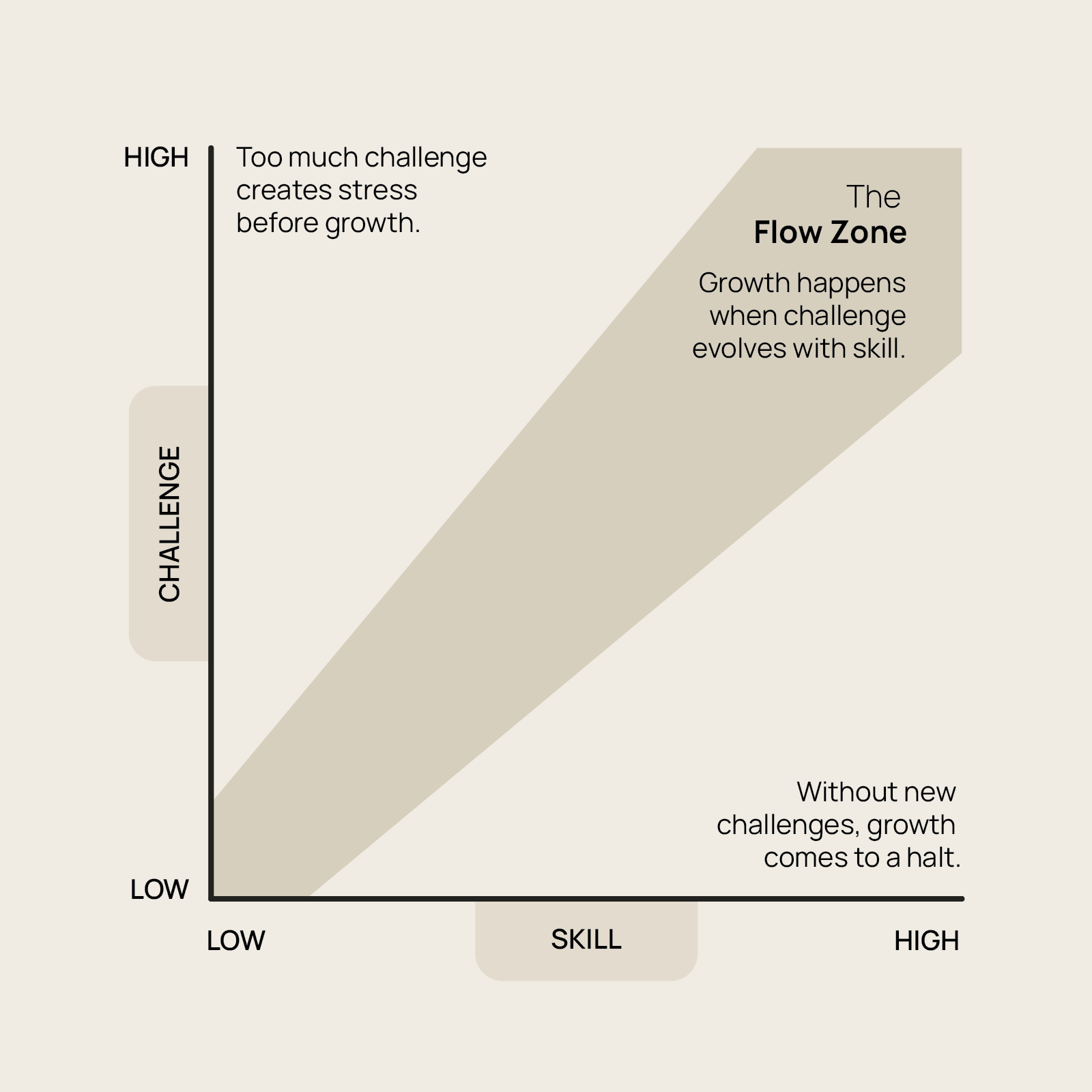
The Flow Zone
We enter flow when challenge and ability meet.
Features section
Lorem ipsum dolor sit amet, consectetur adipiscing elit. Suspendisse tincidunt sagittis eros. Quisque quis euismod lorem. Etiam sodales ac felis id interdum.
Features section
Lorem ipsum dolor sit amet, consectetur adipiscing elit. Suspendisse tincidunt sagittis eros. Quisque quis euismod lorem. Etiam sodales ac felis id interdum.
- When was the last time you became so absorbed in something that you lost track of time?
- Where in your life are your abilities greater than the challenges you face?
- What challenge could stretch your skills without overwhelming them?
Mihaly Csikszentmihalyi. Flow: The Psychology of Optimal Experience.
→ The foundational work introducing flow as a state of deep absorption where challenge and skill are balanced.
Mihaly Csikszentmihalyi. Finding Flow.
→ Explores how flow can be cultivated in everyday life, relationships, work, and personal growth.
Steven Kotler & Jamie Wheal. Stealing Fire.
→ Examines flow as one of the key altered states that enhance performance, creativity, and well-being.
Flow is a state of deep absorption in which attention becomes fully engaged, self-consciousness recedes, and action can seem almost effortless. It is most likely when the challenge before us is demanding enough to require our full attention while our skills are sufficiently developed to meet it. Too much challenge produces anxiety; too little invites boredom. As our abilities grow, maintaining flow requires allowing the level of challenge to grow alongside them.
MANTRA OF THE DAY
The Five Koshas
You are more than your body, thoughts, or emotions.
Features section
Lorem ipsum dolor sit amet, consectetur adipiscing elit. Suspendisse tincidunt sagittis eros. Quisque quis euismod lorem. Etiam sodales ac felis id interdum.
Features section
Lorem ipsum dolor sit amet, consectetur adipiscing elit. Suspendisse tincidunt sagittis eros. Quisque quis euismod lorem. Etiam sodales ac felis id interdum.
- Which layer of yourself receives the most attention today?
- Which layer has been neglected?
- What would it look like to care for all five, rather than only the visible ones?
Swami Satyananda Saraswati. Four Chapters on Freedom.
→ One of the clearest modern explanations of the koshas within the yogic tradition.
Swami Rama. Living with the Himalayan Masters.
→ Offers practical insights into the experiential understanding of the koshas through classical yoga.
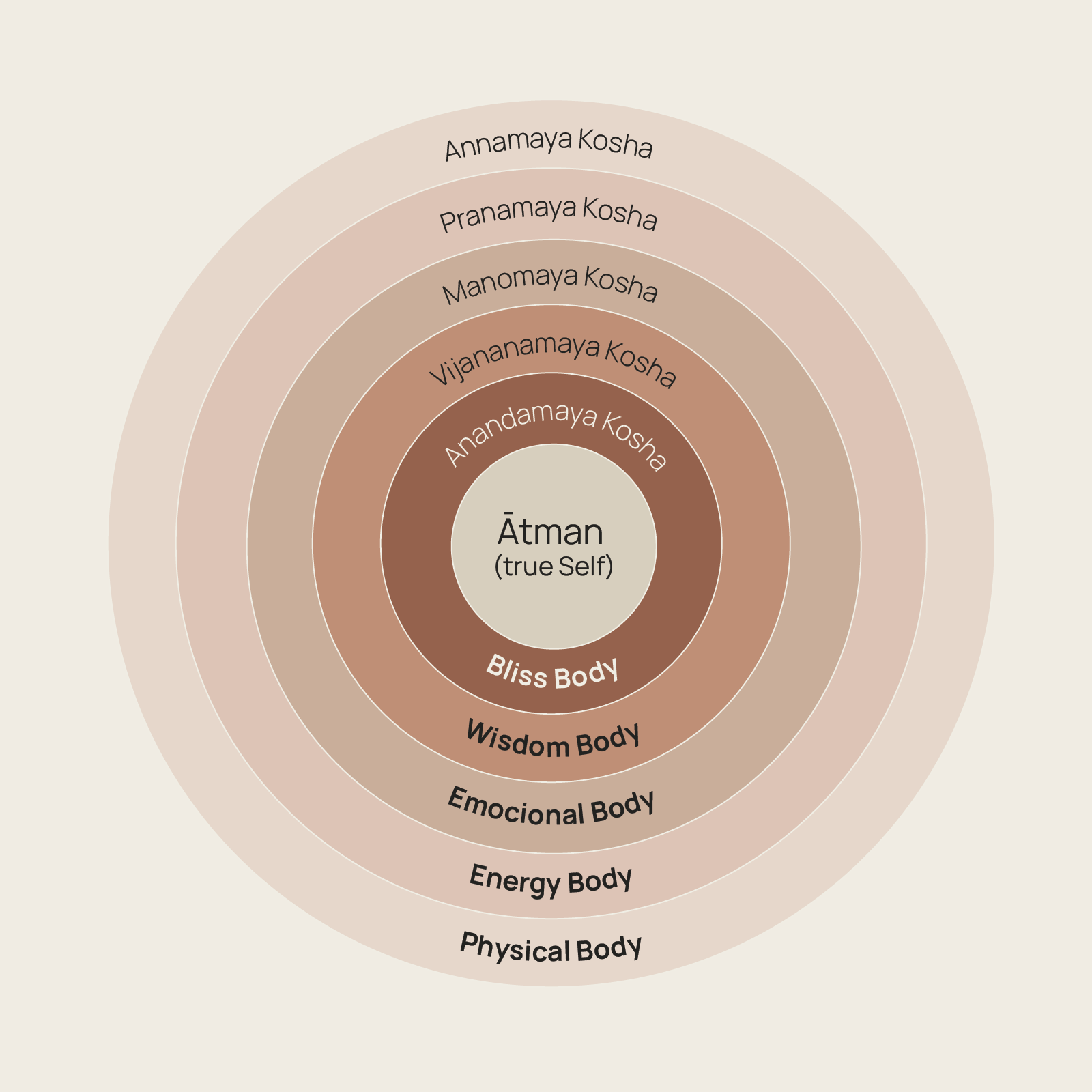
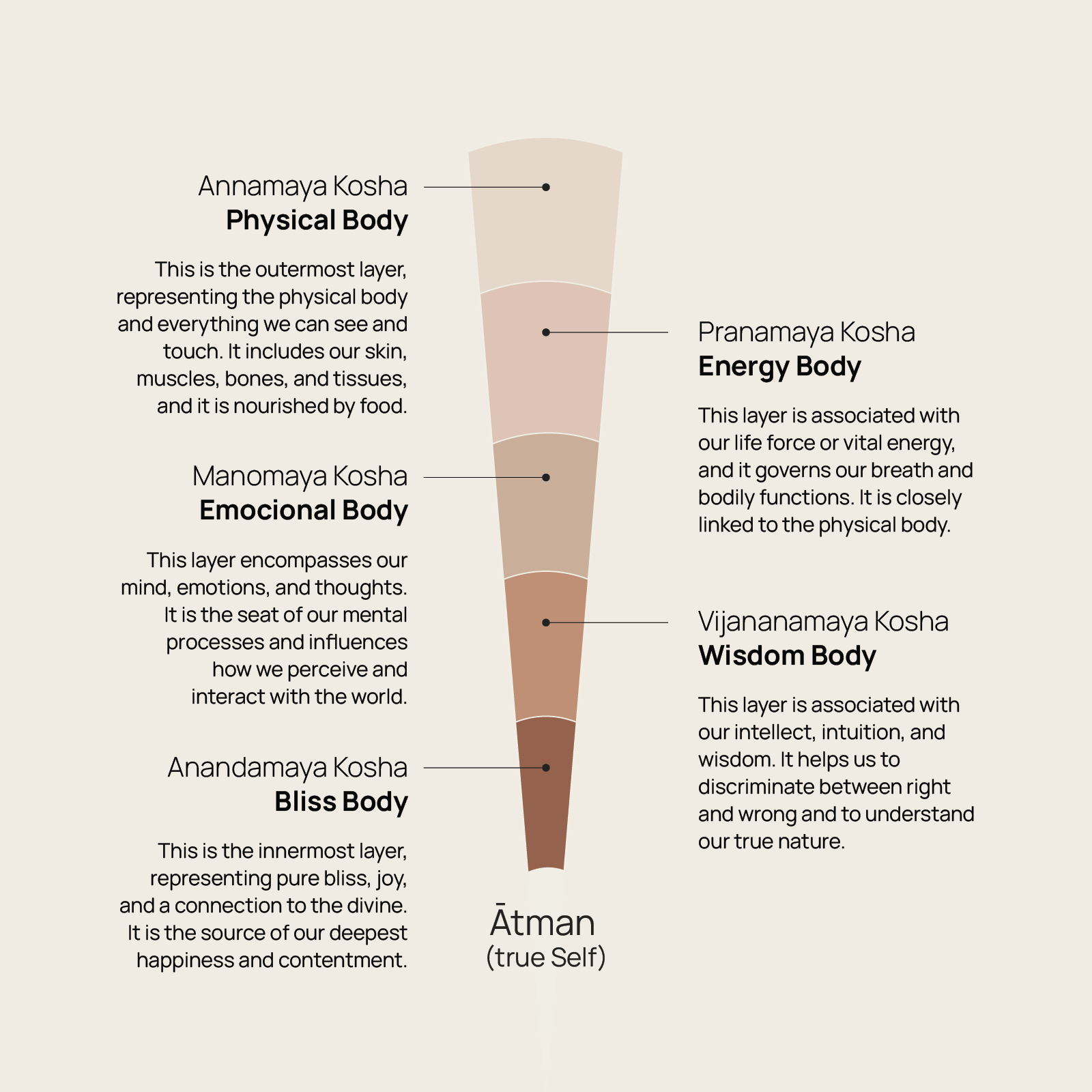
The Five Koshas describe human experience through five interconnected "sheaths": physical body, vital energy, mind and emotion, wisdom, and bliss. Rather than identifying ourselves solely with our bodies or thoughts, this ancient Upanishadic model invites attention to progressively subtler dimensions of being. Caring for these layers supports a more integrated life, while the teaching ultimately points beyond all five toward Atman, the deepest Self that cannot be reduced to any single layer.
MANTRA OF THE DAY
The Adler Triangle
The quality of our lives depends on the quality of our relationships.
Features section
Lorem ipsum dolor sit amet, consectetur adipiscing elit. Suspendisse tincidunt sagittis eros. Quisque quis euismod lorem. Etiam sodales ac felis id interdum.
Features section
Lorem ipsum dolor sit amet, consectetur adipiscing elit. Suspendisse tincidunt sagittis eros. Quisque quis euismod lorem. Etiam sodales ac felis id interdum.
- Which of the three relationships feels strongest in my life today?
- Where am I seeking belonging, recognition, or approval in unhealthy ways?
- What small action could strengthen one side of my triangle this week?
Alfred Adler. The Practice and Theory of Individual Psychology.
→ Introduces the core principles of Individual Psychology, emphasizing social interest, belonging, and the relational nature of psychological wellbeing.
Alfred Adler. What Life Could Mean to You.
→ Adler's accessible exploration of purpose, courage, and the importance of healthy relationships in living a meaningful life
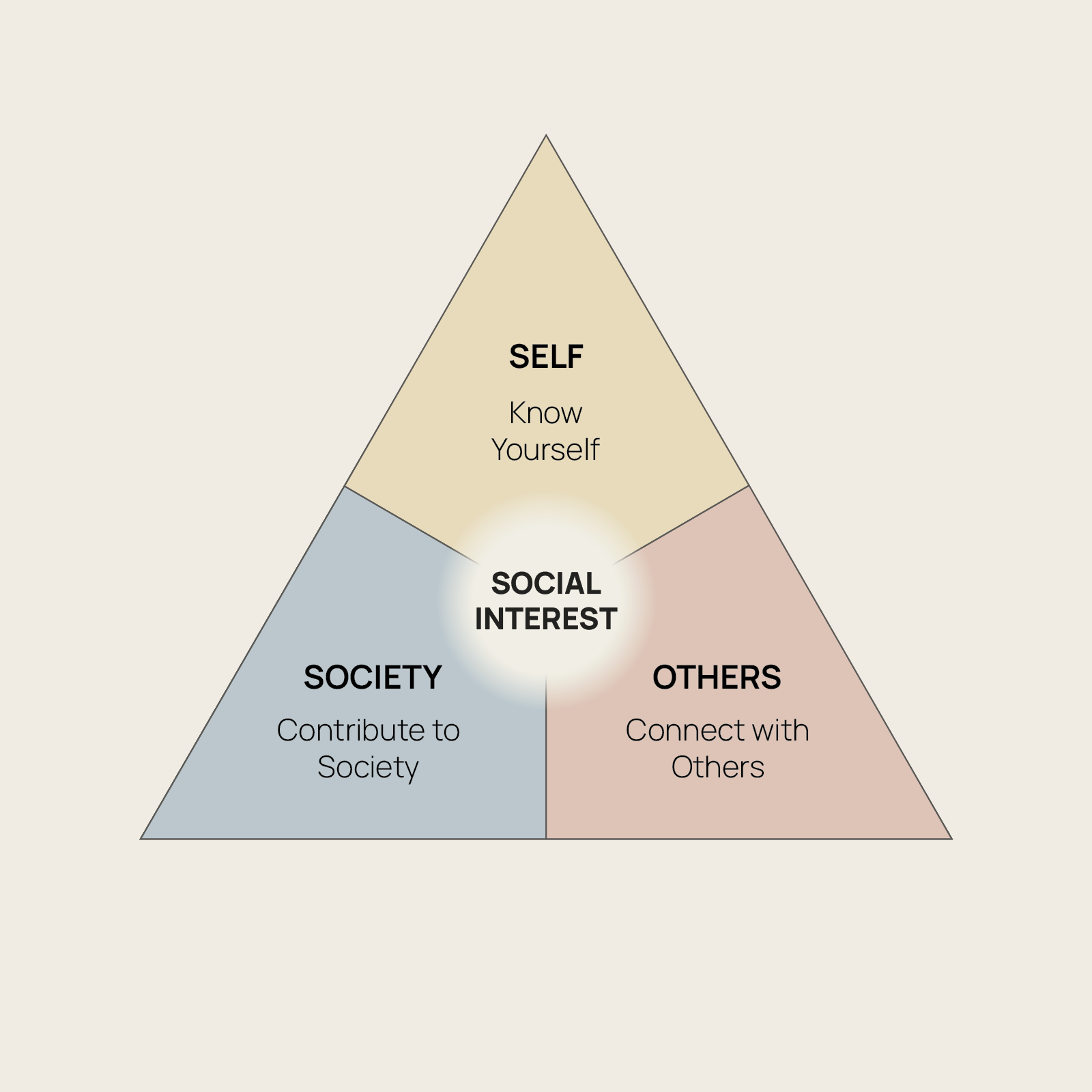
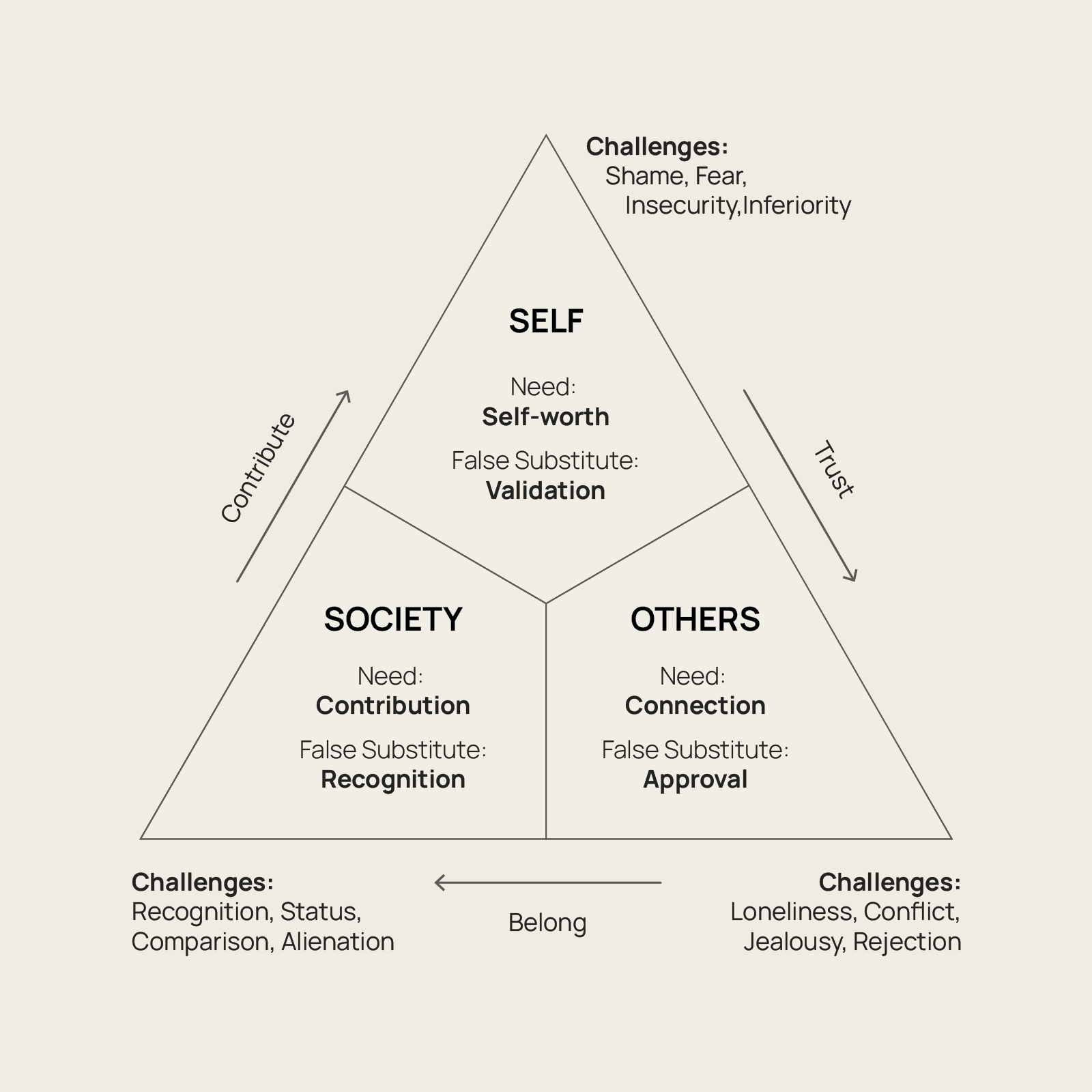
Inspired by Adlerian psychology, the Adler Triangle views psychological wellbeing through three interconnected relationships: with ourselves, with other people, and with the wider community. Difficulties involving shame, loneliness, jealousy, recognition, status, love, or conflict can often be understood through tensions within these relationships. Because each side influences the others, growth in one can strengthen the whole. At the center lies courage: the willingness to participate in life despite imperfection, vulnerability, and uncertainty.
MANTRA OF THE DAY
Integrity of Character
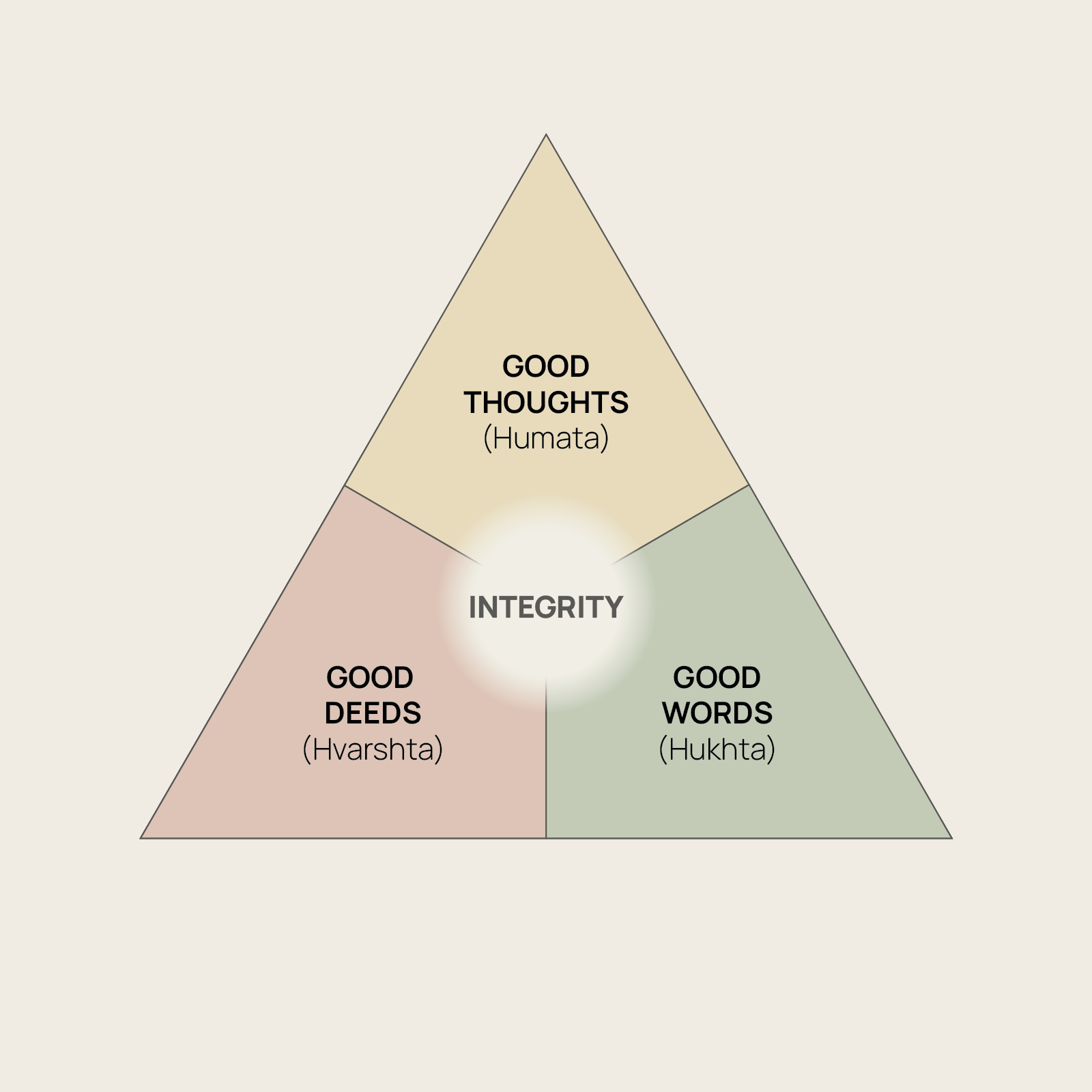
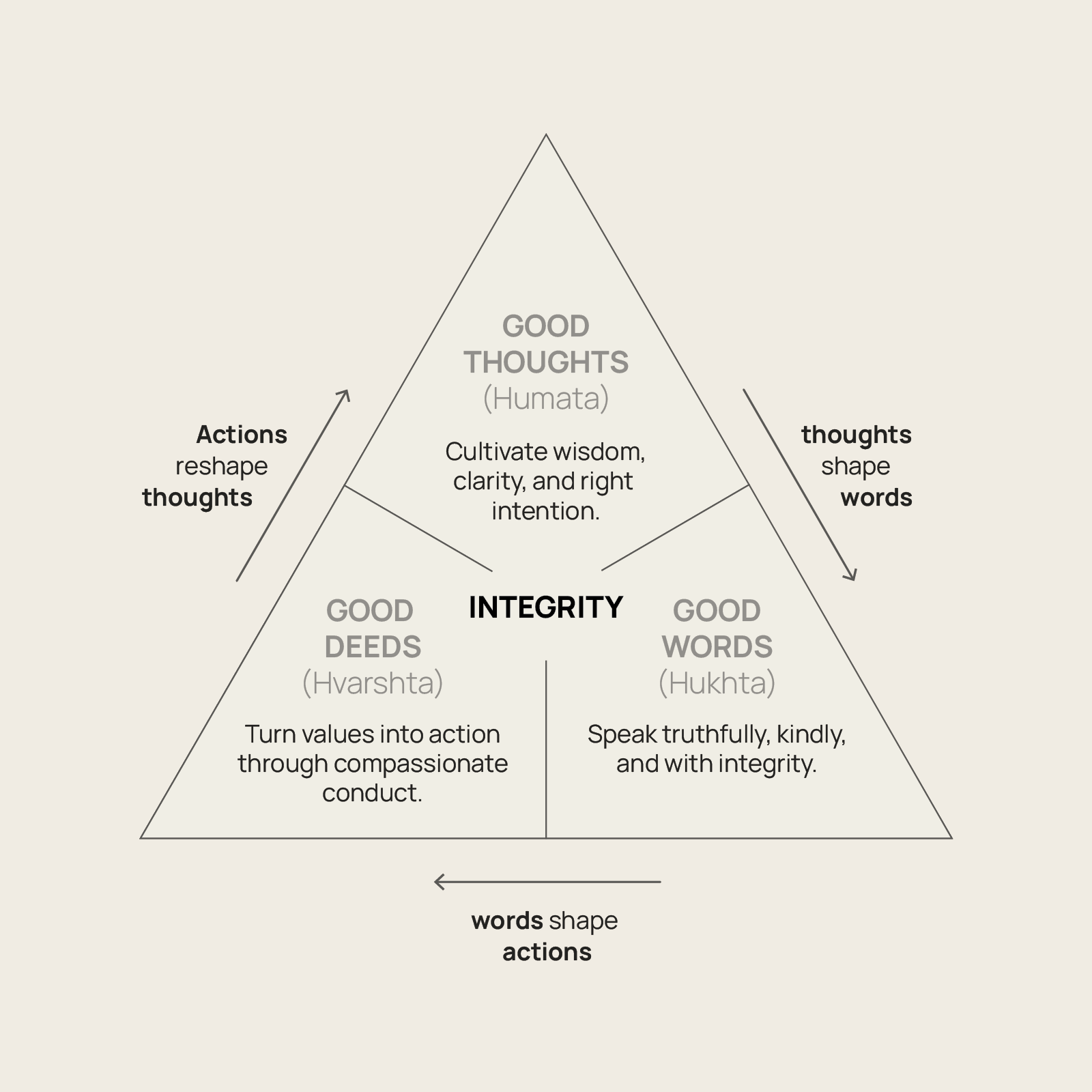
Align what you think, what you say, and what you do.
Features section
Lorem ipsum dolor sit amet, consectetur adipiscing elit. Suspendisse tincidunt sagittis eros. Quisque quis euismod lorem. Etiam sodales ac felis id interdum.
Features section
Lorem ipsum dolor sit amet, consectetur adipiscing elit. Suspendisse tincidunt sagittis eros. Quisque quis euismod lorem. Etiam sodales ac felis id interdum.
- Where are your thoughts, words, and actions currently most aligned?
- Where is there a gap between what you say matters and how you actually live?
- What single action could bring these three closer together?
The Avesta.
→ The foundational collection of Zoroastrian sacred texts and the primary source for its religious and ethical worldview.
The Gathas of Zarathustra.
→ The oldest part of the Avesta, traditionally attributed to Zarathustra, emphasizing right thought, ethical choice, and alignment with Asha.
Mary Boyce. Zoroastrians: Their Religious Beliefs and Practices.
→ A widely respected scholarly introduction to Zoroastrian history, beliefs, and ethical principles.
Zoroastrian ethics expresses an enduring ideal through three deceptively simple commitments: Good Thoughts, Good Words, Good Deeds. Integrity emerges when what we think, what we say, and what we do reinforce rather than contradict one another. Character is therefore more than intention or reputation; it is alignment. The smaller the distance between our inner values, our spoken commitments, and our outward actions, the more coherent, credible, and trustworthy our lives become.
MANTRA OF THE DAY
The Hierarchy of Needs
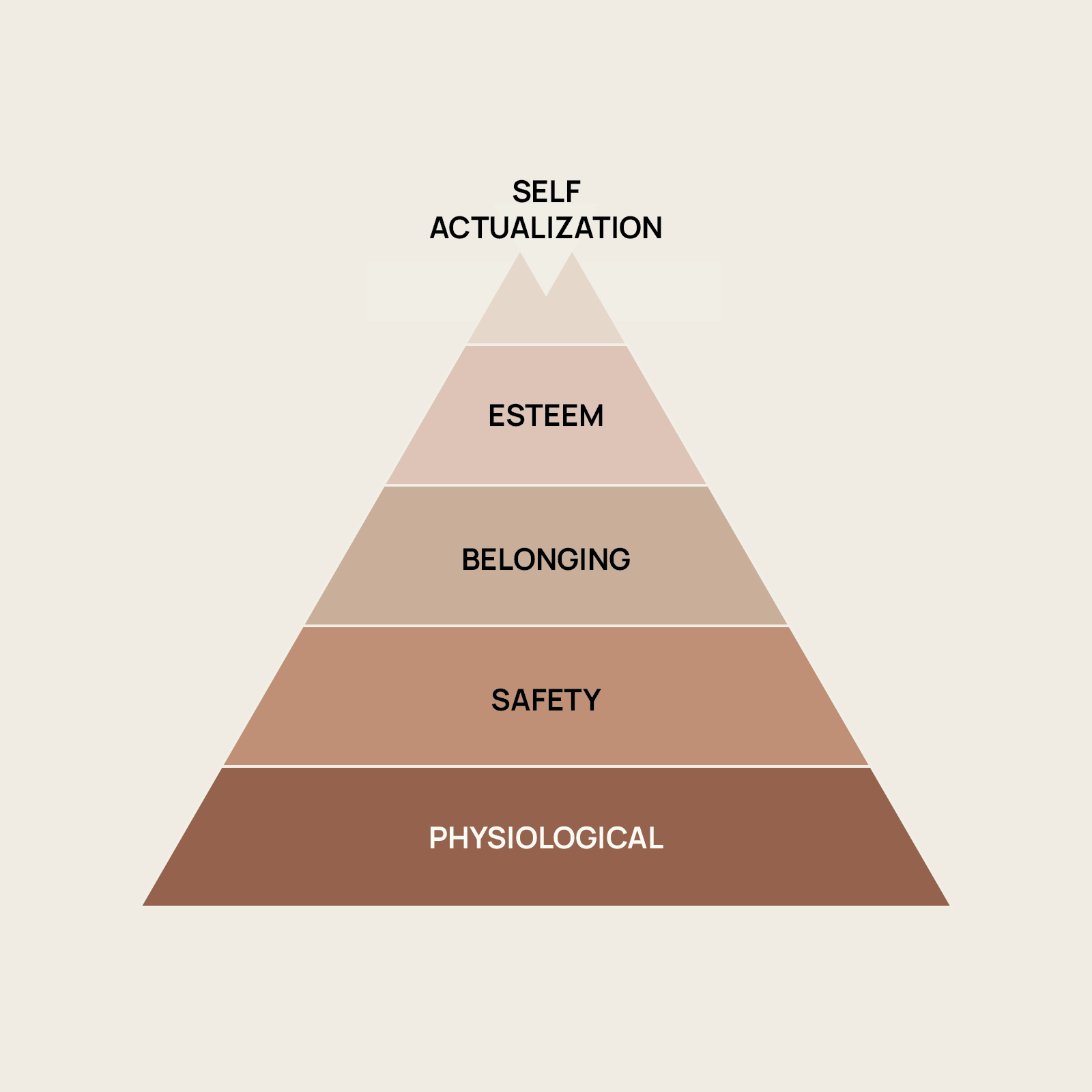
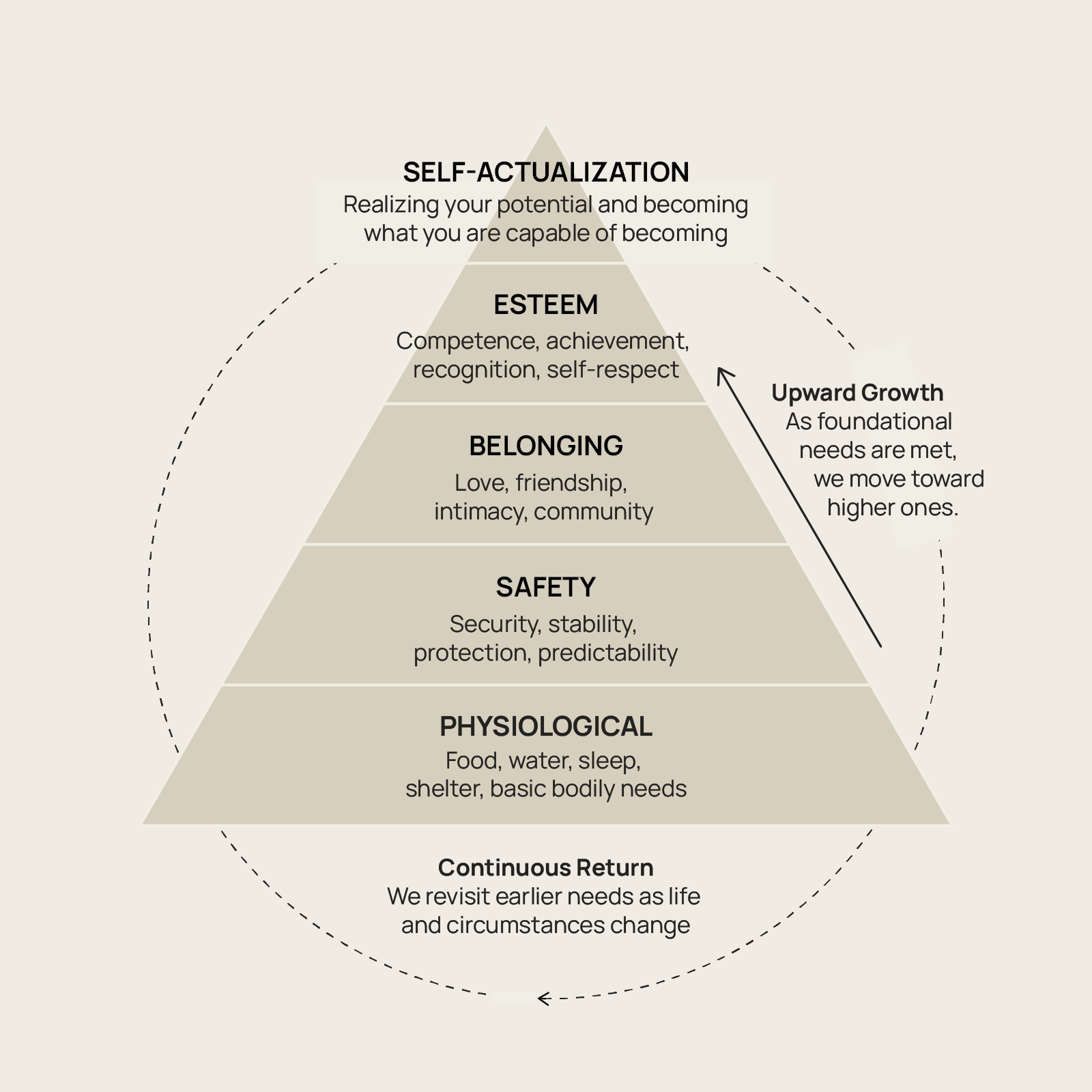
Human flourishing grows from needs that continually shape one another.
Features section
Lorem ipsum dolor sit amet, consectetur adipiscing elit. Suspendisse tincidunt sagittis eros. Quisque quis euismod lorem. Etiam sodales ac felis id interdum.
Features section
Lorem ipsum dolor sit amet, consectetur adipiscing elit. Suspendisse tincidunt sagittis eros. Quisque quis euismod lorem. Etiam sodales ac felis id interdum.
- Which needs currently demand most of your attention?
- Which part of your life feels stable enough to support further growth?
- What foundational need might require renewed attention?
Abraham H. Maslow. “A Theory of Human Motivation” (1943).
→ The original paper proposing Maslow’s hierarchy and distinguishing between different levels of human motivation.
Abraham H. Maslow. Motivation and Personality (1954).
→ Develops Maslow’s theory further and provides a richer account of human needs, motivation, and self-actualization.
Abraham Maslow proposed that human motivation encompasses different kinds of needs, from physiological survival and safety through belonging and esteem to self-actualization. The familiar pyramid suggests that higher aspirations are supported by more foundational conditions, but human motivation is not a rigid staircase. Needs can overlap, reappear, and compete throughout life. The model's enduring insight is that our capacity to grow and flourish is deeply influenced by whether life's foundations feel sufficiently secure.
MANTRA OF THE DAY
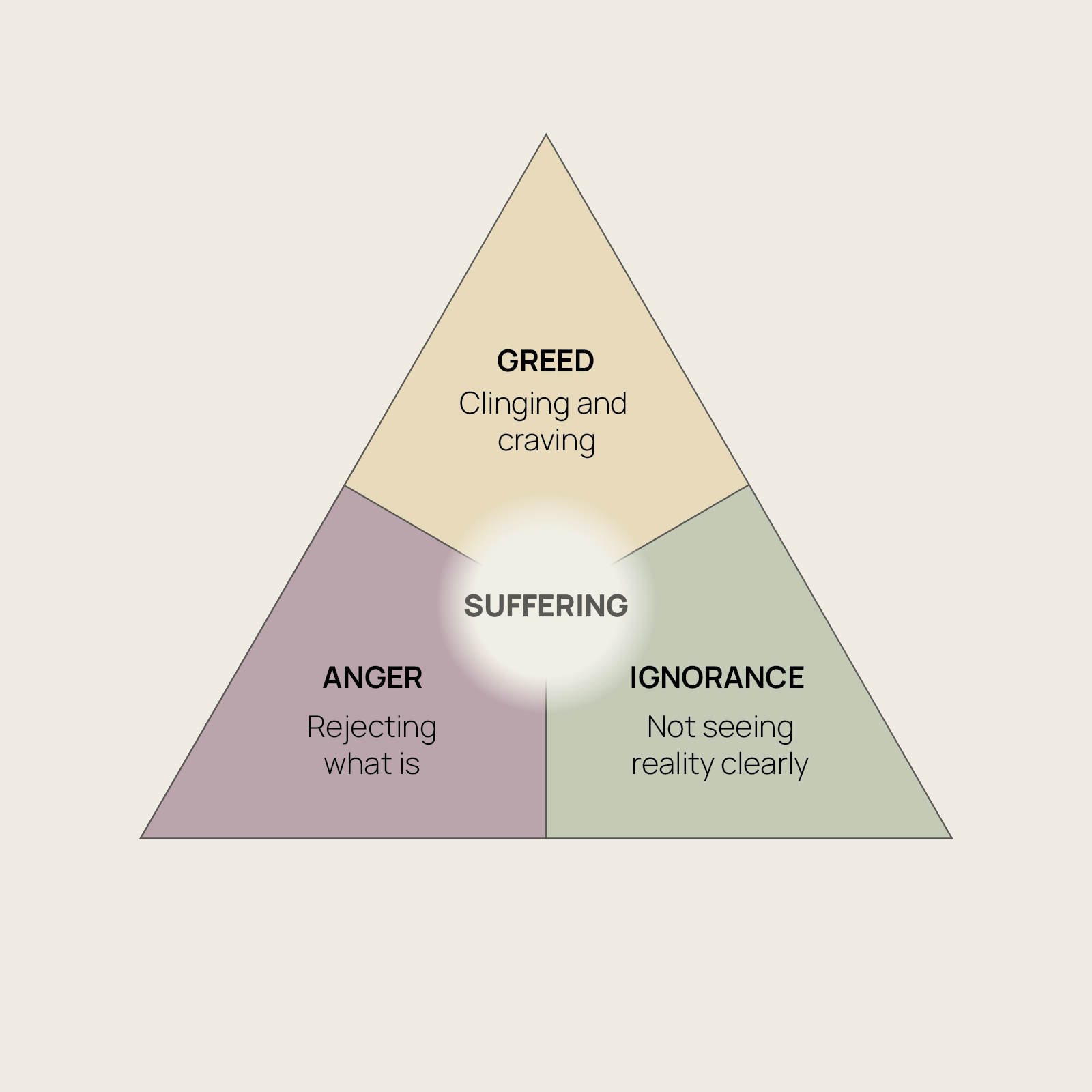
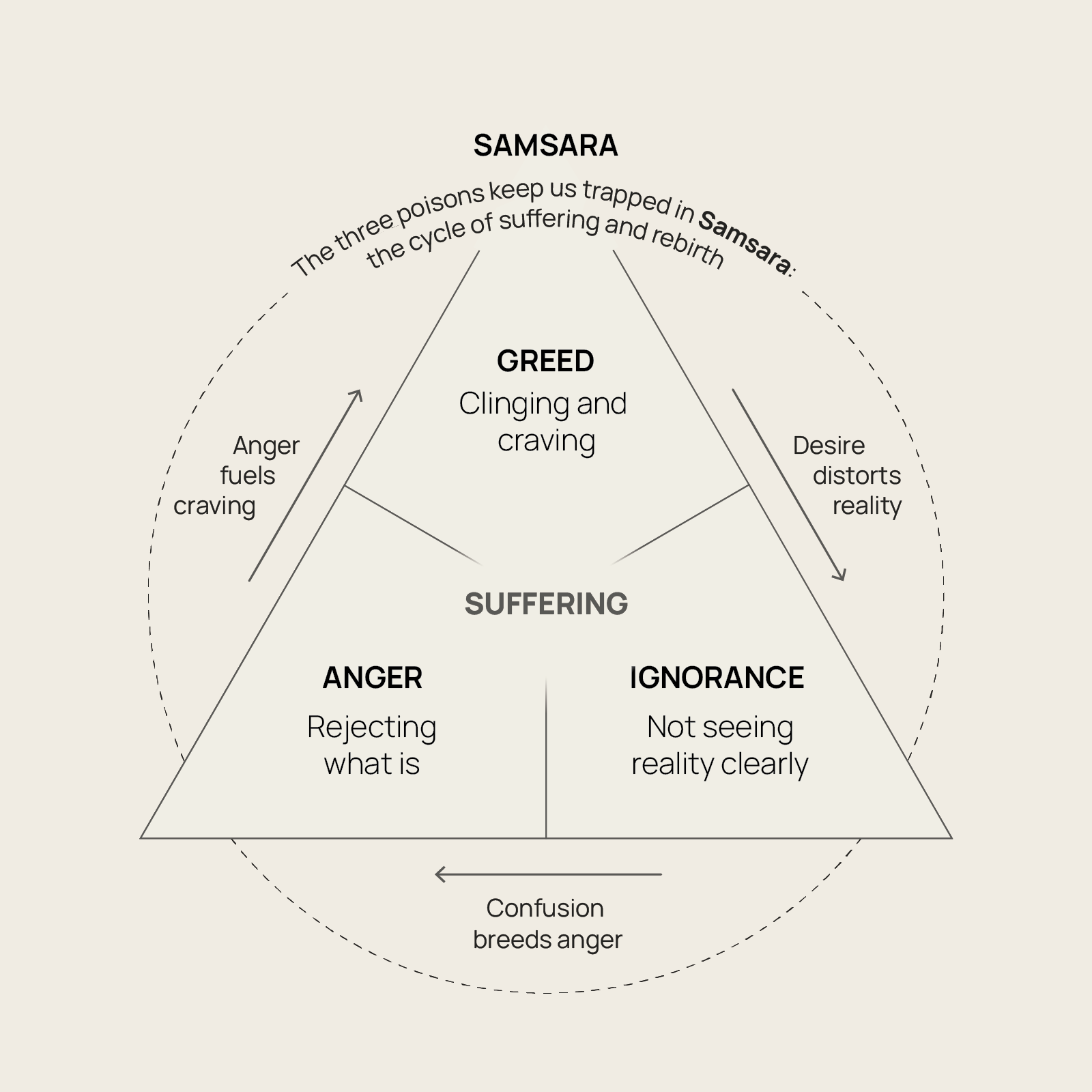
The Three Poisons
Freedom begins by understanding the roots of suffering.
Features section
Lorem ipsum dolor sit amet, consectetur adipiscing elit. Suspendisse tincidunt sagittis eros. Quisque quis euismod lorem. Etiam sodales ac felis id interdum.
Features section
Lorem ipsum dolor sit amet, consectetur adipiscing elit. Suspendisse tincidunt sagittis eros. Quisque quis euismod lorem. Etiam sodales ac felis id interdum.
- What am I clinging to that is causing unnecessary suffering?
- What reality am I resisting instead of accepting?
- What would wisdom look like in this situation?
The Dhammapada.
→ One of Buddhism's most accessible teachings on the roots of suffering.
Walpola Rahula. What the Buddha Taught.
→ A clear introduction to Buddhist philosophy and the Three Poisons.
Buddhism identifies three deeply rooted mental tendencies that perpetuate suffering: greed or attachment, aversion or anger, and ignorance or delusion. We cling to what we want, reject what we dislike, and misunderstand the changing nature of reality. These forces reinforce one another, shaping our perceptions and behavior. By learning to recognize them rather than automatically obeying them, we can gradually weaken their influence and cultivate greater wisdom, compassion, and freedom.
MANTRA OF THE DAY
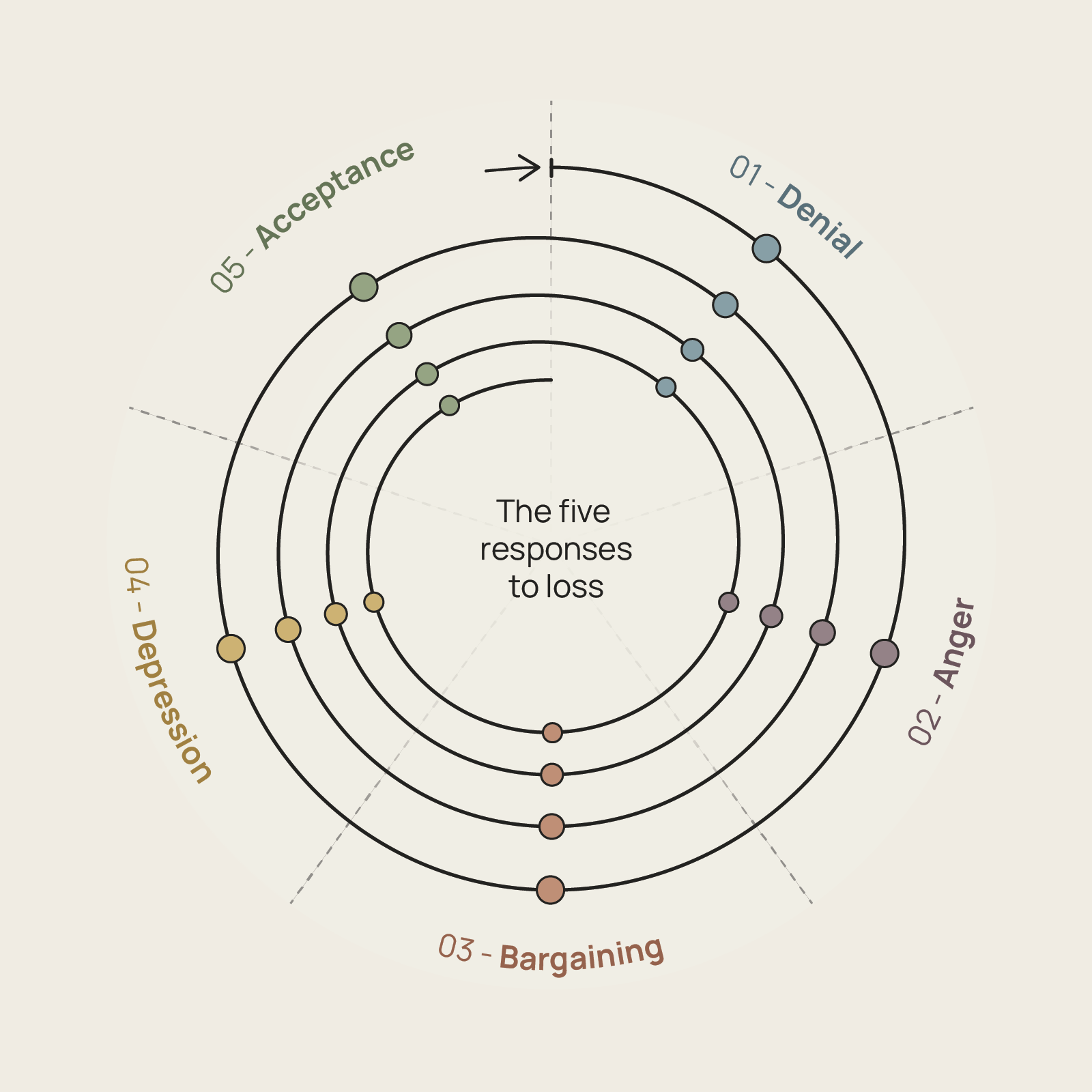
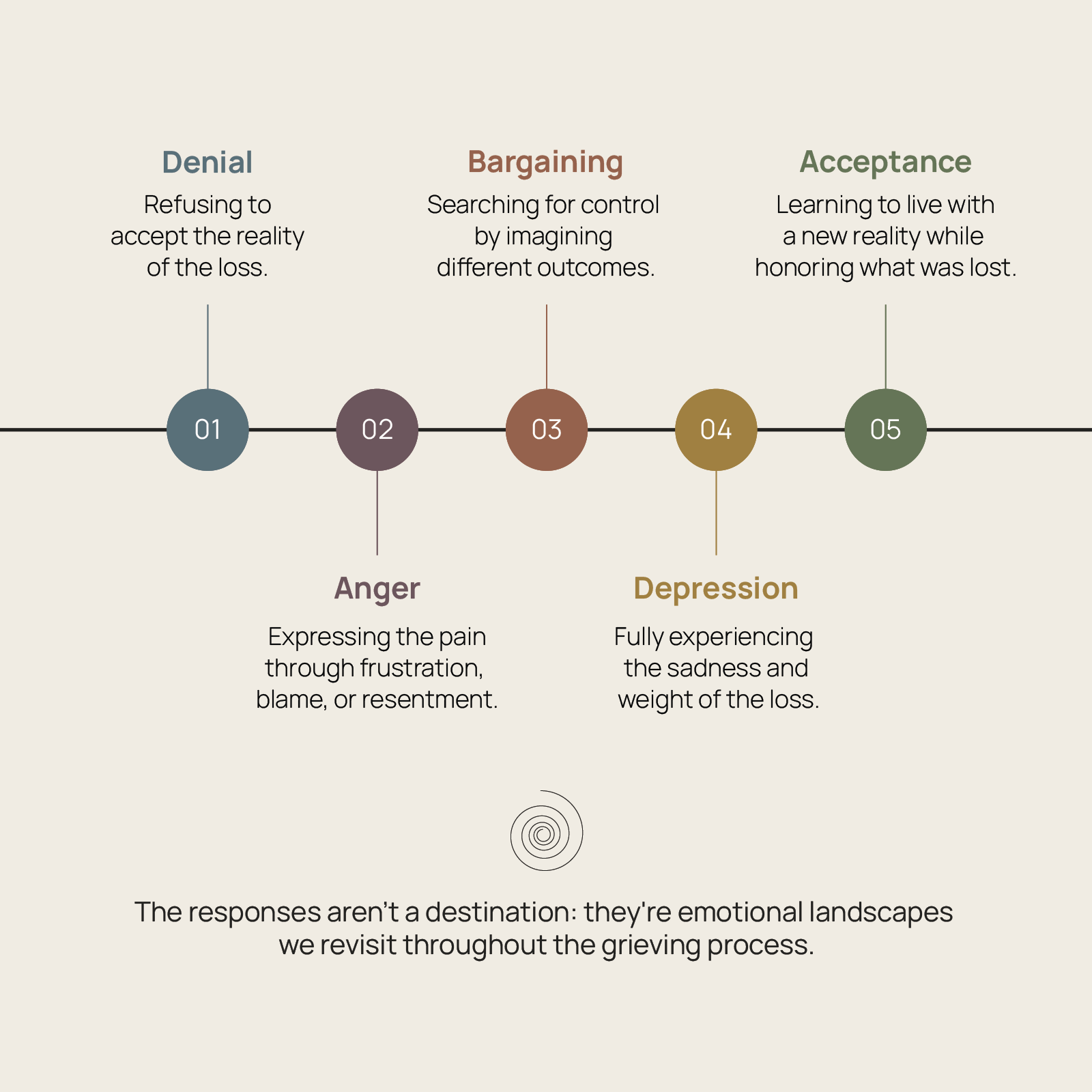
Spiral of Grief
Healing doesn't move in a straight line.
Features section
Lorem ipsum dolor sit amet, consectetur adipiscing elit. Suspendisse tincidunt sagittis eros. Quisque quis euismod lorem. Etiam sodales ac felis id interdum.
Features section
Lorem ipsum dolor sit amet, consectetur adipiscing elit. Suspendisse tincidunt sagittis eros. Quisque quis euismod lorem. Etiam sodales ac felis id interdum.
- What feeling keeps returning in my life?
- What have I learned since I first experienced this loss or change?
- How might this experience continue to shape me with compassion and wisdom?
Margaret Stroebe and Henk Schut. The Dual Process Model of Coping with Bereavement. (1999)
→ Introduces one of the most influential contemporary models of grief.
David Kessler. Finding Meaning: The Sixth Stage of Grief.
→ Explores how meaning can emerge through loss and healing.
Grief rarely unfolds as a neat sequence of stages. The Spiral of Grief represents healing as cyclical and nonlinear: sadness, anger, bargaining, depression, and acceptance may return in different forms and at unexpected times. Revisiting an emotion does not mean returning to where we started. Each encounter happens from a different place, carrying new experience, perspective, and understanding. Healing can therefore continue moving forward even when the emotional landscape feels painfully familiar.
MANTRA OF THE DAY
Ikigai
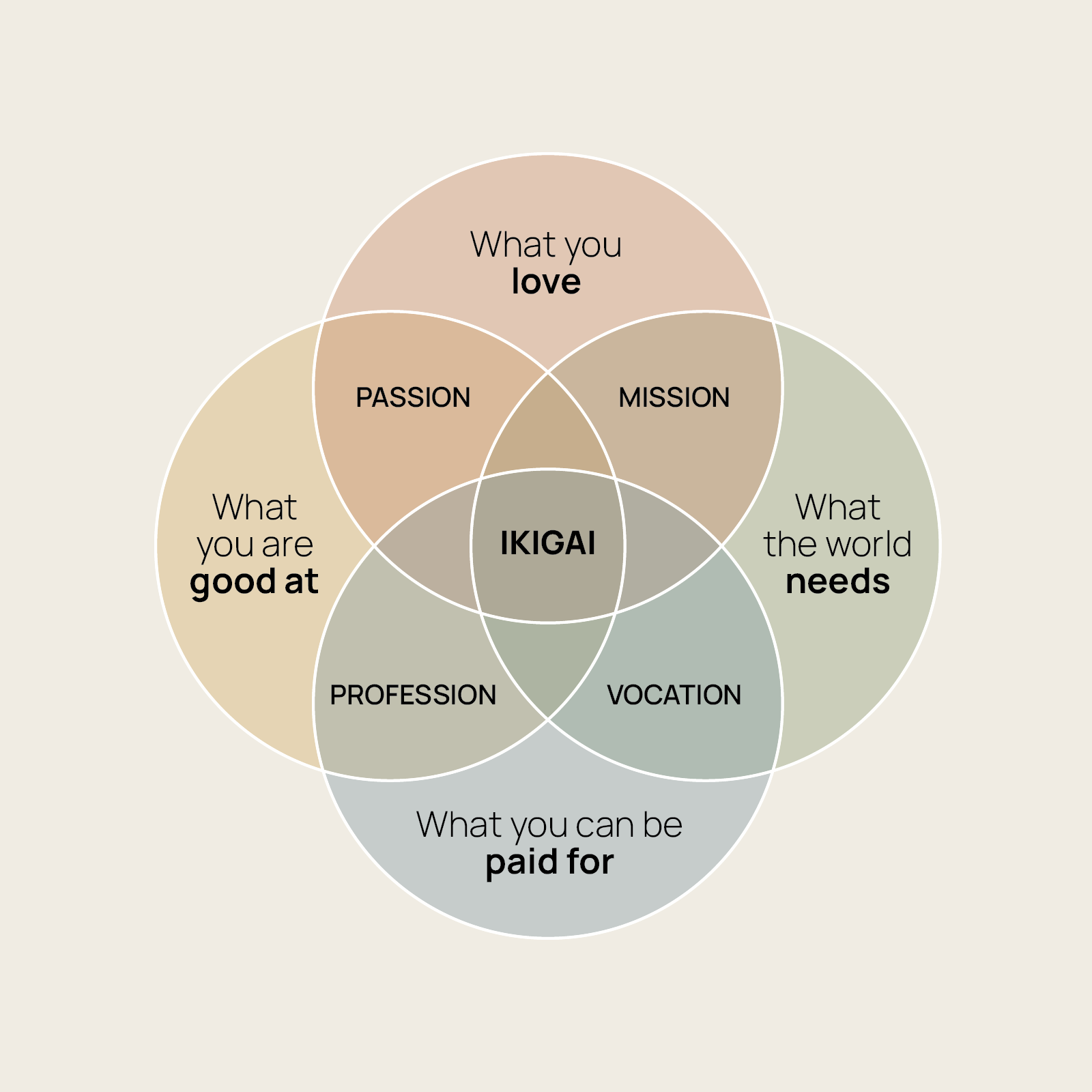
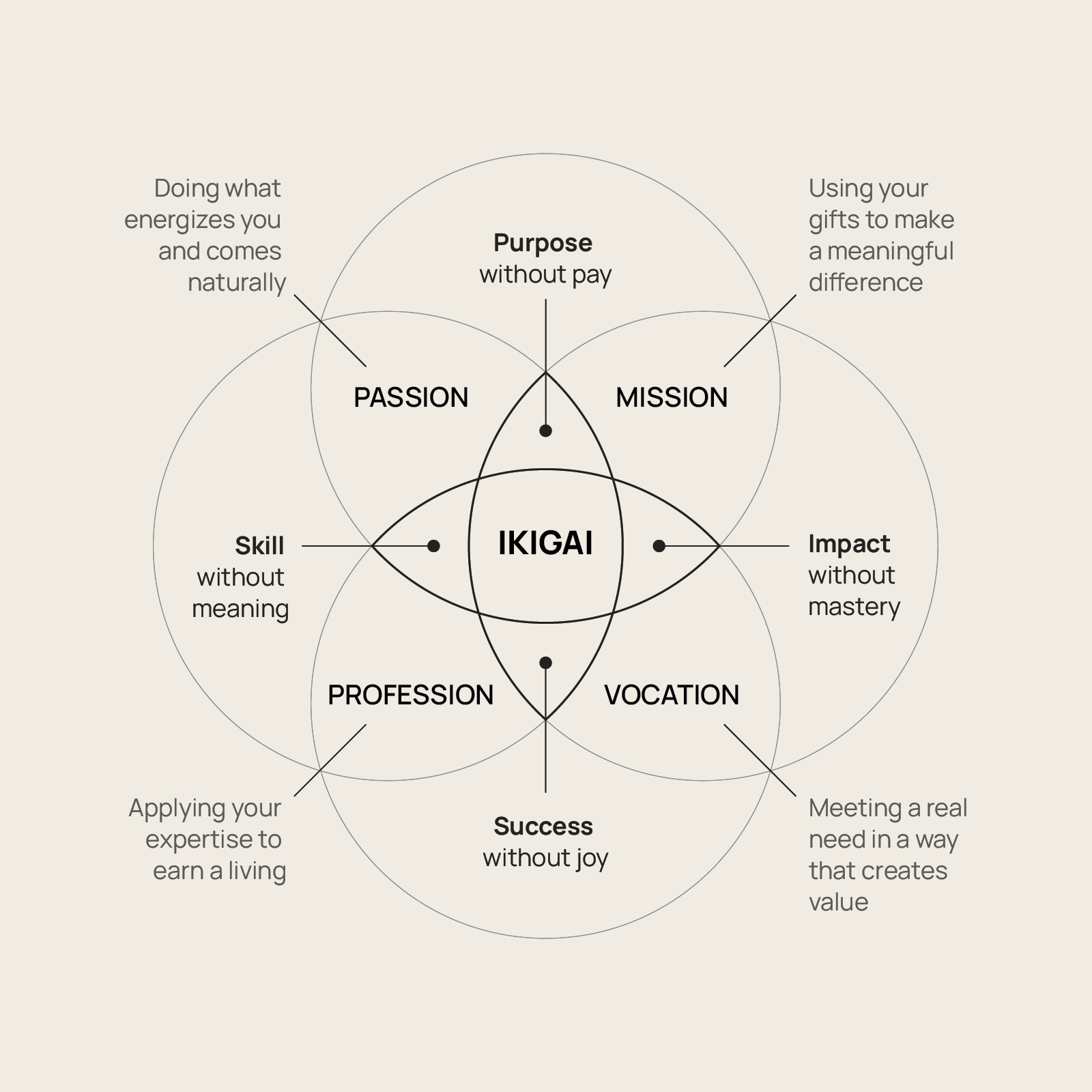
A fulfilling life emerges where purpose meets daily living.
Features section
Lorem ipsum dolor sit amet, consectetur adipiscing elit. Suspendisse tincidunt sagittis eros. Quisque quis euismod lorem. Etiam sodales ac felis id interdum.
Features section
Lorem ipsum dolor sit amet, consectetur adipiscing elit. Suspendisse tincidunt sagittis eros. Quisque quis euismod lorem. Etiam sodales ac felis id interdum.
- Which moments in my life feel quietly meaningful?
- Where have I confused success with fulfillment?
- What gives me a reason to look forward to tomorrow?
Mieko Kamiya. On the Meaning of Life (Ikigai ni Tsuite).
→ The seminal modern work exploring the deeper meaning of ikigai.
Ken Mogi. The Little Book of Ikigai.
→ A thoughtful introduction to ikigai as a way of living.
Ikigai is a Japanese concept often translated as "reason for being," or that which makes life worth living. It need not be one grand purpose or perfect career. Ikigai can be found in relationships, meaningful work, curiosity, service, creativity, rituals, and everyday pleasures. It reminds us that a fulfilling life is often built from many small sources of meaning that give us energy, direction, connection, and a reason to welcome another day.
MANTRA OF THE DAY
The Nine Habits of Longevity
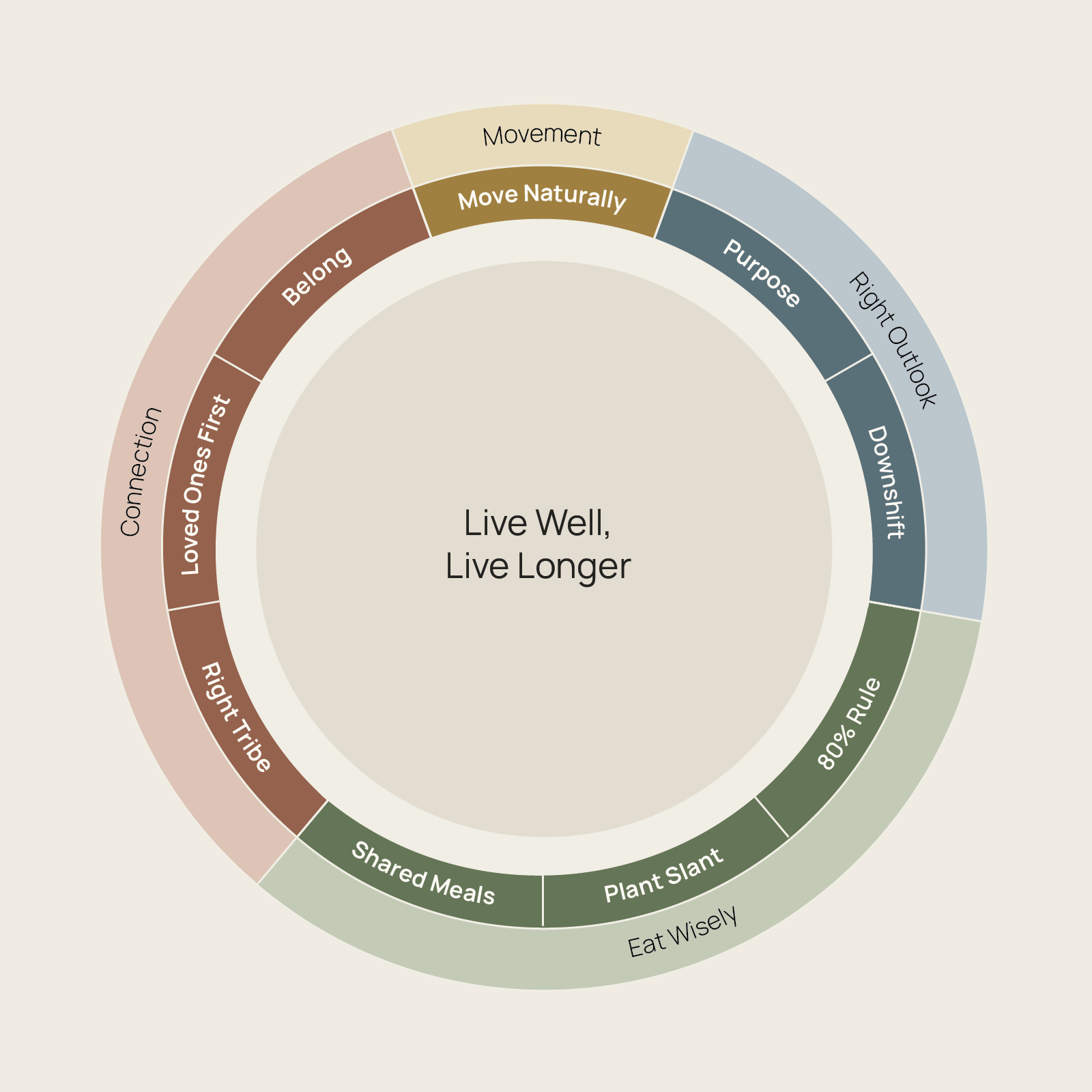
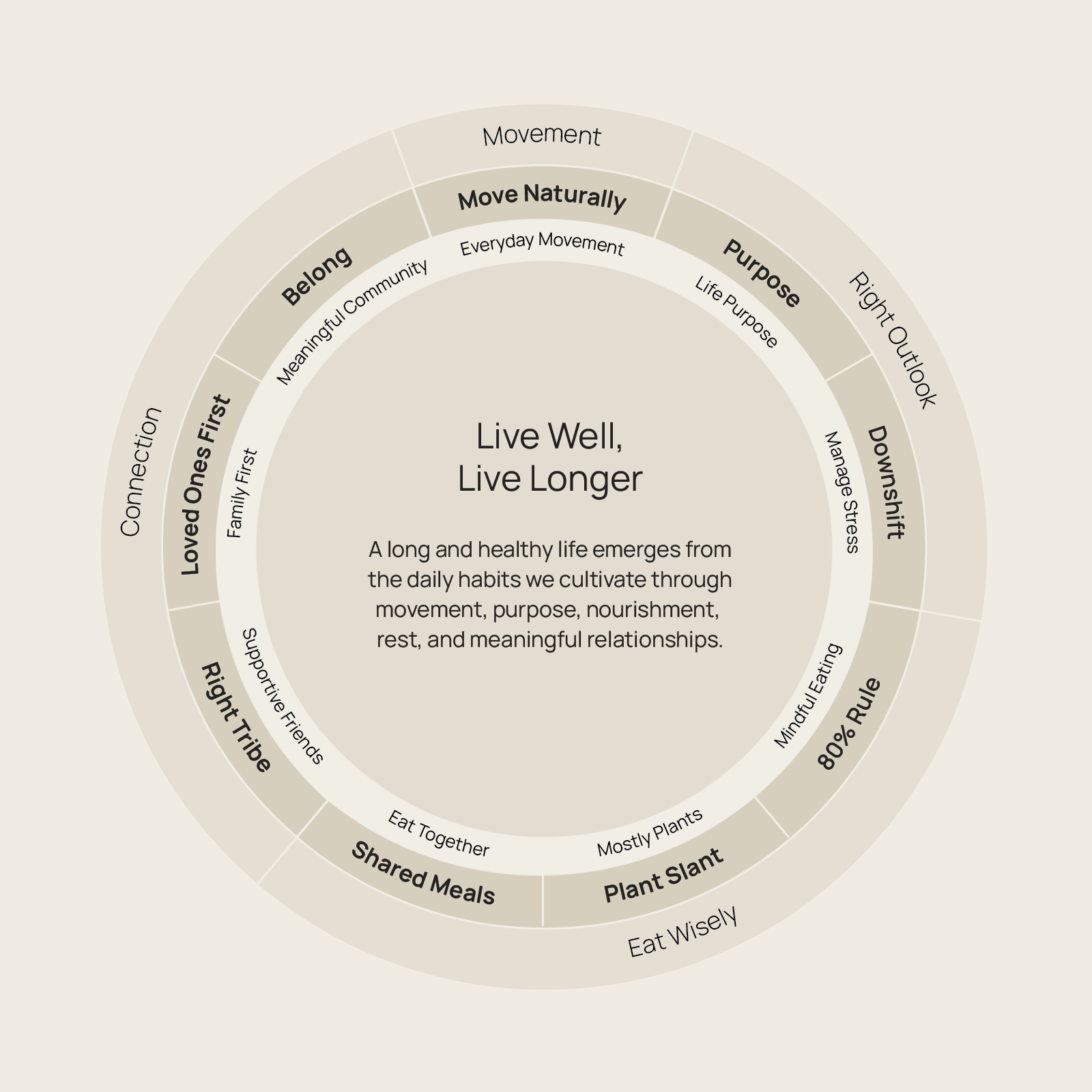
Nine everyday habits that consistently appear in the world's longest-lived communities.
Features section
Lorem ipsum dolor sit amet, consectetur adipiscing elit. Suspendisse tincidunt sagittis eros. Quisque quis euismod lorem. Etiam sodales ac felis id interdum.
Features section
Lorem ipsum dolor sit amet, consectetur adipiscing elit. Suspendisse tincidunt sagittis eros. Quisque quis euismod lorem. Etiam sodales ac felis id interdum.
- Which of these nine habits is already present in my life?
- Which habit would have the greatest positive impact if I practiced it consistently?
- How can I redesign my environment so healthier choices become the easiest choices?
Dan Buettner. The Blue Zones: Lessons for Living Longer From the People Who've Lived the Longest.
→ Introduces the original research into the world's longest-lived communities and the lifestyle patterns they share.
Dan Buettner. The Blue Zones Solution.
→ Expands the research into practical strategies for applying the nine longevity habits in everyday life.
Research into long-lived communities popularized as the world's Blue Zones identified recurring patterns associated with healthier, longer lives. These include natural movement, purpose, stress reduction, moderate eating, plant-rich diets, close relationships, belonging, and supportive social environments. The larger lesson is simple: longevity is shaped not only by medicine or individual willpower, but by the ordinary habits, relationships, and environments that quietly structure the way we live every day.
MANTRA OF THE DAY
The Three Gunas
The quality of your mind shapes the quality of your life.
Features section
Lorem ipsum dolor sit amet, consectetur adipiscing elit. Suspendisse tincidunt sagittis eros. Quisque quis euismod lorem. Etiam sodales ac felis id interdum.
Features section
Lorem ipsum dolor sit amet, consectetur adipiscing elit. Suspendisse tincidunt sagittis eros. Quisque quis euismod lorem. Etiam sodales ac felis id interdum.
- Which quality best describes my current state?
- What habits keep me stuck in restlessness or inertia?
- What could help cultivate greater clarity today?
Bhagavad Gita.
→ The classic source describing the three gunas and their influence on human nature.
Eknath Easwaran. The Bhagavad Gita.
→ An accessible translation with commentary for contemporary readers.
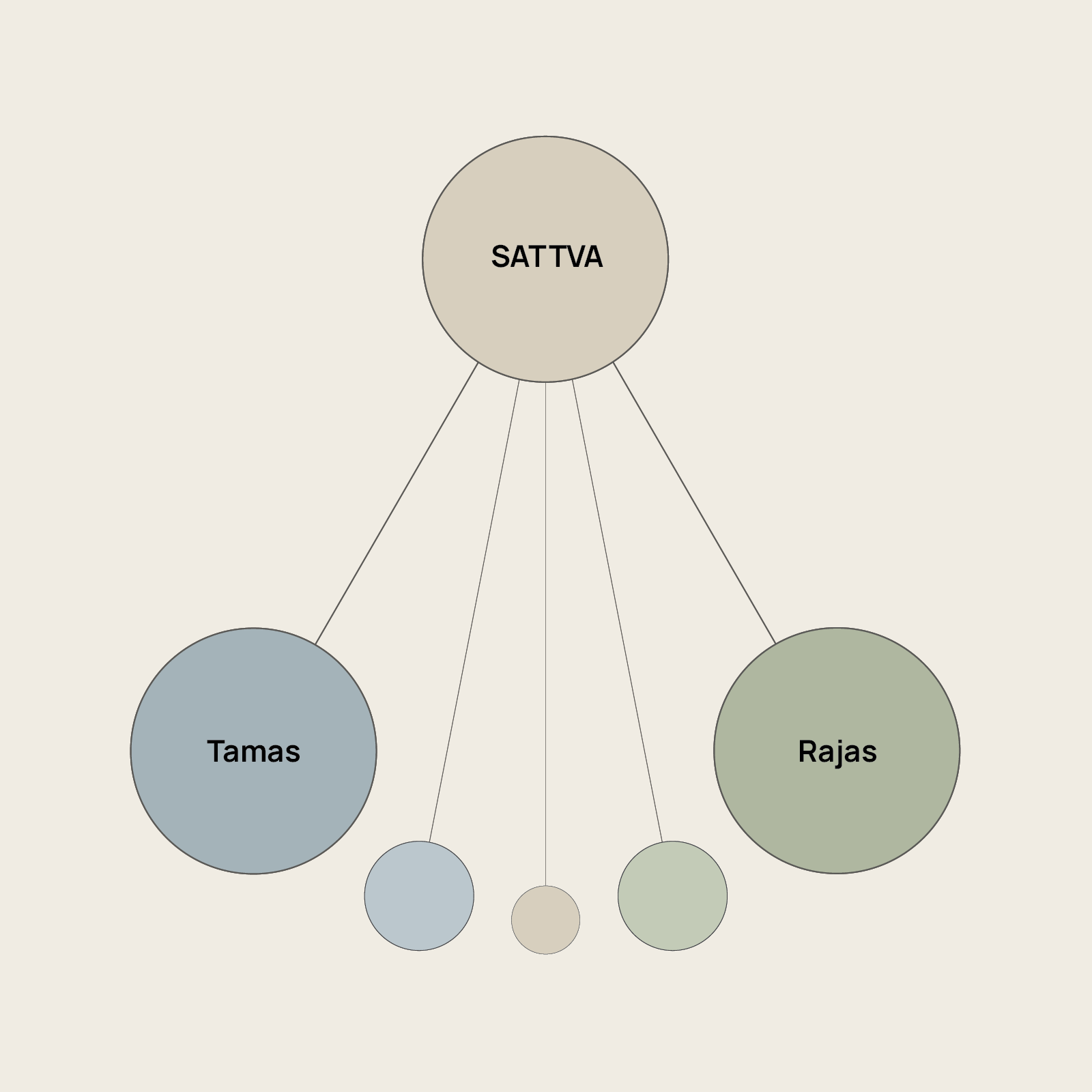
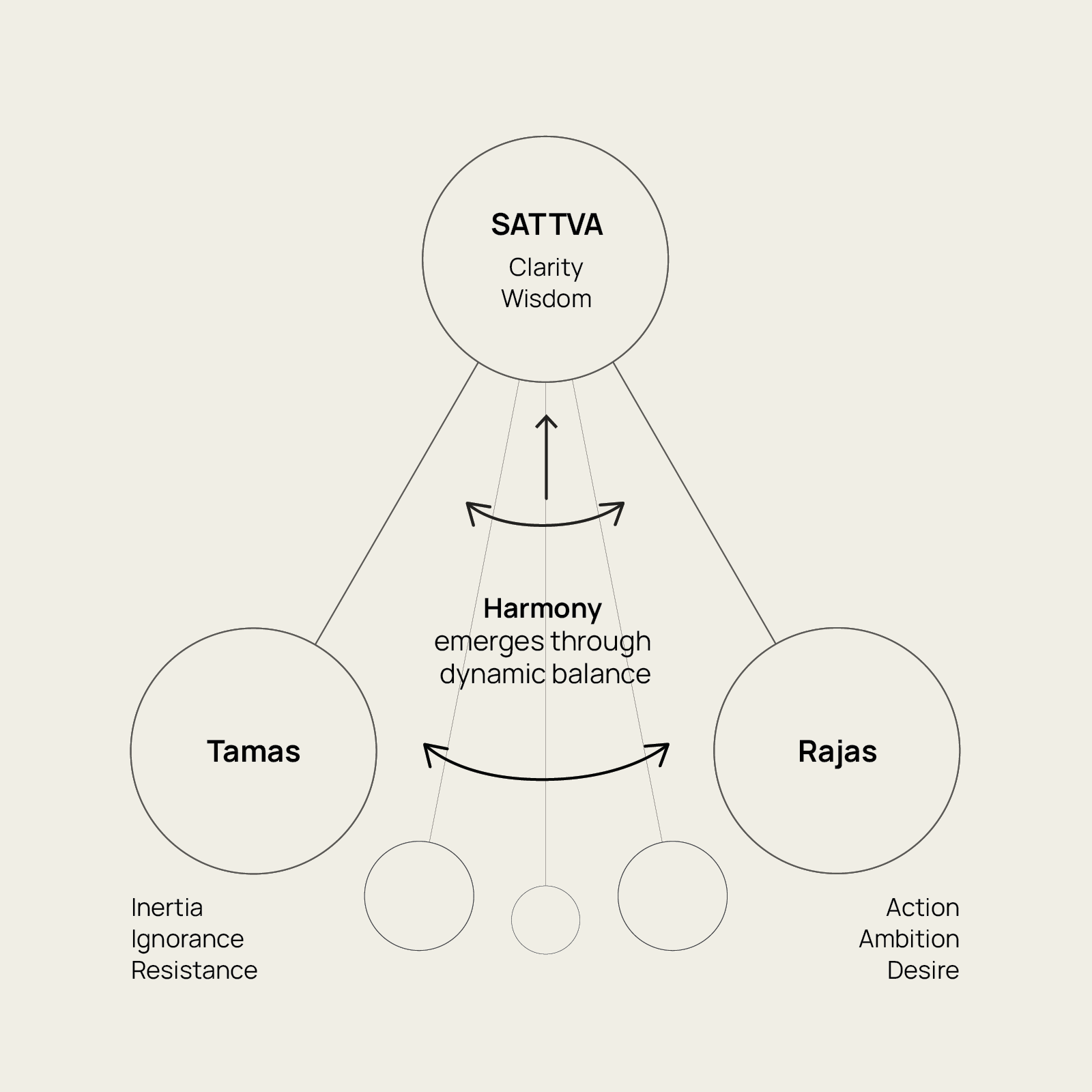
Hindu philosophy describes three fundamental qualities, or gunas, that shape nature and human experience: Tamas, associated with inertia and obscurity; Rajas, with activity and desire; and Sattva, with clarity and harmony. All three are continually present and shifting within us. By recognizing their influence on our thoughts, emotions, and behavior, we can become less governed by unconscious patterns and cultivate greater awareness, balance, and clarity in how we live.
MANTRA OF THE DAY
Medicine Wheel
A meaningful life begins by honoring the whole.
Features section
Lorem ipsum dolor sit amet, consectetur adipiscing elit. Suspendisse tincidunt sagittis eros. Quisque quis euismod lorem. Etiam sodales ac felis id interdum.
Features section
Lorem ipsum dolor sit amet, consectetur adipiscing elit. Suspendisse tincidunt sagittis eros. Quisque quis euismod lorem. Etiam sodales ac felis id interdum.
- Which part of my life has received the least attention recently?
- Where do I feel disconnected from myself, others, or nature?
- What would bring greater balance into my life today?
Judie Bopp, Michael Bopp, Lee Brown, and Phil Lane Jr. The Sacred Tree.
→ An accessible introduction to Indigenous teachings and the Medicine Wheel.
Alvin M. Josephy Jr., ed. America in 1492: The World of the Indian Peoples Before the Arrival of Columbus.
→ Provides broader context for Indigenous worldviews and holistic living.
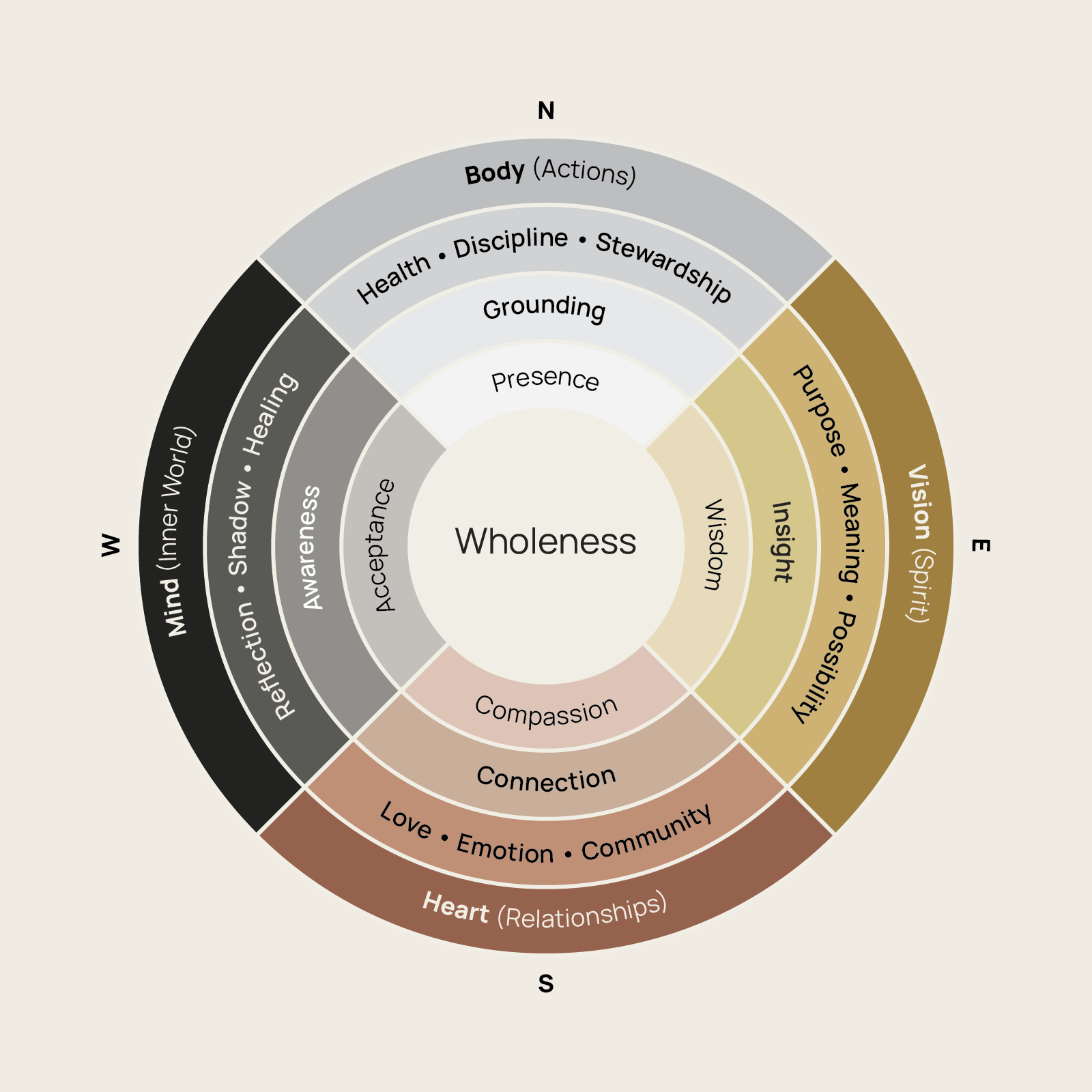
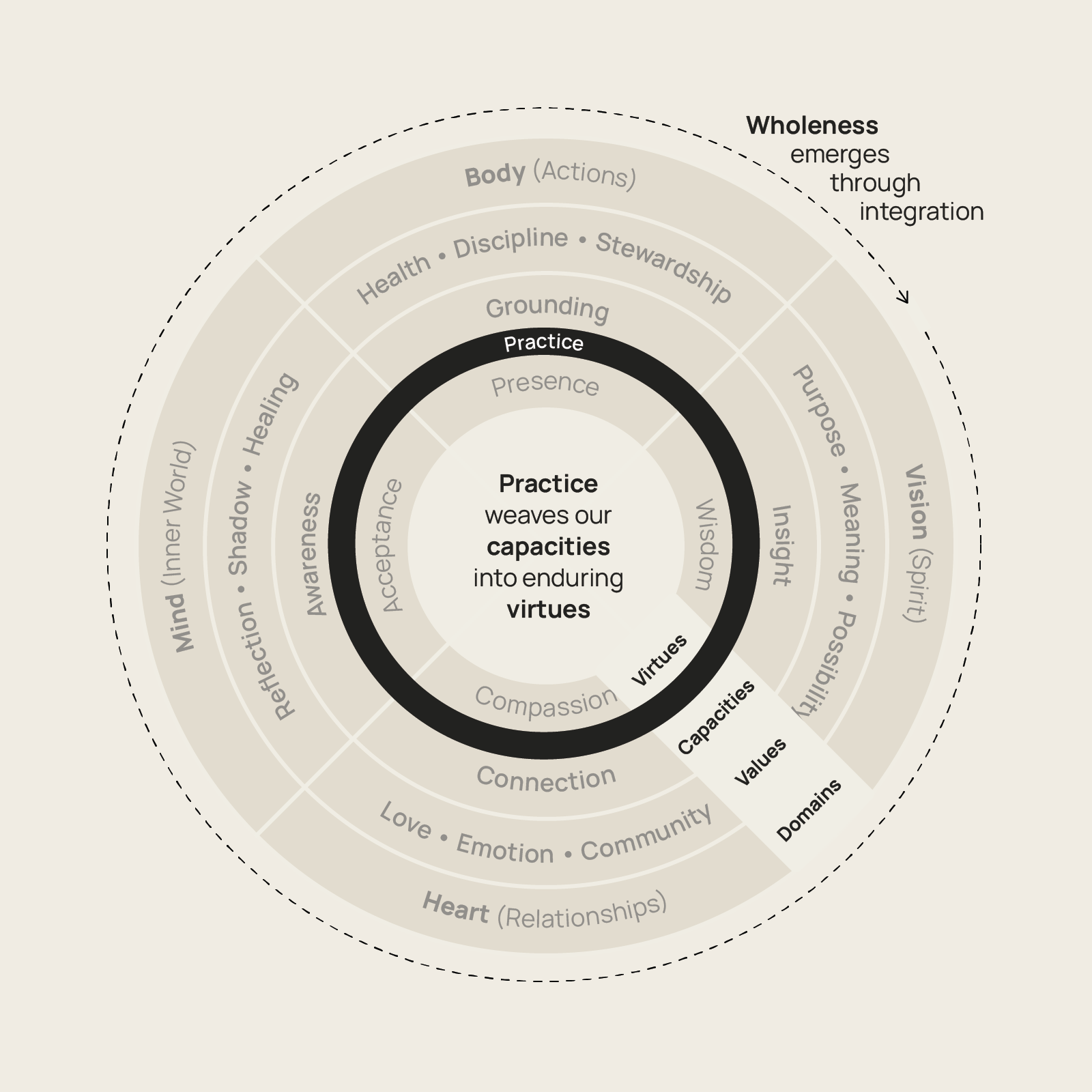
The Medicine Wheel, interpreted in many different ways across Indigenous traditions, offers a powerful image of life as interconnected and cyclical. This Visual Mantra uses the wheel to explore physical, emotional, mental, and spiritual dimensions of experience, alongside the values, capacities, and virtues cultivated within them. Wholeness does not come from perfecting one dimension, but from continually bringing the different parts of our lives into relationship, integration, and balance.
MANTRA OF THE DAY
Johari Window
Self-awareness grows where openness meets feedback.
Features section
Lorem ipsum dolor sit amet, consectetur adipiscing elit. Suspendisse tincidunt sagittis eros. Quisque quis euismod lorem. Etiam sodales ac felis id interdum.
Features section
Lorem ipsum dolor sit amet, consectetur adipiscing elit. Suspendisse tincidunt sagittis eros. Quisque quis euismod lorem. Etiam sodales ac felis id interdum.
- What might others see in me that I struggle to recognize myself?
- What part of myself do I rarely share, and why?
- What conversation could help me know myself better?
Joseph Luft and Harrington Ingham. The Johari Window: A Graphic Model of Interpersonal Awareness. (1955)
→ The original paper introducing the Johari Window model.
Douglas Stone and Sheila Heen. Thanks for the Feedback.
→ A practical guide to using feedback for greater self-awareness and stronger relationships.
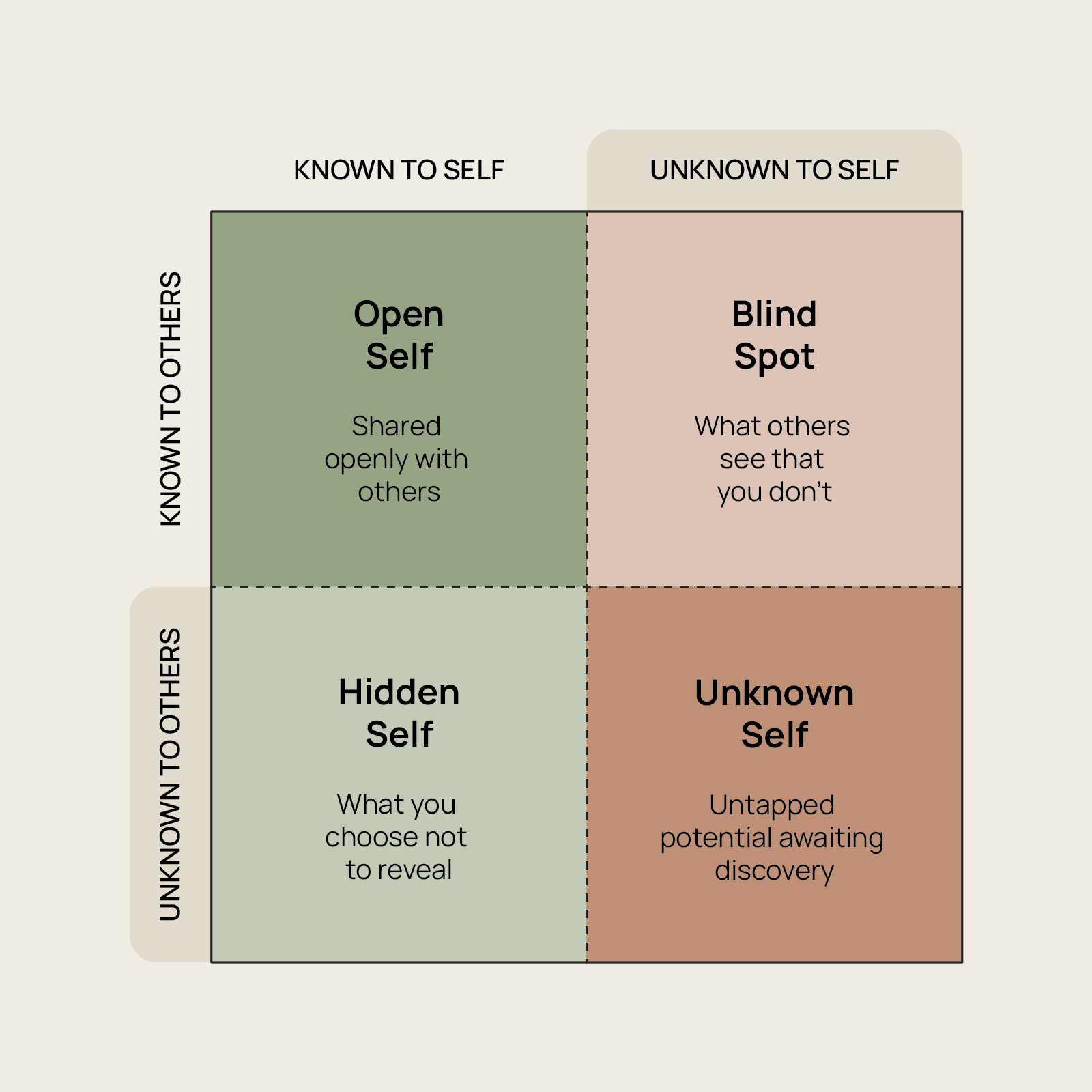
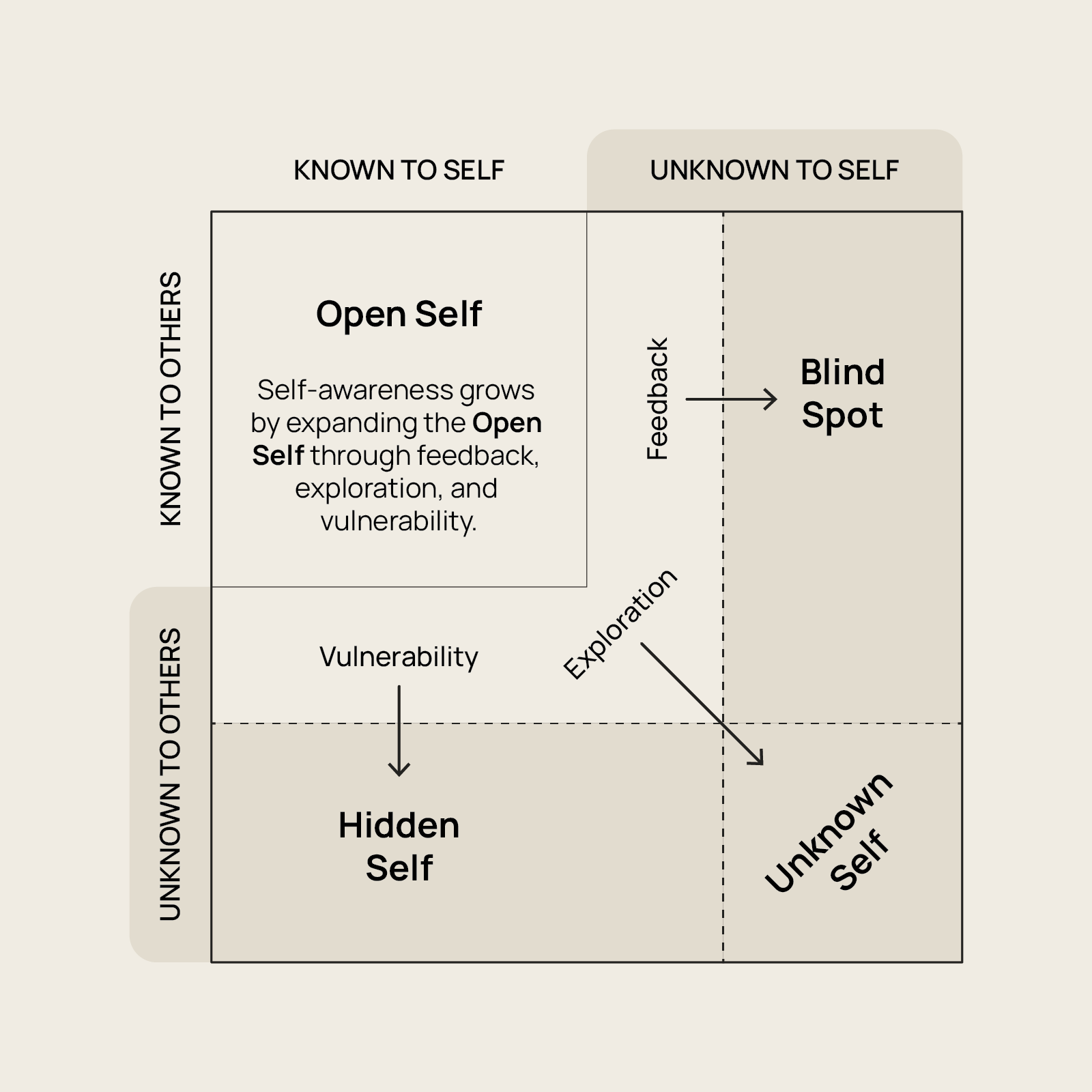
The Johari Window explores self-awareness through what is known and unknown to ourselves and to others. Some parts of us are openly shared, others remain hidden, some are visible to others but invisible to us, and still others have yet to be discovered by anyone. Through vulnerability, honest feedback, and exploration, we can gradually expand what is known, reduce our blind spots, and develop a fuller understanding of ourselves.
MANTRA OF THE DAY
Dichotomy of Control
Peace comes from knowing what belongs to you—and what never did.
Features section
Lorem ipsum dolor sit amet, consectetur adipiscing elit. Suspendisse tincidunt sagittis eros. Quisque quis euismod lorem. Etiam sodales ac felis id interdum.
Features section
Lorem ipsum dolor sit amet, consectetur adipiscing elit. Suspendisse tincidunt sagittis eros. Quisque quis euismod lorem. Etiam sodales ac felis id interdum.
- What part of this situation is truly within my control?
- Where am I wasting energy trying to control the uncontrollable?
- What action can I take today that depends entirely on me?
Epictetus. The Enchiridion.
→ The clearest introduction to the Stoic distinction between what we can and cannot control.
Marcus Aurelius. Meditations.
→ A personal reflection on applying Stoic principles to everyday life.
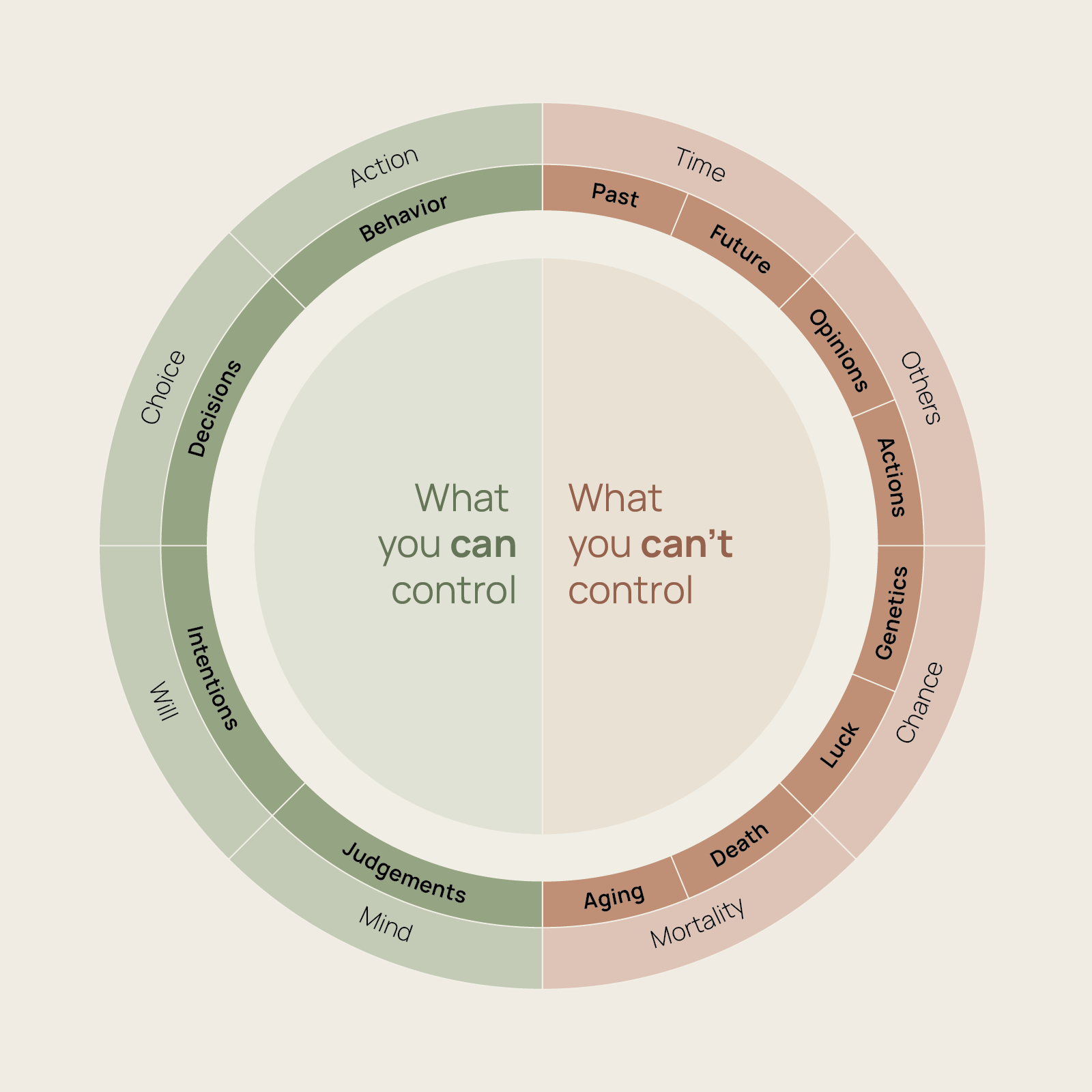
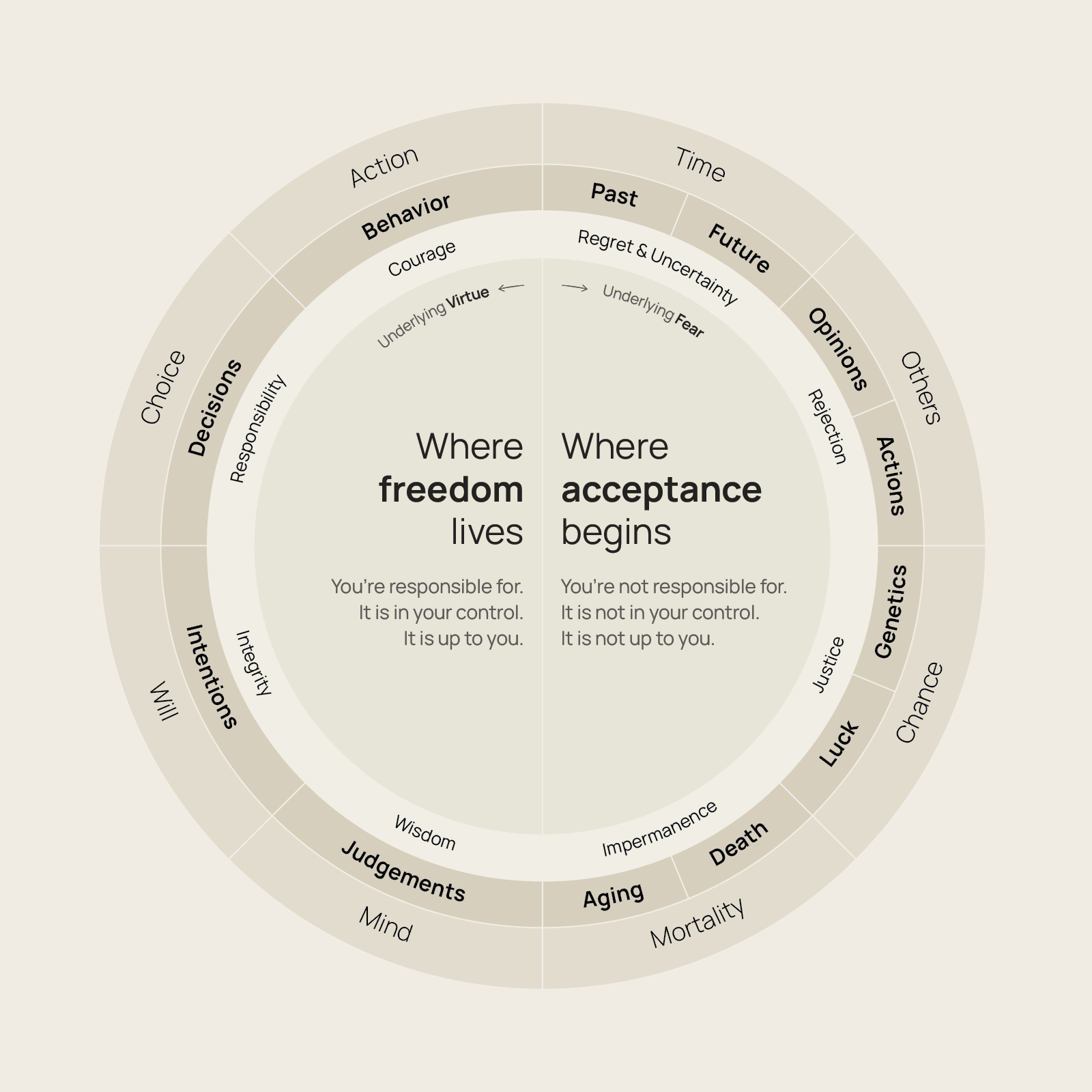
The Stoics taught that peace begins by distinguishing what depends on us from what does not. Our judgments, intentions, choices, and actions are ours to shape; other people, external events, and ultimate outcomes are not fully ours to command. By investing our energy where we have agency and learning to accept what lies beyond it, we become less reactive, more resilient, and better able to act deliberately in an unpredictable world.
MANTRA OF THE DAY
Yin & Yang
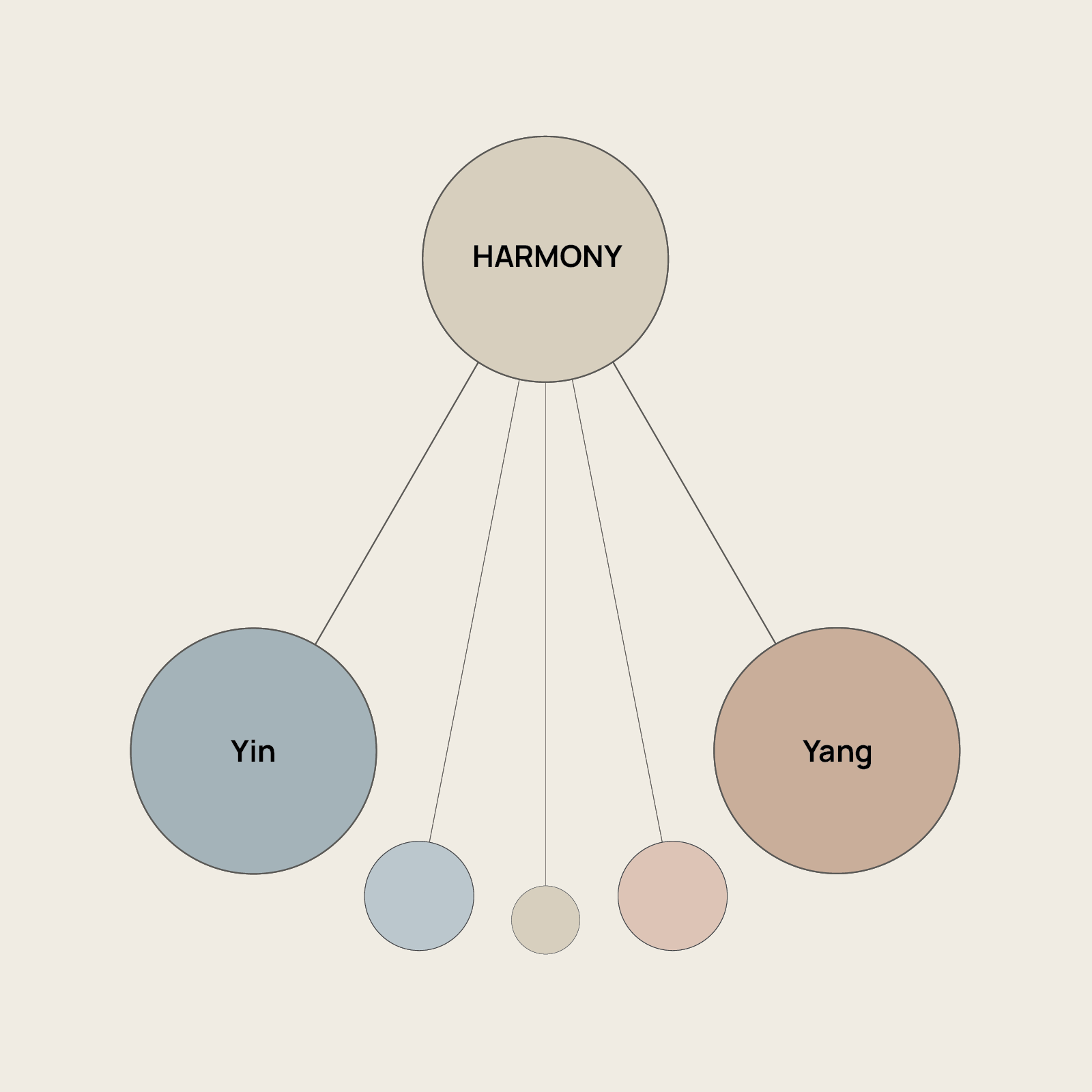
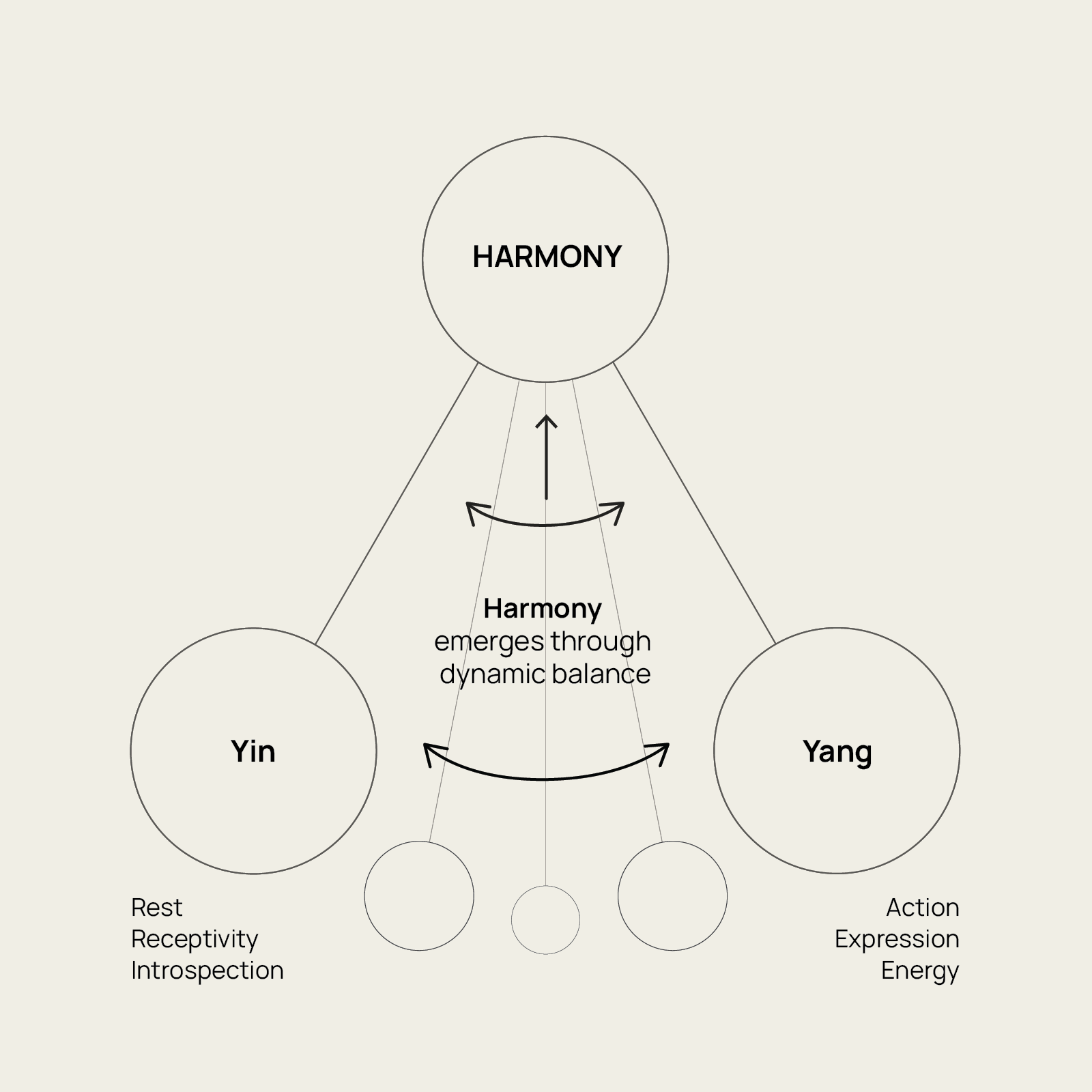
Life flourishes not by eliminating opposites, but by learning to balance them.
Features section
Lorem ipsum dolor sit amet, consectetur adipiscing elit. Suspendisse tincidunt sagittis eros. Quisque quis euismod lorem. Etiam sodales ac felis id interdum.
Features section
Lorem ipsum dolor sit amet, consectetur adipiscing elit. Suspendisse tincidunt sagittis eros. Quisque quis euismod lorem. Etiam sodales ac felis id interdum.
- Where in my life do I feel most out of balance?
- What opposite force have I been resisting that could actually help me?
- What small adjustment would bring greater harmony today?
Laozi. Tao Te Ching.
→ The foundational text of Taoism and its vision of harmony through complementary opposites.
Robin R. Wang. Yinyang: The Way of Heaven and Earth in Chinese Thought and Culture.
→ A modern exploration of the origins and enduring significance of Yin and Yang.
Yin and Yang describes reality as the dynamic interplay of complementary forces. Light and dark, activity and rest, strength and gentleness do not simply oppose one another; each helps define and complete the other. Rather than seeking permanence or eliminating one side, the philosophy invites us to move with life's changing rhythms. Balance is not a fixed destination, but an ongoing process of adjustment between forces that continually transform into one another.
MANTRA OF THE DAY
Frankl’s Logotherapy Triad
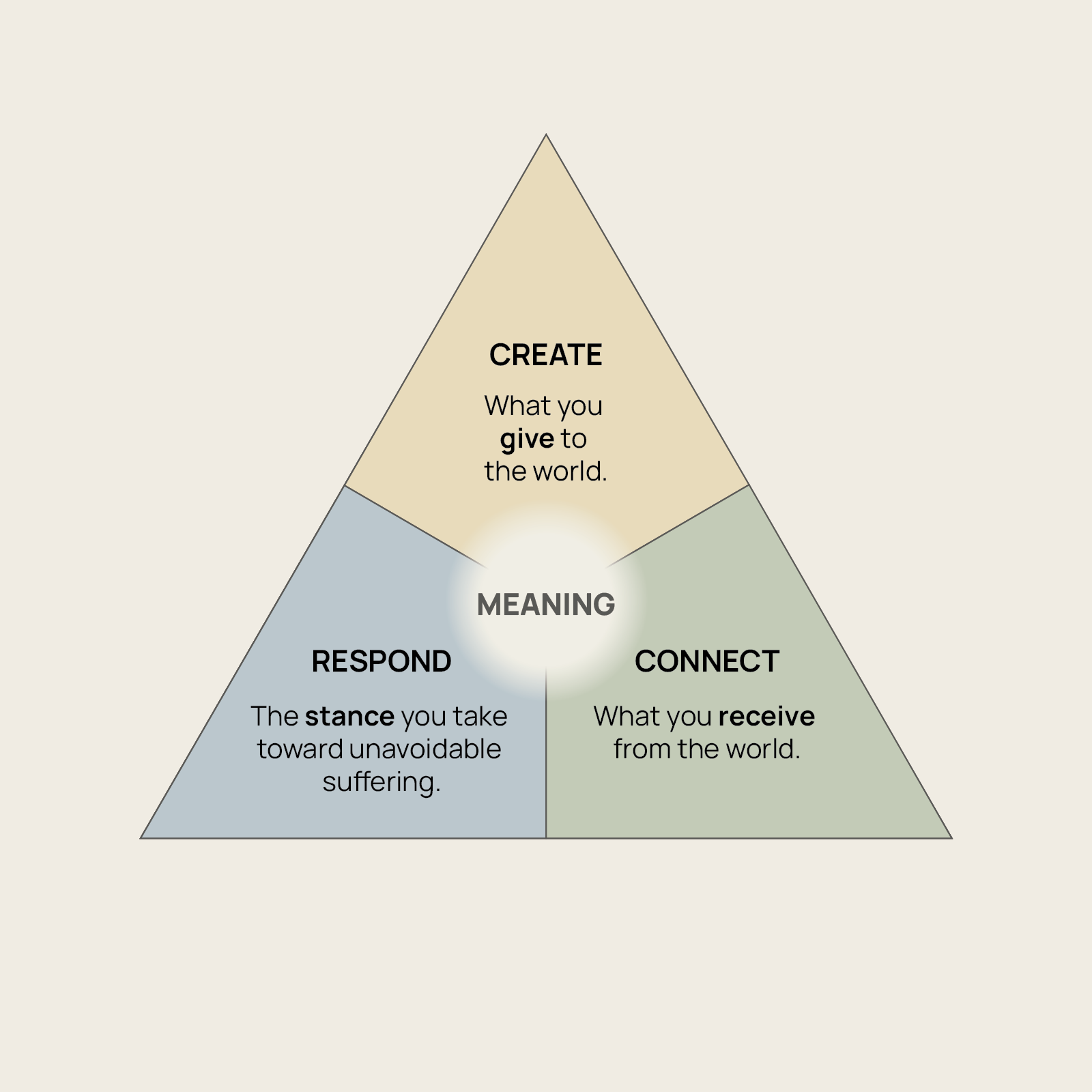
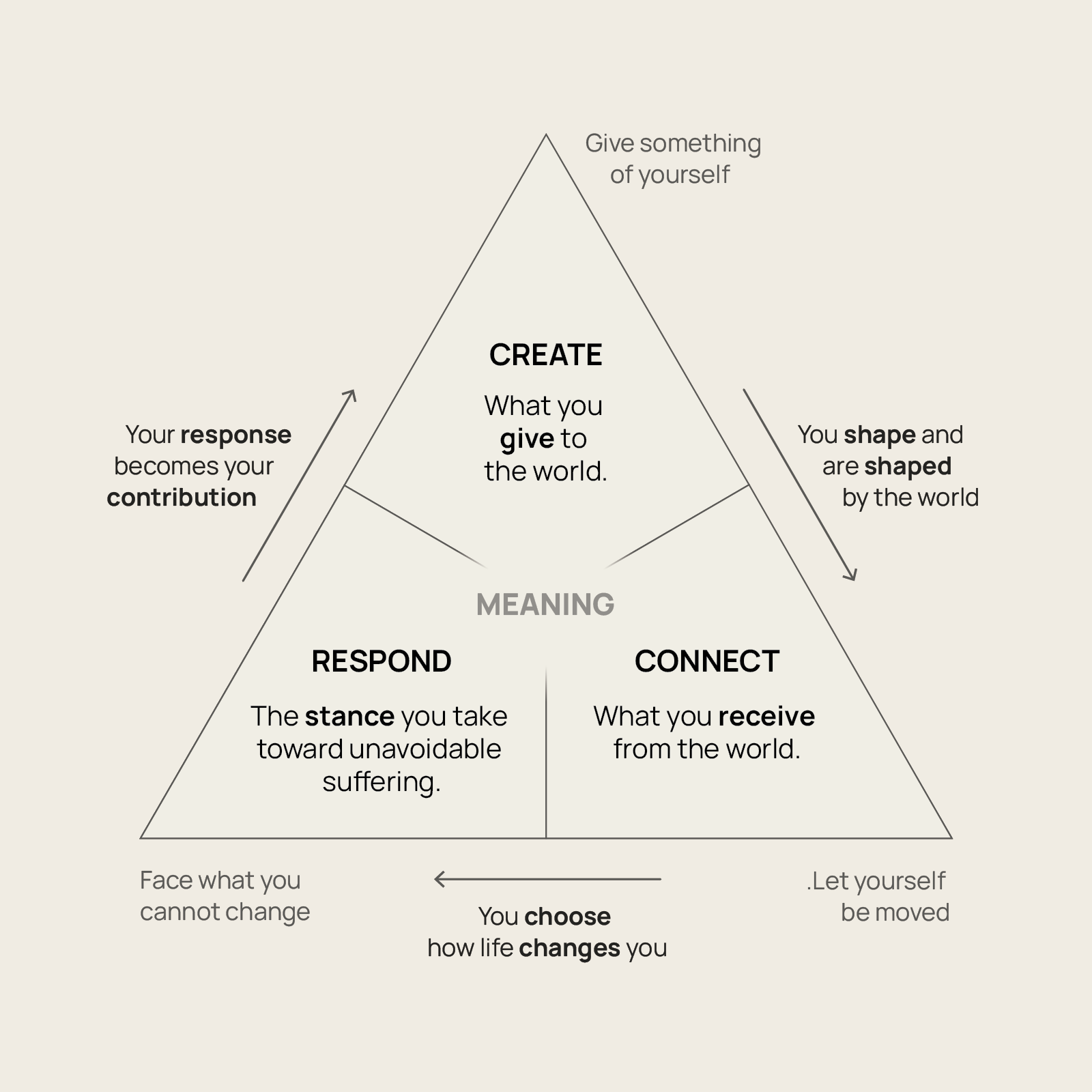
A life becomes meaningful when freedom is directed toward responsibility.
Features section
Lorem ipsum dolor sit amet, consectetur adipiscing elit. Suspendisse tincidunt sagittis eros. Quisque quis euismod lorem. Etiam sodales ac felis id interdum.
Features section
Lorem ipsum dolor sit amet, consectetur adipiscing elit. Suspendisse tincidunt sagittis eros. Quisque quis euismod lorem. Etiam sodales ac felis id interdum.
- Which source of meaning have I neglected recently?
- Where am I pursuing comfort instead of meaning?
- What would make today feel meaningful, regardless of how productive it is?
Viktor E. Frankl. Man's Search for Meaning.
→ Frankl's seminal work introducing logotherapy and the search for meaning.
Viktor Frankl believed that meaning can be discovered in three fundamental ways: through what we create or contribute, through what we experience or love, and through the attitude we choose when facing circumstances we cannot change. Meaning is therefore not a single purpose we must discover once and for all. It can emerge through work, relationships, beauty, suffering, and the way we choose to respond to life itself.
